
The drive to the McKenzie river was windy and brief—only about 90 minutes outside of Bend. It’s always a drastic shift crossing over the Cascades. The arid, sunny climate in Central Oregon feels like the antithesis of the wet, mossy green of McKenzie Bridge. But today we lucked out with a light breeze and clear skies, a pleasant surprise in late May.
Nobody at the boat ramp when we put in. Water temps were in the low 50s. Not a bad start to the morning, especially with a Red Bull in hand. My younger brother, Todd, and my good friend Mike helped load the raft with all the essentials—Rainier, High Altitude Lager, more Red Bull, and a can of V8 bloody beer mix. There might have been some sunscreen thrown in the boat at some point, but I never found it.
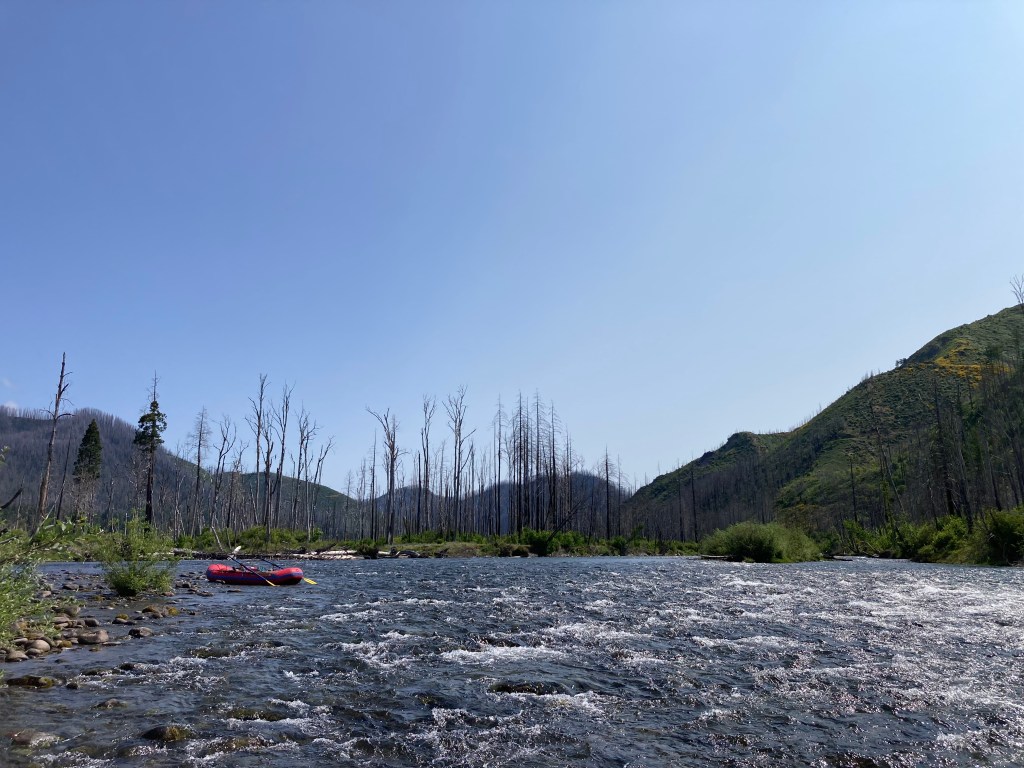
The day started slow since my oar skills were a little rusty after a winter of mostly wet-wading. The first few turns downriver were clumsy, but I quickly found my rhythm. The McKenzie is a new river to me, and I had some fresh Cataract oars I was breaking in. They’re about a foot longer than my old, sun-bleached wooden ones. Turns out that longer oars don’t just give you more reach—they push a lot more water, thanks to the wider and longer blades. More surface area = more power.
I bought the new set not just because the old ones were beat up, but because they were way too short for my setup. I row a 30-year-old Riken Pioneer commercial raft, patched and re-patched, measuring 12’6” long with a 66-inch-wide unbranded frame. And yes—it floats. The old 7’6” oars barely gave me any leverage. The new 9’6” oars are sized closer to proper specs (roughly 3x half the frame width) and have swappable blades. Since I plan on upgrading to a bigger boat with a 72” frame down the line, I sized up about a foot. Plus, my tall captain’s seat and habit of standing while scoping upcoming rapids call for longer oars than conventional setups.
The McKenzie is no joke. It’s pushy, and keeping anglers in position is a real challenge. Wind, microcurrents, and a minefield of rocks make things interesting. While it’s not an advanced whitewater river (at least the section we rowed), it does demand your full attention. There are plenty of sweepers, exposed rocks, and hydraulics that can punish a lazy stroke. Some rapids have flipped boats and taken lives. Respect the McKenzie.
It was about an hour in before we finally got into fish. At the second decent-looking run, we pulled off and found some eager trout holding about two feet under a turbulent seam, just a few feet to the right of a rock that would make any approaching drift boater sweat. Euro nymphing with heavy jig streamers turned out to be the ticket for this slot. About 40 feet downstream, the water slowed and the turbulent seam mellowed into a well-defined foam line about 18 inches wide. Even flows, cobbled bottom, scattered boulders a few rod lengths off the bank. It was beautiful dry-dropper water—3 to 4 feet deep—and the fish thought so too. While nothing took the dry, a size 18 olive baetis nymph picked off a few willing trout.
Further downriver, we came upon the head of a riffle flanked by a monolithic rock face—easily a couple hundred feet tall. We stopped here mostly because the tailout above the riffle shallowed up fast and grounded our raft mid-river. We hadn’t consumed enough beers to lighten our ballast. It looked too fishy to pass up, so we dropped the anchor and waded out.
This might be a good time to mention that it was Todd’s first time fly fishing moving water outside of practice casting. I had gifted him a 9’ 5wt Echo Carbon XL and an old reel in exchange for his 2004 Corolla with over 250K on the odometer—a fair trade. To be honest, the dulled finish on the Echo looked freshly buffed next to the Corolla’s peeling red topcoat. Todd had been working on his cast all day with minimal success—until now. A Sexy Walt’s Worm, suspended four feet under a Chubby Chernobyl, tempted three trout in just a few minutes. Triumph at last. Mike and I each cleaned up in our own corners of the riffle, while Todd’s confidence grew with every cast.
It was as if the fishing gods had finally cut us a break. The rest of the day turned into a blur of action—trout no more than 10 inches long leaping out of the water to hit Chubbies, Hoppers, Green Drakes, X-Caddis—you name it. It was a perfect day to initiate my little brother to life on the river. This time of year, the fish like to hang tight to the banks under the alders, especially as the sun climbs. Overhanging branches drop a buffet of big bugs into the foam lines, and trout wait below in the shade to ambush them. The long boulder-strewn runs of the McKenzie offer prime habitat for a thriving trout fishery.
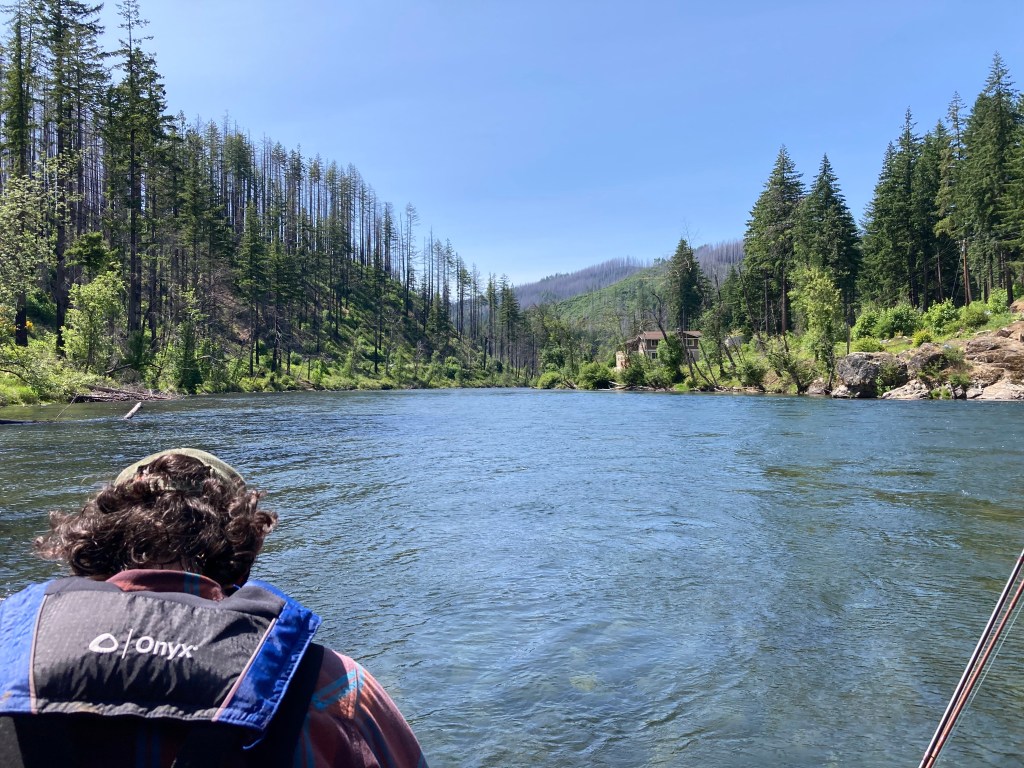
It’s worth noting that several miles of the McKenzie River corridor burned in the wildfires a few years ago. The first part of our float was ghostly—dead trees, log jams, no shade, and not much bug life. But further downriver, where the canopy still lives, the fish are still there, and the river still sings. While the river is making it’s recovery, it still has a long way to go.
Final count: 12 cans of beer, sunburned flesh, a few busted knuckles, minimal flies lost, three big smiles. No idea how many fish we caught since I never keep count (that philosophy deserves its own article). I can’t wait to float this river again and make the McKenzie my second home. And if you’re headed to the McKenzie – bring some dries and mind the rocks.
-T

Leave a comment