Blog

  • How to Read Steelhead Holding Water: A Simple Guide for Swinging Success

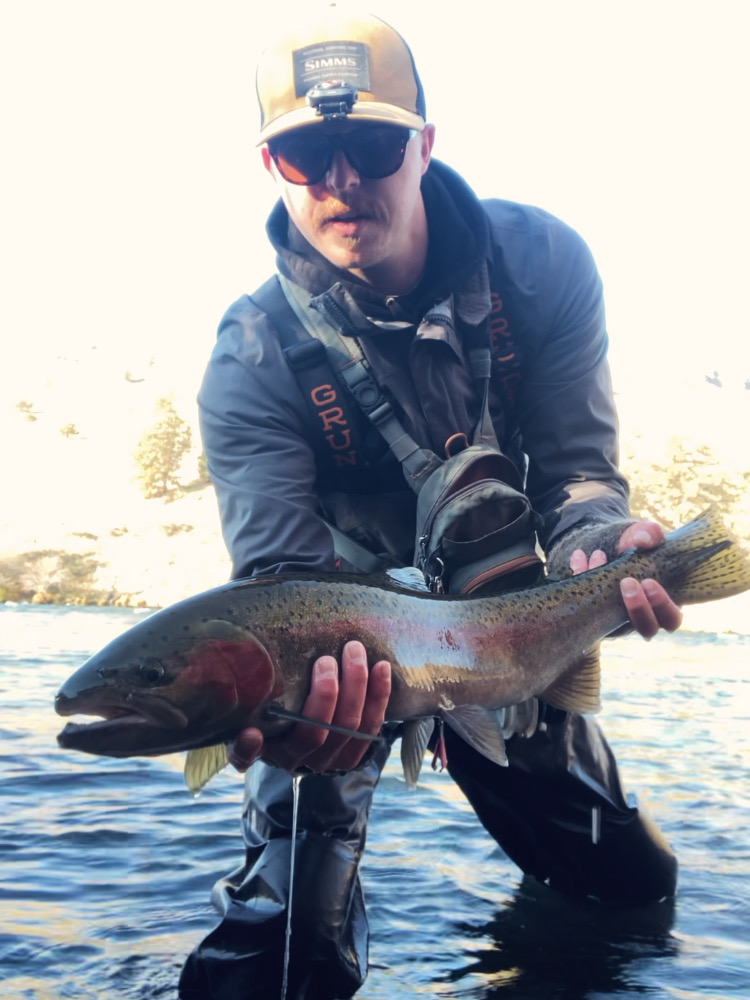
    This wild hen was hiding in a depression on a mixed-substrate run. The washboard effect on the water’s surface gave away the structure.

    It’s easy for a steelhead angler to get caught up in the buzz: Which fly do I use? Is pink hotter than purple today? Do I need to slow down the lift before sweeping into my cast? Maybe it’s just the barometric pressure. We’re all tangled between fly selection and dialing in the perfect cast — but there’s more to it.

    The greatest steelhead anglers recognize that the ability to read water is what sets them apart from 95% of fly fishers. The simplest explanation for why the rest of us don’t catch fish is pretty straightforward: we aren’t casting where the fish are. And while steelhead are technically trout, their behavior is anything but trouty. If we want to shake hands with one, we need to get inside their heads and think a little differently.


    Steelhead Are Built Different

    Though they spend their first couple of years living like resident trout, those trouty habits fade quickly. After growing up in their home streams, steelhead make the long journey to the ocean, where they fatten up while dodging constant pressure from big, bad predators. Only a small percentage—around 5–10% of smolts—survive long enough to return. Those that do are battle-hardened and much smarter than your average trout.

    Once they migrate back to freshwater, their behavior changes dramatically. For one, they have very few threats as the biggest fish in the river, aside from a prowling grizzly or a lowlife poacher. Running chinook salmon will put steelhead off the bite but still, they’re cautious. Beyond the occasional exuberant surface breach, they move like ghosts — conditioned to self-preserve after thousands of years of evolution.

    Steelhead also aren’t in the river to eat. Their sole mission is to get upstream as quickly as possible, spawn, and return to the salt. They enter freshwater as heavyweights and slowly slim down the longer they’re in the system. Because they’re not feeding, they stick to dedicated travel lanes — underwater highways — and stop only when they need to rest in holding water. They must conserve energy to complete the journey to their spawning tributaries.

    Travel lanes and holding spots become obvious the more time you spend staring at the river. I like to ask myself: What route would I take if I were swimming upstream? Suddenly, pockets of slack water, even current, and tighter bank seams start to reveal themselves. It pays to focus your casts on pockets that sit along or adjacent to these travel lanes.


    This wild buck was hiding on a shelf just before a long gravel bar and 40 feet below a rapid. The rapid plunges into a bucket with plenty of structure. I’ve found fish nosed into the rapid before.

    So, Where Are They Hiding?

    It’s a cop-out answer, but…it depends.

    The type of water we want is soft, but still moving at about a walking pace. It should be even, not churning. And while the surface gives clues about current speed, what’s happening beneath can be slightly different. Since steelhead generally prefer 4–6 feet of holding depth, you can assume underwater structure — boulders, shelves, drop-offs — is slowing the current below. That alone narrows the search considerably.

    Mornings and evenings often offer the best chance at a handshake. Since steelhead tend to travel under cover of darkness, we target them most effectively when they’re still active at the end of a night of moving. Tailouts and the heads of rapids are consistent producers.

    Tailouts are ideal because the river shelves upward before dumping into a rapid. It’s the first slow water a steelhead encounters after charging through whitewater, and it’s easy for an angler to identify. Fish may rest there for hours before continuing upriver. Tailouts are also a pleasure to fish — perfect for dries, muddlers, and skaters. Look for slow water in the tailout that creates a gentle, washboard-like texture on the surface. That’s a dead giveaway for holding structure.

    Rapid heads are trickier. Fish might be nosed right into the pocket at the lip of the rapid, and the only way to reach them is to sink your fly quickly and keep it in the zone long enough for them to notice. A better bet, in my opinion, is to target the first major piece of structure below the rapid — the spot where current begins to even out. I’ll fish the rapid head carefully with a bigger fly, then work diligently in front of and behind the big boulder or shelf 30 feet below. You’ll see it by watching for subtle surface disturbances: a slight bulge, a slowdown, or a subtle v-wake.

    Many anglers picture long, classic runs when talking about steelhead water. Those do hold fish, but they’re a bit more complicated. Long runs are rest stops — like pulling into a gas station on a road trip. Choose runs with structure: shelves, drop-offs, color changes, boulders, or depth variation. Because long runs don’t have much happening on the surface to camouflage fish, steelhead rely more on structure itself to feel safe. Luckily, the long runs are a great way to get into a casting rhythm and enjoy the process, but with a couple key pointers: Slim down your offering, step carefully, and minimize mends. I also stay tight to the bank; alders shading water as shallow as knee-deep offer enough security for a resting fish.


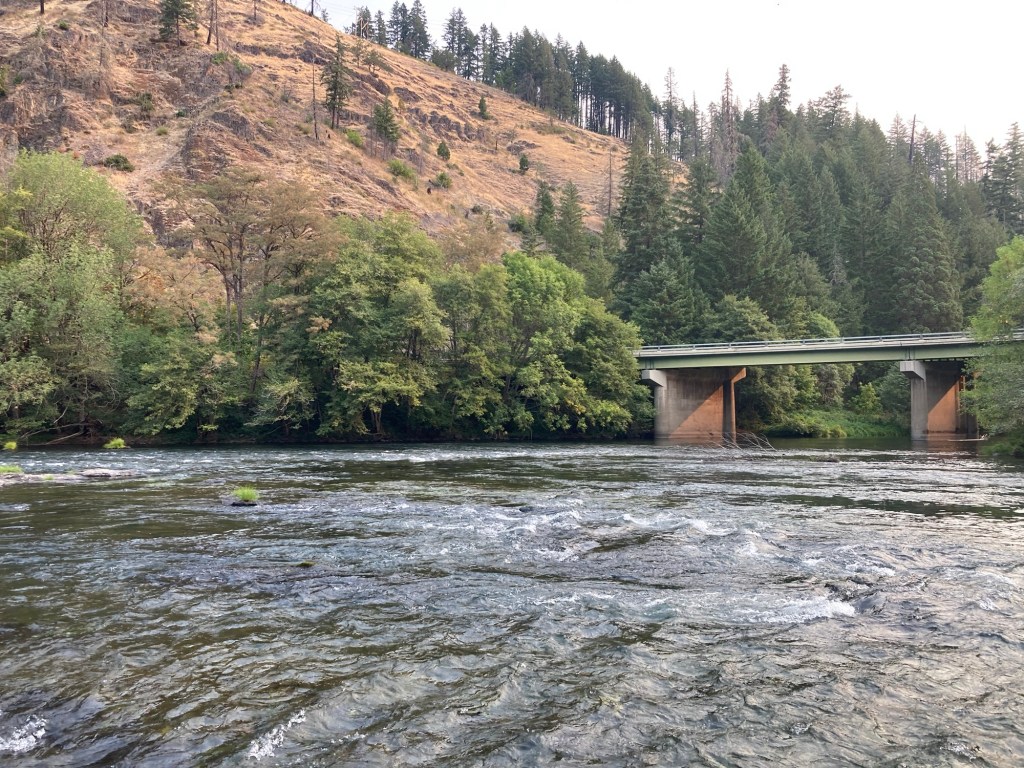
    This is classic holding water on the North Umpqua. Fish can be found in soft pockets along spines of bedrock in chutes of quick-flowing water. The North Umpqua is notorious for small buckets that may hold a single fish.

    A Couple of Rules to Live By

    Here are a few key points I keep in mind when I’m swinging flies for steelhead:

    • Steelhead tend to hold in the same spots. If you get a grab behind a boulder today, odds are you’ll find action around that same boulder tomorrow. Keep a log of encounters and revisit those spots at the same time year after year. Note the date, place, conditions, time of day, and fly. Steelhead are creatures of habit.
    • Steelhead are smart but lazy. These fish are big because they were the smartest in their brood. But none of them want to sit in churning, fast, difficult water. Think about where you would rest if you were a lazy fish.
    • There is no such thing as a desperate steelhead. If the fish wanted your fly, it would have eaten it. Don’t overwork the same water or get frustrated when you don’t find a willing participant. Steelhead are challenging because they’re patient — use that as a chance to work on your own patience. Just be sure to fish each run and bucket with integrity.

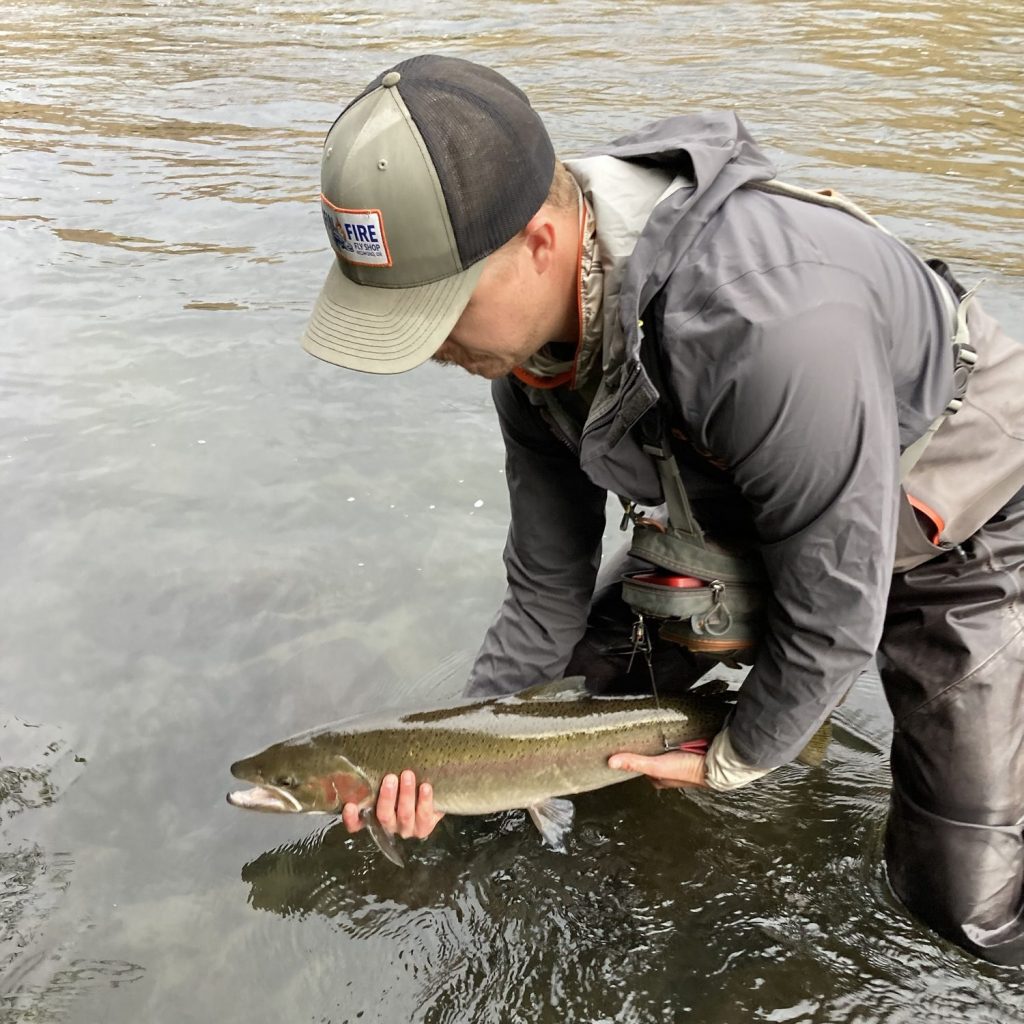
    This wild buck took my fly on a long, calm run with tall alders shading the bank. The water is about two to four feet deep for about 50 yards with plenty of medium-sized boulders.

    This Is Not a Comprehensive Guide

    It takes a lifetime on the water to truly understand steelhead holding water, and I’m lightyears away from becoming a master myself. Reading water is so nuanced that one blog post could never cover the entire topic. I may break down different types of holding water in a future series, but for now, here are a few of my favorite in-depth resources:

    • Steelhead Fly Fishing — by Trey Combs
    • A Steelheader’s Way — by Lani Waller
    • The Complete Steelheader — by John Larison

    These books have shaved years off my learning curve. But as powerful as they are, there’s no substitute for time on the water.

    Catch me there, my friends.

    —T

  • Inside America’s Oldest Boat Shop: How Lowell’s Shaped Drift Boat History

    Lowell’s Boat Shop sits on the banks of the Merrimac River in Amesbury, MA.

    Ever since I picked up my copy of Roger Fletcher’s Drift Boats & River Dories, I’ve been wanting to make the journey out to Lowell’s Boat Shop in Amesbury, MA. While Fletcher doesn’t specifically discuss the shop itself, it quickly became obvious that the origins of the classic McKenzie River drift boat can be traced back to America’s oldest continuously operating boat shop.

    I became interested in Oregon’s drift boating history when I saw my first wooden drift boat float past me on the Deschutes River. Its flat bottom, high sides, and sexy sheer lines immediately caught my eye and sent me down the rabbit hole, exploring how this design came about out of necessity—pioneers sending boats through the McKenzie River’s rapids many years ago. Since then, I’ve read thousands of words on the history of these iconic vessels in hopes that one day, in my own shop, I can recreate and refine the designs that once conquered Oregon’s remote waterways.


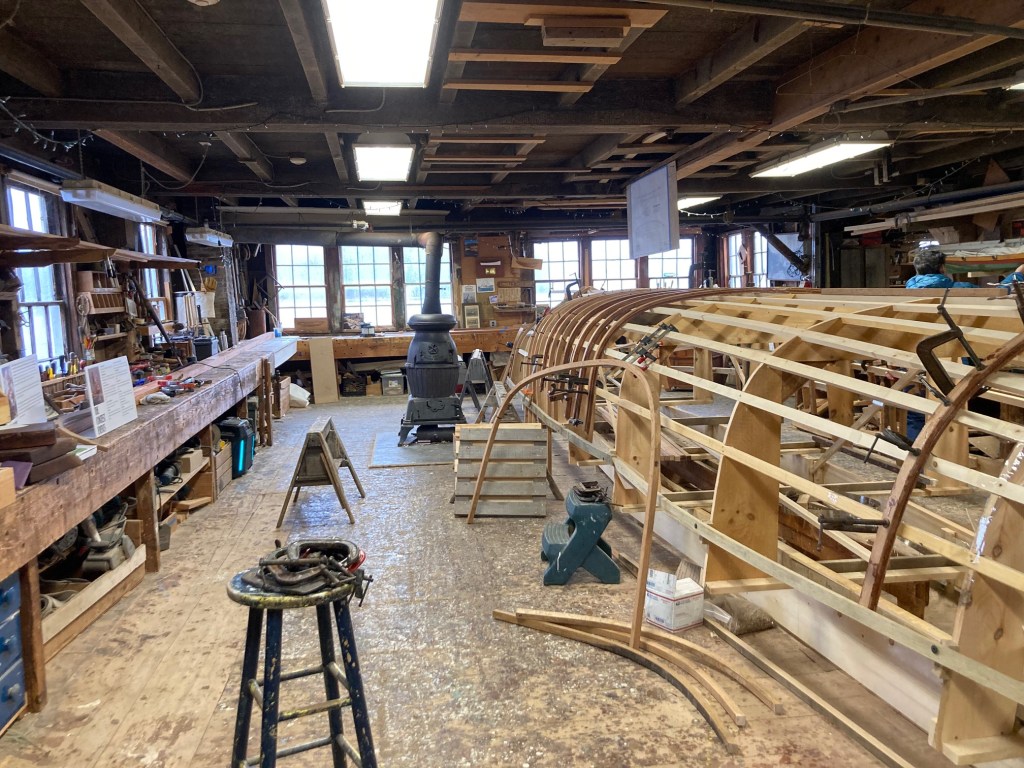
    The main workshop upstairs is heated by a pair of old pot belly stoves.

    Lowell’s Boat Shop

    Lowell’s Boat Shop is the birthplace of the Banks-style dory. While it isn’t the boat we see punching through rapids on the McKenzie or the Deschutes today, it’s easy to spot the shared DNA with modern drift boat designs. The flat bottom, straight sides, and rugged build were all essential for riding atop waves and slipping between rocks on Oregon rivers. The original design actually derived from Simeon and Hiram Lowell’s surf dory—famous for its ability to ride over breaking waves at the mouth of the mighty Merrimac River as it empties into the Atlantic Ocean.

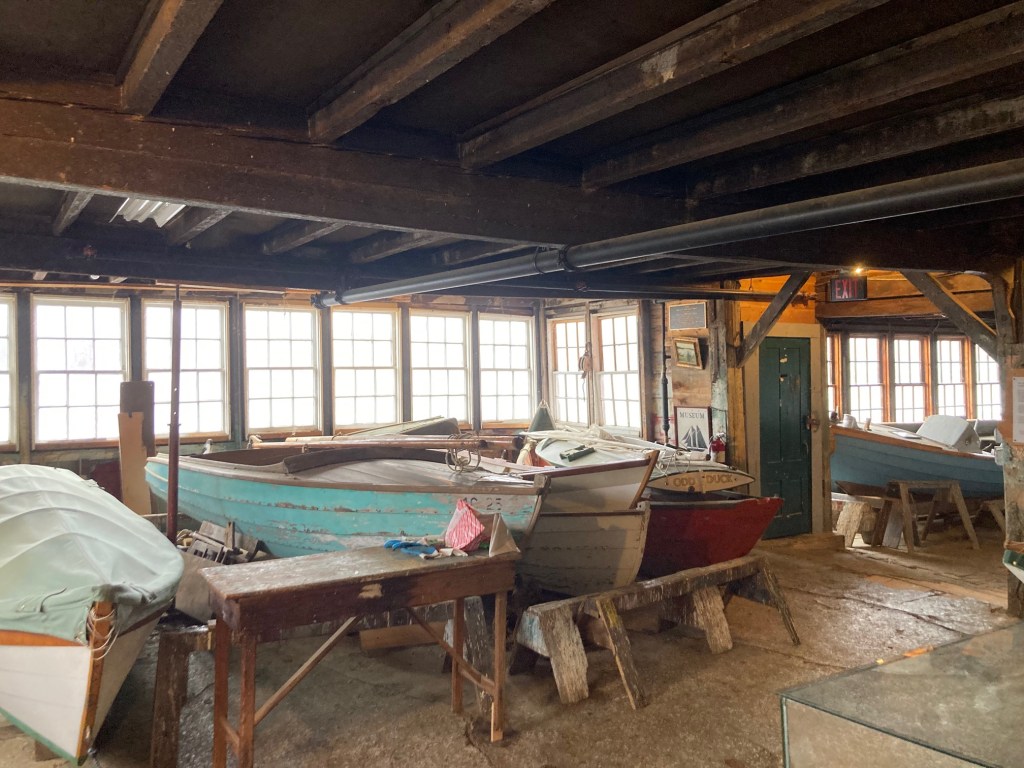
    A collection of old wooden dories. Each is well over a hundred years old.

    The Banks dory, which developed from that original surf dory, later incorporated straight sides and a stackable form, making it an ideal mass-produced working boat. Many of these qualities eventually became essential demands of river guides out West.

    The boat shop itself was founded in 1793 by Simeon Lowell on the banks of the Merrimac River in Amesbury, MA. As the nation’s oldest continuously operating boat shop, it pioneered a production process that made its surf dories a staple of New England’s commercial fishing fleet. In 1911, Lowell’s produced over 2,000 wooden boats—each built by hand—inside the historic timber-framed building. Despite their reputation for quality, the boats typically lasted only a handful of years against New England’s harsh coastline, making them “disposable” in the sense that they were constantly replaced.

    Today, Lowell’s still produces wooden boats but primarily functions as a museum and classroom space, preserving the craft and culture of traditional wooden boatbuilding.


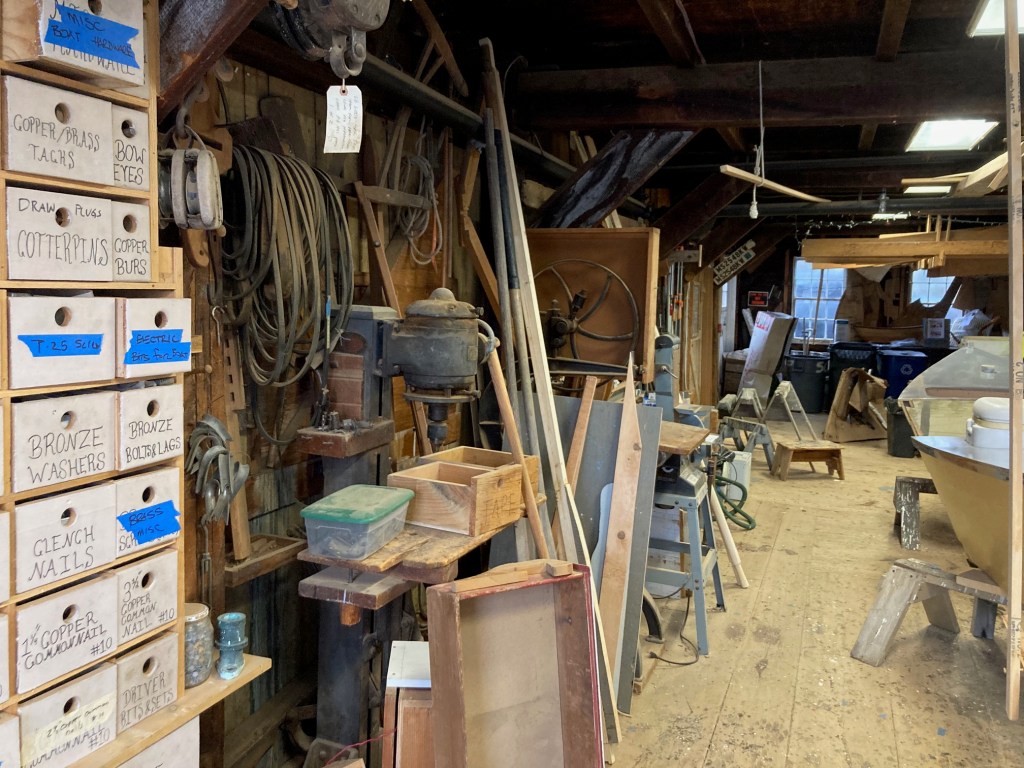
    Lowell’s is an antique tool collector’s delight. Note the cast iron bandsaw and old wooden snatch blocks.

    The Building Itself

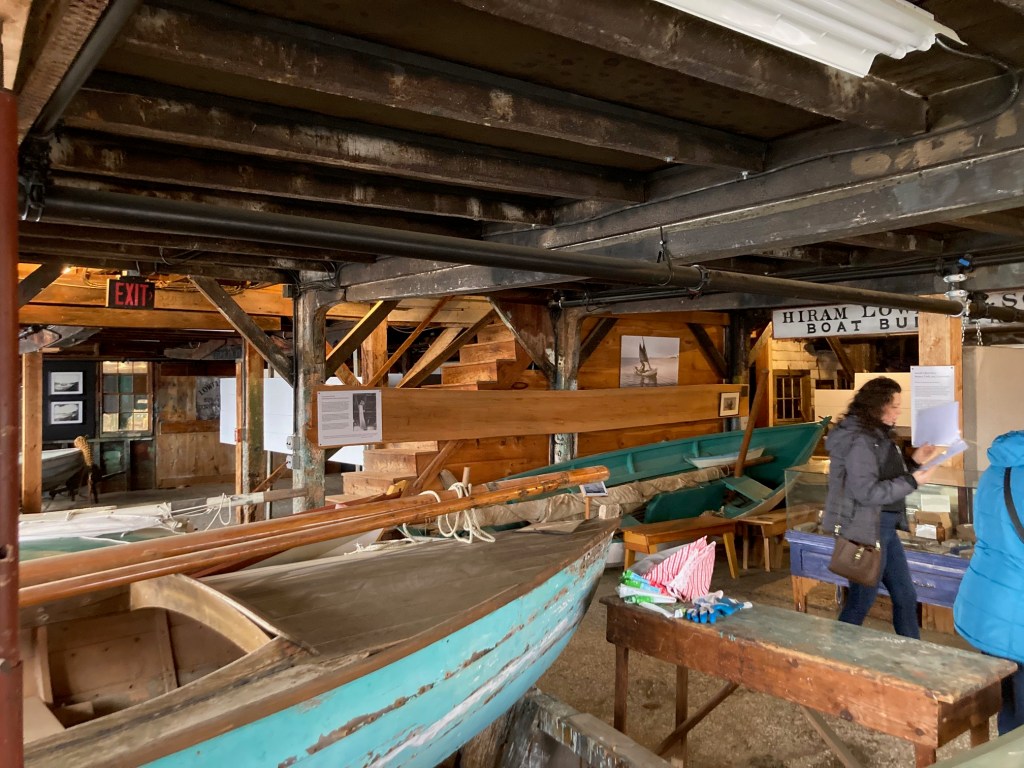
    During my visit, I was most struck by the building. The original 232-year-old structure still stands, weathered by salty air and held together by boat knees and braces. Giant timbers support a structure that seems determined to be reclaimed by the river below. The floors buckle and twist from two centuries of settling. Crossbeams bear carved annual production figures—most notably the 1911 record boasting 2,011 boats built in a single year.

    The floors are coated with what’s lovingly called “Lowell’s Linoleum”: a thick layer of marine paint drips and spills, in some places up to six inches thick. Walking across the uneven floorboards, you trip over inch-or-two variances where paint has broken away to reveal the aged timber beneath.

    Massive beams hold up the 232 year old building. Note the old boat knees repurposed as braces in some areas.

    The multi-level shop is a treasure trove of antique tools that would make any collector drool. Hammers, wooden clamps, hand-crank drills, wooden snatch blocks, cast-iron bandsaws, and rows of handplanes fill every surface. A wall of bins stocked with copper and silicon-bronze fasteners sits beside a window overlooking the Merrimac. The lower level is littered with old boats—paint peeling, wood weathered—each well over a century old. An inconspicuous latrine along the southern wall hangs over the river, its seat opening directly to the cold waters below.


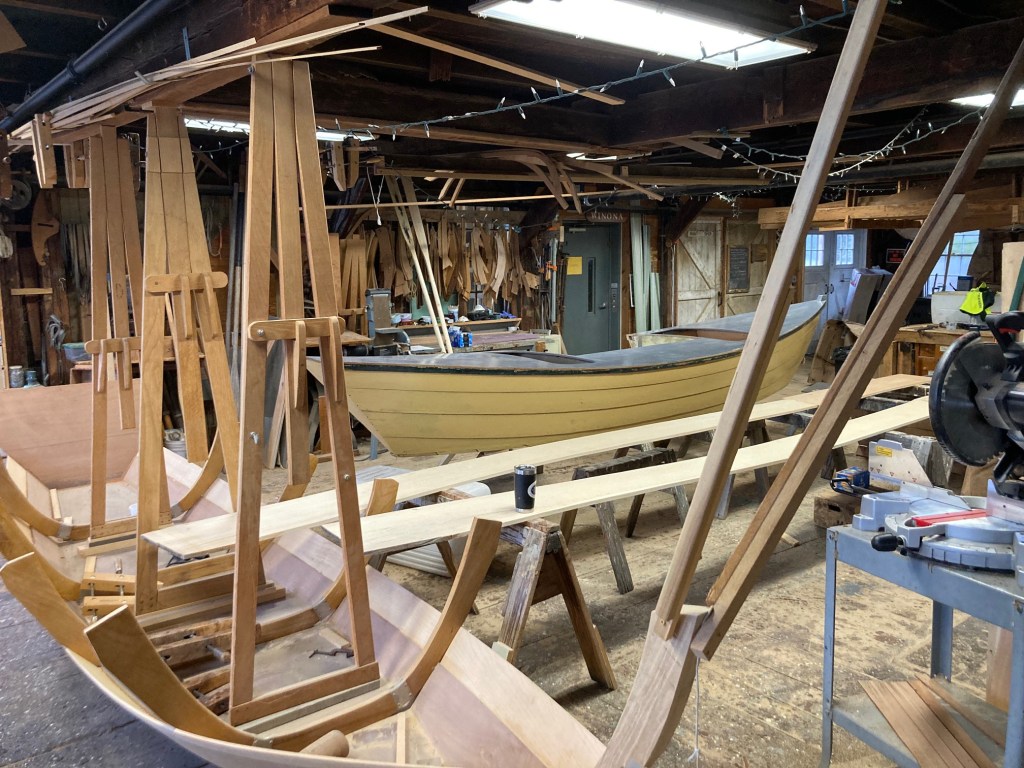
    Lowell’s builds all of their boats upright. Easel-like forms attach to the overheads beams and apply downward pressure to preserve accurate curvature of the flat bottoms. the lapstrake planks on the classic wooden surf dories are riveted in place by hand.

    An Experience to Remember

    Maybe one day I’ll nerd out and write a comprehensive history of wooden drift boats in the Pacific Northwest, but Lowell’s Boat Shop felt like the right place to start. It’s a moving experience to stand in the place where drift boat design was conceived and to see 232 years of progression in the wooden relics scattered around the property.

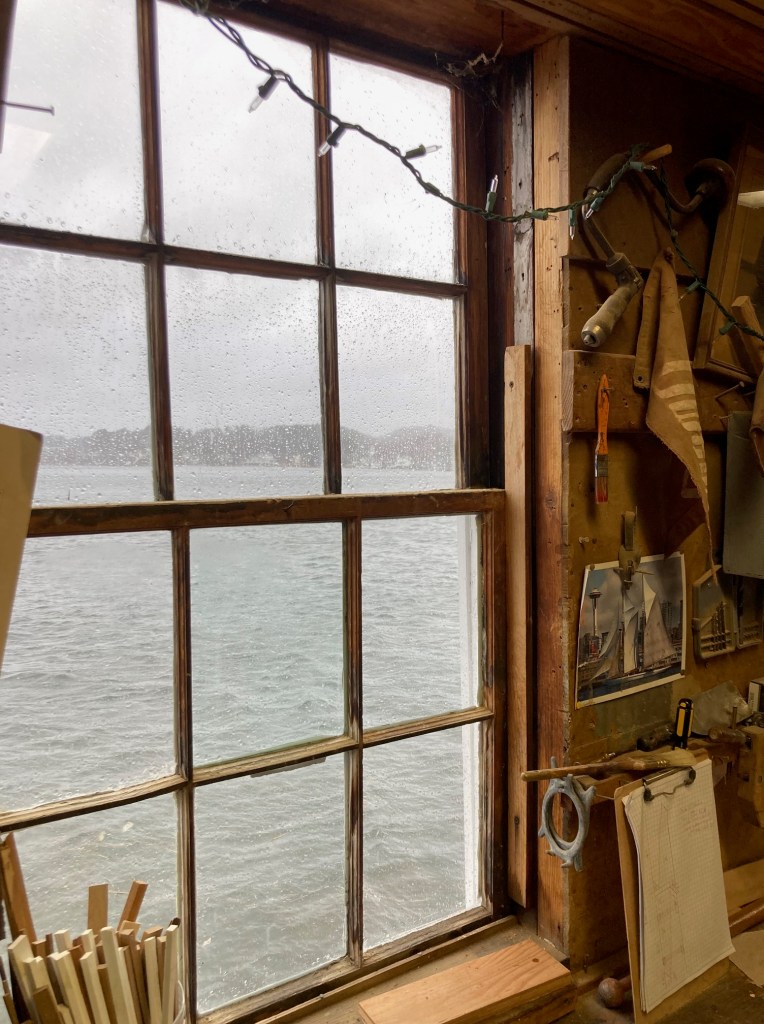
    A spot to reflect. The view from a workbench through ancient wooden sash and trim.

    The shop is a reminder that traditional boatbuilding is accessible to anyone with a few hand tools and some know-how. You don’t need fancy machinery to build the wooden boat of your dreams. Just look at the hand saws, drills, and century-old planes and chisels lining the walls of Simeon and Hiram Lowell’s legacy shop.

    Signing off.
    –T

  • Tried-and-True Mayfly Imitations to Fill Your Fly Boxes

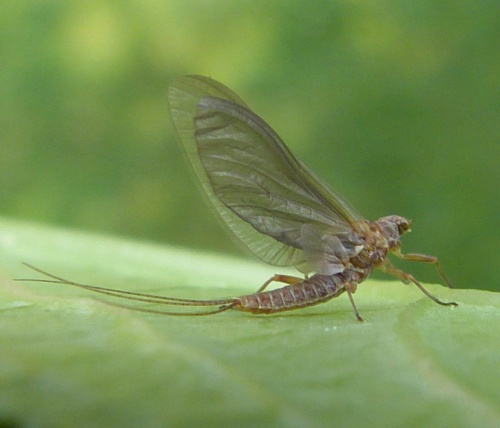
    Blue Winged Olive photo I found on NatureSpot.

    I’ve been doing some reading on more traditional flies, and I’m excited to fill my fly boxes with them this winter. When the weather keeps you off the water, there’s nothing quite like sitting at the vise with your favorite warm beverage in hand. This is a short list of classic mayfly patterns that act as solid general practitioners and cover most hatches you’ll encounter throughout the year.

    Mayflies

    Mayflies—Baetis included—are an incredibly diverse group of insects. I love mayflies because of this diversity and the fact that they’re present year-round in several different forms. From nymphs to dries, there’s no shortage of patterns you can dream up to imitate a mayfly on your local waters.

    Mayflies are fairly easy to identify on the water. They’re the ones with three tails and stunning, sail-like upright wings. In flight, they tend to look like they’re dancing or gently fluttering, unlike the more chaotic flight of most caddis species. Don’t get too hung up on identifying mayflies as Cinygmula, Hexagenia, Callibaetis, etc. Instead, look in your box and pick the best color and size match. A good rule of thumb is to go one size smaller than you think you need.

    Tying Up Some Bugs

    For all intents and purposes, we can group mayflies into three major categories: small, medium, and large. Small mayflies include BWOs (blue-winged olives) in sizes 18–24. Medium mayflies include sulphurs and flavs, among others, in sizes 14–18. Large mayflies include drakes and hexes in size 12 and larger.

    Most of the following patterns act as solid general practitioners for any of these categories—just adjust your sizing. I’m going to focus on dries and emergers specifically.

    Olive Dun Quill

    • Hook: Size 16 or smaller dry fly hook
    • Thread: Light olive
    • Tail: Small bunch of blue dun spade hackle fibers
    • Body: Olive-dyed quills
    • Wings: Divided pair of blue dun hen hackle tips
    • Collar: Blue dun hackle
    Palm Emerger.

    BWO Palm Emerger

    • Hook: Size 16 or smaller curved dry fly/nymph hook
    • Thread: Pale olive
    • Tail: Small bunch of wood duck flank fibers
    • Body: Olive-dyed goose or turkey biot
    • Thorax: Pale olive rabbit fur dubbing
    • Hackle: A couple turns of blue dun hen hackle

    Royal Wulff

    • Hook: Size 12 or smaller dry fly hook
    • Thread: Black
    • Tail: Small bunch of black moose body hair
    • Body: Fine peacock herl with a red floss joint
    • Wings: Divided; snowshoe hare foot, calf, or goat
    • Collar: Dark brown or furnace hackle

    Biot Drake Parachute

    (Use brown or tan materials for Brown Drakes)

    • Hook: Size 12
    • Thread: Olive
    • Tail: Bleached moose body hair or blonde elk
    • Body: Olive turkey biot
    • Wings: Webby hen neck, hen back, or blue grouse flank wrapped into a parachute post
    • Thorax: Olive rabbit fur dubbing
    • Hackle: Mixed olive-dyed grizzly and blue dun, tied parachute style
    Most mayflies end their lifecycle as a rust-colored spinner. This one is from The Perfect Fly Store.

    Red Quill Spinner

    • Hook: Size 12 or smaller dry fly hook
    • Thread: Brown or tan
    • Tail: Split white or cream spade hackle fibers
    • Body: Natural reddish-brown quills, or reddish-brown thread in smaller sizes
    • Wings: White or cream hen hackle tips tied spent
    • Thorax: Rusty brown rabbit fur dubbing

    A Note on Spinners

    Have you ever noticed that most spinner patterns in fly shops are tied beautifully, with wings perfectly perpendicular to the body? Me too—and I don’t like it.

    I recently read a book that confirmed my suspicion that spinner dries are often tied too perfectly, and I plan to adjust my tying accordingly. Spinners should look like dead bugs. That means mangled, broken, and dragged through the current. It’s worth experimenting with spinners tied with a missing or broken wing, wings set at odd angles, or even flies tied on hooks with slightly bent shanks. Try it out and see how you like it.

    Wrapping Up

    There’s no way I could write a post covering every fly for every mayfly species you’ll encounter on your local water—especially once you factor in nymphs. What I do know is that trout are less picky than we think, and it pays to get good at tying a few core patterns in a range of sizes and colors.

    Winter is the perfect time to practice tying mayflies, and it’s gratifying to know you can fish those patterns nearly year-round—at least when it comes to BWOs.

    Signing off. See you in 2026!

    —T

  • Great Fly Fishing Gifts Under $20 (Perfect for Last-Minute Shoppers)

    Wild steelhead are the greatest gift of all.

    For the budget-conscious shopper with a fly fisher in their life: it’s tough finding affordable gifts in the era of $1,000 fly rods and $200 nippers. That said, I think we can still do a damn good job with this one.

    This list is perfect for the last-minute gifter looking for stocking stuffers, cheap holiday wares, or small surprises that show your fly fisher you approve of their obsession. Without further ado, let’s get into it.

    30 Rainier Beers – I’m bringing back the deal of the century. Found at any participating PNW Costco for around $20. You can’t beat it—but you can drink them all in one sitting with the right friends (responsibly).

    Loon Classic Nippers – You can never have too many nippers. In fact, I lost a pair just a couple of weeks ago. Beat the curse and gift them a fresh set.

    Loon Rogue Forceps – These are my favorite forceps, and they haven’t done me wrong yet. They clip onto your pack and just won’t quit.

    Fishpond Swiftcurrent Thermometer – Every angler needs a thermometer in their kit. Use it to predict hatches, check water temps to gauge steelhead activity, or make sure conditions are safe for the fish.

    A Good Read from ThriftBooks – ThriftBooks offers used books at an amazing price point. Here are a few of my all-time favorites:

    Oros Strike Indicators – These are my favorite bobbers on the market because they install and uninstall easily while staying in line with the leader. Fewer tangles and excellent visibility make them an Amazon favorite. I like grabbing both fluorescent and white versions to build a hybrid indicator—half white, half fluorescent.

    Merch from Their Local Fly Shop – Support the local shop. Hats, tees, fly boxes—whatever. These always make great gifts and help keep small businesses alive.

    There Ya Have It

    By no means a comprehensive list, but I think we got pretty damn close. These are some of the best gifts you can grab quickly and easily, and they’re guaranteed to impress. Expect a similar list next year with gifts under $50 to account for inflation and tariffs.

    Until then—happy holidays.

    —T

  • In Search of Winter Water

    Seasons Greetings from the SLC Airport!

    I’m writing this post from a lounger in the Salt Lake City Airport, flanked by a magnificent 40-foot-tall Christmas tree and a small, hidden menorah. Hanukkah could use a bit more love, don’t you think?

    I was on the fence about bringing a fly rod with me on this trip to Boston. Kate and I try to go annually, almost exclusively during the winter. I’ve tried suggesting that we go when it isn’t frigid outside, but holidays with her family are worth more than decent weather. Each time I pack for this trip, I debate bringing a fly rod—knowing full well that I will likely not have a spare moment to fish. Even if I did, where would I?

    New England has a tendency to ice up during the winter, and not in a fun way. All of the ice-fishing opportunities are further west, and the open water along the coast is too cold to target any species in a meaningful way. The only exception is a warmer confluence on the Charles River that might hold some striped bass, but odds like that aren’t worth checking a bunch of fishing gear through airport security.

    I’m Very Grateful to Live in Central Oregon

    The holiday season always fills me with a sense of gratitude. I’m grateful that my family lives close by, I’m grateful for Kate making sure I stay well-stocked with common sense, and I’m especially grateful for the winter fishing opportunities that abound in Central Oregon.

    It’s all fair game around here depending on water levels and clarity. The Metolius is always the best bet for consistent winter action—at least, it’s consistent if your presentation is on point. Since it’s a spring-fed stream, the water stays a steady 40–45 degrees no matter the conditions. Fish remain relatively active despite the cold and are especially receptive to euro-nymphing tactics. Catch a winter midge or BWO hatch on the Metolius for a refreshingly good time.

    The Fall River, close to Sunriver, is another solid winter option. This spring creek flows much slower and shallower than the Met, so I recommend dry-droppers or slowly stripped streamers like the Thin Mint. Winter midge and BWO hatches also present fleeting opportunities to break up the monotony of winter nymphing.

    The Deschutes and Crooked Rivers are a bit more finicky, being tailwaters. You’d think the dams would keep them stable, but that couldn’t be further from the truth. Dam operators will open the gates during heavy rainstorms or heat spells. The heat causes snowmelt and runoff, and the increased flows quickly muddy the water. Always check flows and dam-operation schedules when fishing your local tailwaters, especially heading into spring.

    Anyhow…

    It can be tough to travel without fishing gear knowing there will be water nearby. I personally supplement the craving with a good read. Anything by John Gierach tends to scratch the itch. On this particular Delta flight, I’m taunting the rest of the economy cabin with my copy of Good Flies: Favorite Trout Patterns and How They Got That Way. John’s writing is as engaging as ever, and books like this help reset my fly-tying habits into something that (hopefully) ends up being more productive.

    I want to find a way to travel with my fly-tying kit as well—my vise, a couple essential tools, and enough materials to tie three to five key patterns. If any of you have found a way to pack fly-tying gear efficiently, please tell me. If you’ve figured out how to tie from your airline seat without pissing off your neighbor, please email me a full set of descriptive instructions. I’ll write a separate post one day about my experiences flying with tying gear—whenever I get around to trying it.

    Wrapping Up This Yarn

    Time to bring this word-vomiting session to a close. The point is that fishing is always on the mind of the passionate angler. As I’ve written before, the angler’s affliction is measured off the water just as much as it is on the banks of their favorite stretch. This pastime always has a deeper layer waiting to be uncovered. All you need to do is put in an extra two cents of effort to find it.

    Stay warm.
    —T

  • When You Can’t Fish: How to Stay Connected to the Water

    Fly tying is one of the best ways to stay in touch with your inner angler when there is no water in sight.

    This one has been hitting close to home lately. Any serious angler has gone through dry spells — literally. I’m talking about when life gets so busy that your boots go dry for not just one but maybe two weekends in a row. For a moment, you might even wonder if you’re still a religious fly fisher. You ask yourself, “Am I some kind of poser?”

    Don’t worry — you’re still the same obsessive angler who brings up fishing in every conversation, whether it’s an anecdote from a recent day on the river or an analogy inspired by yet another revelation you had while untangling your leader. I’m here to help you stay connected to your primal self, even when life is determined to pull you in every direction.


    Number One: Tie Some Flies

    We’ll start with a gimme. The easiest way to feel connected to the water is to fill your fly box. Whether you’re tying bugs for the next big trip, rounding out your caddis emergers and cripples, or cranking out your favorite jig streamer — it’s all fair game.

    If you aren’t a tyer, sort through your boxes and organize your bugs into categories that actually make sense. Heavy nymphs in one box, big attractor dries in another, all the perdigons in one place — you get the picture. Maybe go a step further and deal with the graveyard of broken hooks and stripped flies hiding in the bottom of your bag.

    Which brings me to the next one…


    Number Two: Maintain Your Gear

    This one deserves its own article, especially since most anglers don’t take nearly good enough care of their gear. Well-maintained gear is more pleasant to use — and safer on the water.

    Some simple maintenance tasks worth tackling:

    • Clean and organize your pack.
    • Clean your waders. Follow the manufacturer’s instructions and take the opportunity to patch pinhole leaks with Aquaseal.
    • Clean your fly line. This one is criminally overlooked. A great tip I picked up from Steven at The Patient Angler: take a microfiber rag, spray it with a little 303 Protectant (yes, the same stuff you use on rafts), and run your fly line through it.
    • Clean your rods and reels. Warm water and mild dish soap are all you need. Afterward, hit the moving parts on your reel with a little WD-40 to keep things dry and lubricated.

    Number Three: Plan a Trip

    This one’s a personal favorite — and you can include your spouse in the fun. Make a short list of destinations, from easy weekend escapes to full-blown, off-grid expeditions. Even if you don’t book anything, the simple act of planning keeps your imagination fired up.

    Here are a few of my current dream trips:

    • A weekend at the historic Steamboat Inn on the North Umpqua. Quality time with my fiancée and my spey rod. Does it get any better?
    • Beers and striper fishing with my buddy Mike in New England. We’ve been talking about it for years — this needs to happen.
    • A rafting and fishing trip down the Rogue River. Classed rapids, primitive camping, and world-class steelheading? Sign me up.
    • Literally any trip to eastern Canada. Paddling for brook trout, flying into a remote Atlantic salmon lodge — it’s all fair game.
    • The absolute dream: a two-week expedition through the mountains and plains of Mongolia. Unique trout, the world’s largest salmonid (the legendary taimen), nomadic yurt camps, and parts unknown — tell me that doesn’t stir your soul.

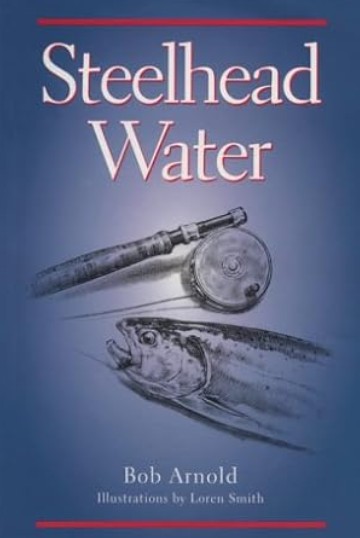
    Steelhead Water by Bob Arnold is a great read. Definitely stokes the steelhead fire in any old soul.

    Number Four: Read a Book

    There are tons of fishing-adjacent books out there — from water-soaked short stories to deeply practical how-to’s. You can’t get bored. There’s something special about sitting on the porch with a decent cup of coffee and a copy of Big Two-Hearted River or Bob Arnold’s Steelhead Water. I’ll write a separate article soon about my small but growing collection of fly-fishing literature.


    Moral of the Story

    Our obsession continues off the water because fly fishing is part of who we are. There are plenty of ways to stay connected when the weather turns cold, when you need to rest after a long week, when you’re sick, or when you just want a quiet day at home with your family.

    Simple as that: don’t let time on dry land get you down.

  • Winter Steelheading in Oregon: A Half-Assed Guide

    My buddy Lucas nymphs for winter fish on the Rogue. He uses a superrad 6wt euro rod specially made for nymphing up steelhead when a swung fly doesn’t get the job done.

    Winter fly fishing for steelhead is tough, to be honest. It’s cold, rainy, gray, and unforgiving. River levels are at the mercy of the weather and can turn unfishable in an instant. I spend my winters glued to the weather app—at least when I’m not glued to the fly-tying vise. I’ll be honest, most of my winters are spent fishing the Metolius and restocking my flies for next year, but sometimes the itch is just too much. Here is a rough guide on how to approach winter steelheading when the urge becomes too great.

    Rivers We Fish in Oregon

    In the winter, most steelheaders turn toward the coast. Everything east of the Cascades—including the Deschutes—is devoid of fresh steelhead since these rivers only get summer-run fish. We load up our trucks and head west toward the Umpqua, Alsea, Siuslaw, Siletz, and any of the north coast rivers near Tillamook Bay.

    Personally, I end up at the North Umpqua since it has about 30 miles of protected water reserved for fly fishing only. Many of the coast rivers become crowded with gear anglers excited by the possibility of bleeding out a 15-pound chrome-bright fish. Can you blame them? I tend to get nervous about my swung flies being remotely effective when competing against the Blue Fox spinners, plugs, fluorescent beads, and egg sacks saturating the local waterways. Maybe fly anglers are just jealous, and that’s why we look down on the gear guys.

    A goal of mine this year is to explore southwestern Oregon steelhead rivers a bit more seriously. My thought is that the distance from major population centers—especially Portland—will lend itself to more solitude, and hopefully more fish. I’m talking about rivers besides the legendary Rogue and Umpqua. Places like the Coos Basin, Coquille Basin, Smith River, and even as far south as the Chetco.

    When the river is blown, go do something fun with your special someone!

    River Conditions Trump Fly Choice

    Many will skim past this section to check out fly choices, but river conditions are paramount in winter steelheading. Fish get very lethargic once water temps hit the mid-40s and are unlikely to take your fly unless it’s put within a foot of their face. Literally. It’s times like these that steelhead slide into deeper, slower water that’s less conducive to swinging a fly. Combine that with an angler’s lack of control over a swinging fly (myself included) and your chances at glory are slim. Your best bet is to take advantage of brief spikes in water temperature that get the steelhead moving again.

    Rains and snowmelt have a major effect on river conditions. DO NOT TAKE THIS LIGHTLY. A big rainfall in the mountains can trigger sudden spikes in water level that become straight-up hazardous. The same can be said for sudden winter “heat waves” that melt enough snow to cause a small flood. Be mindful of both of these weather events and track your river flows religiously.

    Rain and snowmelt also affect water clarity, but I’m not so worried about that. Yes, arriving at the river to see muddy chocolate milk is unfishable, but a slight color-up is not the end of the world. Stained water just means you need to increase the size/profile of your fly and slow down your pace. Fish a bit deeper and take half-steps through the run to make sure any willing fish have a chance to see your fly. The “two big steps” rule of summer steelheading will do you no favors during the winter.

    The Misconception About Sink Tips

    Sink tips are indispensable during the winter, but you shouldn’t fish T-14 on every cast. Sink tip choice depends on water speed, water temperature, water visibility, and fly weight. It’s a lot to consider, but I’ll try to break it down.

    Most of the fishing you’ll do in 4–6 feet of water can be done on a type 3 as long as the water speed is fairly slow. Combined with a moderately weighted fly, you will get into the strike zone just fine. Remember, you only need to get within a foot or two of fish faces.

    T-8 is my go-to for most winter situations since I can adjust my depth easily using fly weight. T-8 gets me by at most water speeds and at most depths I enjoy fishing. Deeper holes warrant a slightly heavier bug, and shelves sloping up in a tailout sometimes call for an unweighted fly.

    I usually reserve T-11 and up for deep buckets with fast current barreling over the top—think the head of a rapid with a steep drop-off holding fish over six feet down. The sink tip is mostly there to cut through that top layer of raging water and give your weighted fly a chance to hit the strike zone. With the exception of a couple buckets on the North Umpqua, I tend to avoid this type of water.

    The Graboid Leech is a sweet fly. This one was tied by the creator himself — Jonathan Farmer. Check out his site Midnight Sun Custom Flies.

    The 3 Best Flies for Winter Steelheading

    Intruder — A classic winter producer. Tie it with as much variety as your imagination can come up with. I actually did an entire post dedicated to this swinging staple.
    Graboid Leech — Its beauty lies in its simplicity: a bunny strip, some dubbing, a conehead, and a trailing hook. This fly has a pushy head and some serious profile. Tie it in various sizes and colors depending on water quality.
    Hoh Boh Spey — The one I probably reach for the most. This fly does best in slightly slower runs with clearer water. Since it’s the smallest of the three, I don’t reach for it as much when steelhead only have a brief shot at seeing the fly (heads of rapids, quicker water, heavily stained water).

    Bringing It All Together

    Winter steelheading in Oregon is as challenging as it is rewarding. We have a variety of rivers to choose from, but some can be more crowded than others. Keep a close eye on the weather app and flow reports—if only for your safety—and match your fly to the conditions. Don’t let the cold weather keep you from fishing. But if it does, take advantage of the downtime to tie some flies with a glass of decent whisky to warm your soul.

    Stay warm, my friends.
    —T

  • 10 Great Gift Ideas for the Fly Fisher in Your Life (2025 Guide)

    If you’re like my fiancée, the holidays might feel a little intimidating. Well, it’s your lucky day! I’m breaking down some of my favorite pieces of gear at varying price points to help guide you in the right direction. Just make sure to buy from your local fly shop and support the folks who keep our communities running. From stocking stuffers to gifts that might make them cry tears of joy, here’s the list:


    This holiday season, fill their stocking with 30 cans of Rainier Beer.

    Stocking Stuffers (Under $20)

    Loon Classic Nippers – Fly fishermen are cursed with losing nippers, so it’s never worth buying expensive ones in my opinion. They also tend to wear out quickly. It’s always smart to have an extra pair on deck. While I’m on the subject: the most foolproof way to secure your nippers to your pack or lanyard is with 30 lb Maxima and a couple of solid knots.

    Loon Rogue Forceps – I love the clamping power and nonslip grip on these pliers. They attach securely to my pack and haven’t failed me yet.

    Fishpond Swiftcurrent Thermometer – Every angler—especially steelheaders—should have a thermometer within arm’s reach. Use it to make sure water temps are under 65 degrees when trout fishing, and as a guide to predict daily bug hatches.

    30 Rainier Beers – Yep, you can absolutely stuff their stocking with 30 Rainier beers, retailing for $20 at any participating Costco in the PNW. They will be consumed.


    These fly tying scissors are essential to my bench kit.

    Gifts Under $100

    Dr. Slick Prism Scissors Gift Set – My mom gifted me this one year and it’s been indispensable at my fly-tying desk. The set comes with three scissors in varying sizes plus a fly box that’s perfect for streamers or larger bugs. The scissors are sharp and they look rad.

    Fishpond Ripple Reel Case – Any serious fly fisher (including myself) has too many reels scattered everywhere. Even in their neoprene cases, they get buried and misplaced. My advice: get them a reel case that holds like six reels. Even if they don’t own six yet, they’ll fill it eventually. It also leaves room for extra spools, sink tips, leader packs—you name it.

    $100 Gift Card to the Local Fly Shop – If you’re still feeling intimidated, just get a gift card—maybe paired with a sweet hat repping the shop. It never fails, and serious anglers are constantly prowling the fly-tying section anyway. It might even help fund their next rod purchase.


    I love my Korkers Darkhorse wading boots. 10/10 would recommend.

    Baller Gifts

    Permission to Buy a Drift Boat (Priceless) – The gift that truly keeps on giving. Just give them the green light.

    Korkers Darkhorse Wading Boots ($230) – I’ve already written a full post praising these boots. I love the BOA system, the support, and the ability to swap soles in seconds. My fiancée gifted me a pair, and they were the wading boots I didn’t know I needed. I’m never going back to laces.

    A Guided Fishing Trip (Prices Vary) – Head to your local fly shop and grab a voucher for a guided trip on your home water. In Central Oregon, I highly recommend the crew at Fin & Fire in Redmond. The guys are cool, knowledgeable, and know the Deschutes better than their own kitchen cabinets. Most trips are priced for two anglers, so they can bring you or a buddy along.


    This Is By No Means an Exhaustive List

    Gifting for the fly fisher in your life doesn’t need to be stressful. There are a few key items—especially at lower price points—that will always be useful and appreciated. I’m actually planning a separate post just for gifts under $20 for the budget-conscious or anyone just looking for solid stocking stuffers. Whatever you get them, they’ll appreciate it.

    Happy Black Friday Weekend!
    – T

  • Steelhead Intruders 101: What They Are and How to Fish Them Effectively

    Jerry French’s Intruder

    If you’ve fly fished for steelhead, you’re already familiar with the Intruder. But the Intruder is more than a fly-box staple—it’s an entire category of stinger-style flies tied on shanks, all sharing a big-profile, high-motion design. Here’s a breakdown of the modern Intruder and why not all versions are created equal.


    The Origins of the Intruder

    The Intruder is generally credited to Ed Ward and Jerry French in the early 1990s. The fly was big, buggy, leggy, and downright obnoxious—yet surprisingly unbulky. Materials with movement, like marabou and ostrich, created that signature flowing profile without adding much weight. The Intruder pioneers wanted something swimmy that wasn’t too difficult to cast.

    The original versions were tied on long streamer hooks, but modern Intruders have evolved. Today most are tied stinger-style on shanks, which allow for short-shank hooks that reduce damage to fish and limit the leverage fish have during the fight. More hookups, less harm.

    Some anglers tie Intruders on tubes instead: the leader runs through the tube and directly to the hook, with a short piece of flexible tubing keeping everything aligned.


    Basic Construction

    Intruders are tied in two sections on a shank or tube. Each section starts with a stiffer base material—like webby schlappen or bucktail—to support the longer, flowier fibers that give the fly life. Flowy fibers typically include marabou or ostrich. Some guys use rubberlegs or other synthetics.

    Between these stations sits the body, usually made of tinsel, chenille, or light dubbing. Ribbing and flash are common additions.

    Variations can include rubber legs, rabbit or squirrel strips, arctic fox, Amherst fibers, and more. There’s a ton of room for creativity.


    How to Make These Flies Effective

    Brett’s Klamath Intruder

    The Intruder is a blank canvas. Its effectiveness comes from the profile, and the ability to customize that profile to match your river conditions.

    My biggest piece of advice: tie these flies smaller than you think, at least for the Deschutes. Save the big dogs for stained water. My most productive Intruders are 3–4 inches long with a smaller rear section and a larger front section. This creates that layered effect and supports the longer front fibers.

    Just as importantly: use fewer materials than you think you need. Sparse is better. Too much marabou leads to bulky, hard-to-cast flies that trap air and ride too high—exactly what you don’t want in winter when every inch of depth matters.

    I like tying high-contrast color schemes, usually black paired with blue, purple, or hot pink. I bury my brights under black ostrich or marabou to tone down the intensity. This lets you easily adjust the black-to-color ratio for different water conditions:

    • Slow, clear water: shorter fly, heavier on the black
    • Stained or fast water: bump up the color
    • Very dirty water: black stays visible quite well, fish a big boi

    A little fluorescent hot spot doesn’t hurt either. I like chartreuse at the butt or a small orange hit near the eye for an egg-sucking leech look. But overly loud flies feel out of place on pressured rivers like the Deschutes and North Umpqua, so I keep it subtle. 


    Some of My Favorite Intruder-Style Flies

    Greg Senyo’s Predator Scandi

    Scandi Intruders – Light, wispy, and killer in gin clear or pressured water. The hairwing is the signature here. Elegant and deadly.

    Mini Intruders – My most-tied version. Perfect for pressured steelhead and excellent for trout spey. These flies teach you discipline—every wrap matters.

    Jerry’s Intruder – French’s original concept: sparse, contrasting, and flashy in the right places. A true classic.


    Wrapping it Up

    Intruders reward creativity, but they fish best when tied sparser than you expect. Visualize your final profile before laying down your first thread wrap. Jerry French’s Classic Intruder is still the gold standard for a reason and makes for a good reference when staying true to the original concept.

    They’re fun to tie, fun to fish, and just plain fun to look at. Hard to beat an Intruder—or any of its countless riffs.

    Fish ’em hard.

    –T

  • The Fly Fisher’s Gear Obsession: Why We Collect and How to Cope

    My St. Croix Imperial is nothing to write home about, by it oozes pure value. Notice how, though it was once shiny, it is not anymore.

    I’m guilty of it myself. The collection of rods, reels, fly lines, and fly-tying materials keeps growing. At the pace I’m going (which is modest compared to others in my circle), I might need to start saving for a bigger house. Imagine it: a home filled with fishing gear—and a closet for my fiancée and me to sleep in. Hopefully, that closet is big enough for the dog, too.


    Why Anglers Collect Gear

    It’s both a practical and a philosophical question. I’ll start with the practical side since that’s the easier one.

    More gear means (hopefully) you’re ready at a moment’s notice for any fishing situation you might encounter. Did you start the day swinging for trout with a spey setup, but suddenly there’s a sweet Cinygmula hatch? You’ve got a dry-fly rig ready to rock. Skunked on the hatch and need a morale boost? Luckily, your trusty Euro rod is within arm’s reach. Having the right gear for any job feels comforting—especially knowing you’ve got the best possible tools for a specific angling task.

    The philosophical side is trickier. The first explanation for a garage overflowing with gear might be that the angler is compensating for a lack of skill—or at least a perceived lack of skill. Whatever the reason, that $1,000 rod could be compensating for something, especially when it’s paired with an overland-ready Tacoma TRD Pro. I just hope fly anglers aren’t getting too caught up comparing themselves to others, whether it’s about ability or gear envy.

    Fishing is deeply personal. We should do it for our own enrichment and enjoyment. Fuck what everyone else thinks—you should fish the way you want, without judgment. Yes, that includes you Euro-philes.

    Personally, I collect gear because it’s shiny—and my spirit animal might be a crow. I don’t know what it is about fly lines specifically that gets my juices flowing, because God knows my rod collection isn’t much to write home about. Almost all my rods were bought secondhand and have been loved to death. The big exception, of course, is my custom RB Meiser Highlander spey rod. That stick is my pride and joy.

    Rant aside, this might be the real reason anglers accumulate so much gear. The evidence is on the shelves of fly shops everywhere. Would Abel keep releasing limited-edition, overpriced reels if people weren’t buying them? And what about those nippers selling for a couple hundred bucks?


    The Cure to Your Gear Addiction

    Cut up your credit cards—or bring your wife to the fly shop. If you don’t have a significant other, find one who’s budget-conscious. It’s truly the only way to keep yourself from fishing your way toward bankruptcy.

    Beyond that, the solution is the same one I’ve been preaching on this blog since day one: buy solid gear at a fair price that offers great value in most fishing situations. You’ll never stop wanting new rods and reels, but buying quality gear that lasts will keep you from constantly chasing the next shiny thing.

    My 9’ 5wt St. Croix Imperial, for example, is a solid value rod that performs consistently well. At $60 off Facebook Marketplace, it’s hard to beat that kind of deal. Every time I look at new 5wt rods, I remind myself I can probably find one just as good for a better price in the classifieds.


    Anyhow, I’ll bring this ranty post to a close. At the end of the day, you’ll always want shiny new gear. Just practice self-control and remember that the fun of fishing lies in perfecting an art form that can never be perfected. Just like us, our angling is a constant work in progress. Expensive new shit might give you a brief dopamine boost, but the true pleasure of the sport is found on the water.

    Stay frugal, my friends.

    —T