
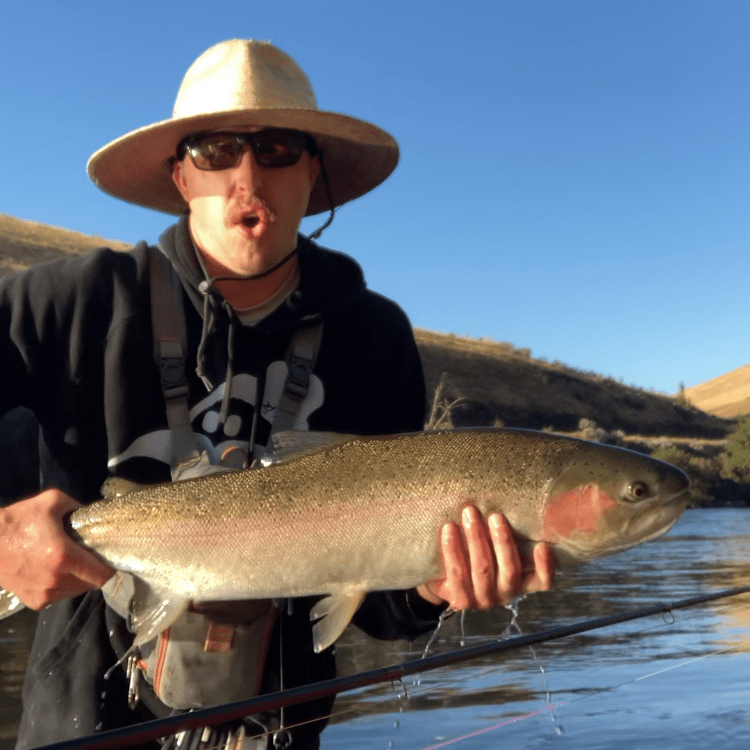
The first time I brought a wild steelhead to hand on the swing changed my life.
For the better? I’m not so sure.
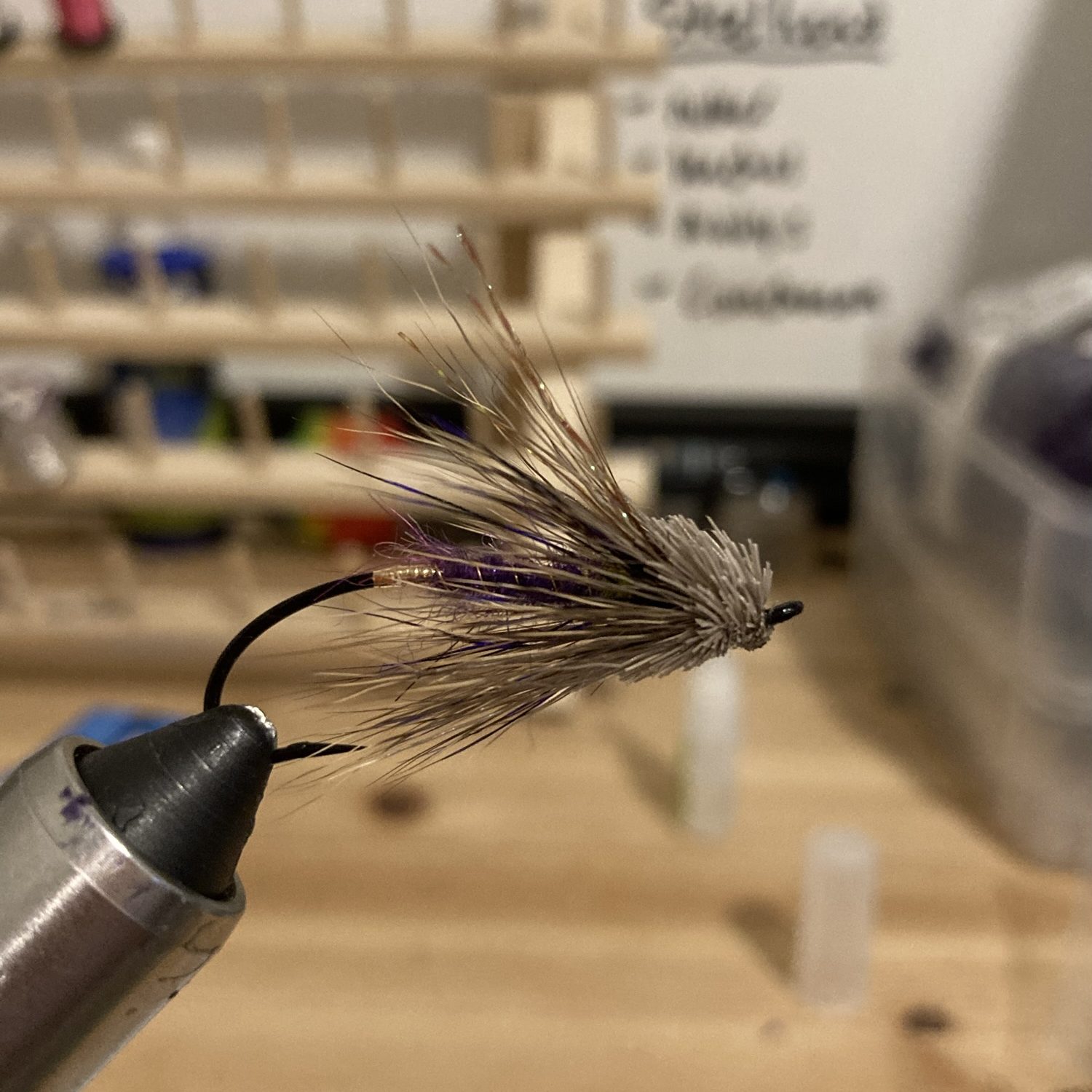
I was perfectly happy fishing for 14-inch redbands before that fish rattled me to my core. The bend in my 8wt, the line flying off my reel uncontrollably, the heft of a specimen that had overcome unthinkable adversity—only to be fooled by some purple feathers. This fish changed something in me, and now I’m going to tell you about it.
A Synopsis on Steelhead in the Deschutes
Steelhead and Columbia redband trout are genetically the same fish. The difference? Steelhead are anadromous—they migrate to the ocean where they gorge themselves before swimming upriver to their natal streams to spawn.
It’s unclear why some redbands stay in freshwater their whole lives while others head to sea. Some trout born to steelhead parents never migrate, and some redbands end up making the journey to the ocean. What is clear: the tremendous size and power of a steelhead is directly tied to its time spent in saltwater.
All Deschutes steelhead are considered “summer run”, meaning they begin migrating upstream in summer, while river levels are dropping. They stage at the mouths of their home streams until fall and winter rains raise water levels—then make their final push upstream. Unlike salmon, steelhead can survive spawning and return to the ocean to repeat the process.
Young steelhead in the Deschutes typically spend 1–2 years in freshwater, feeding in the nutrient-rich river before heading to the Pacific. In the ocean, they bulk up for 1–2 years, preparing for the long journey back. Once they re-enter freshwater, they stop eating—laser-focused on one goal: spawn.
The Challenge of Fly Fishing for Steelhead
Because steelhead don’t feed during their migration, we rely on other instincts to provoke a take. Swinging a fly in front of a resting steelhead evokes a territorial or predatory response—we’re not exactly sure which. Either way, the fish lashes out. No hands? No problem. They use their mouths.
It’s well-known that swinging a fly is the most challenging way to catch a steelhead. Gear anglers use plugs and spinners that cause serious disturbance. Some fly anglers turn to dead-drifting egg patterns and nymphs—even though steelhead aren’t feeding. Still, the easy snack of a nuke egg or stonefly often gets more grabs than a traditional swing.
My buddy Lucas prefers Euro nymphing with his 6wt Diamondback Ideal Nymph. Using a heavy egg-sucking leech, he keeps the fly in the zone, dancing in the soft current near the boulders in the heads of runs. It’s technical, effective, and satisfying for him.
My First Steelhead on the Swing
Being a fishing masochist, I prefer a swung fly on a dry line. I love casting a two-handed rod, feeling the tension as the fly sweeps slowly across the current. While I appreciate a visible V-wake on a skater, I’ve had more success on traditional wet flies swung a foot or two below the surface.
One morning, I launched my raft downstream of Buckhollow. I was solo and late to launch, rigging up while the rest of the crowd hit the water. It was going to be hot—I knew I had just a few hours before the bite turned off.
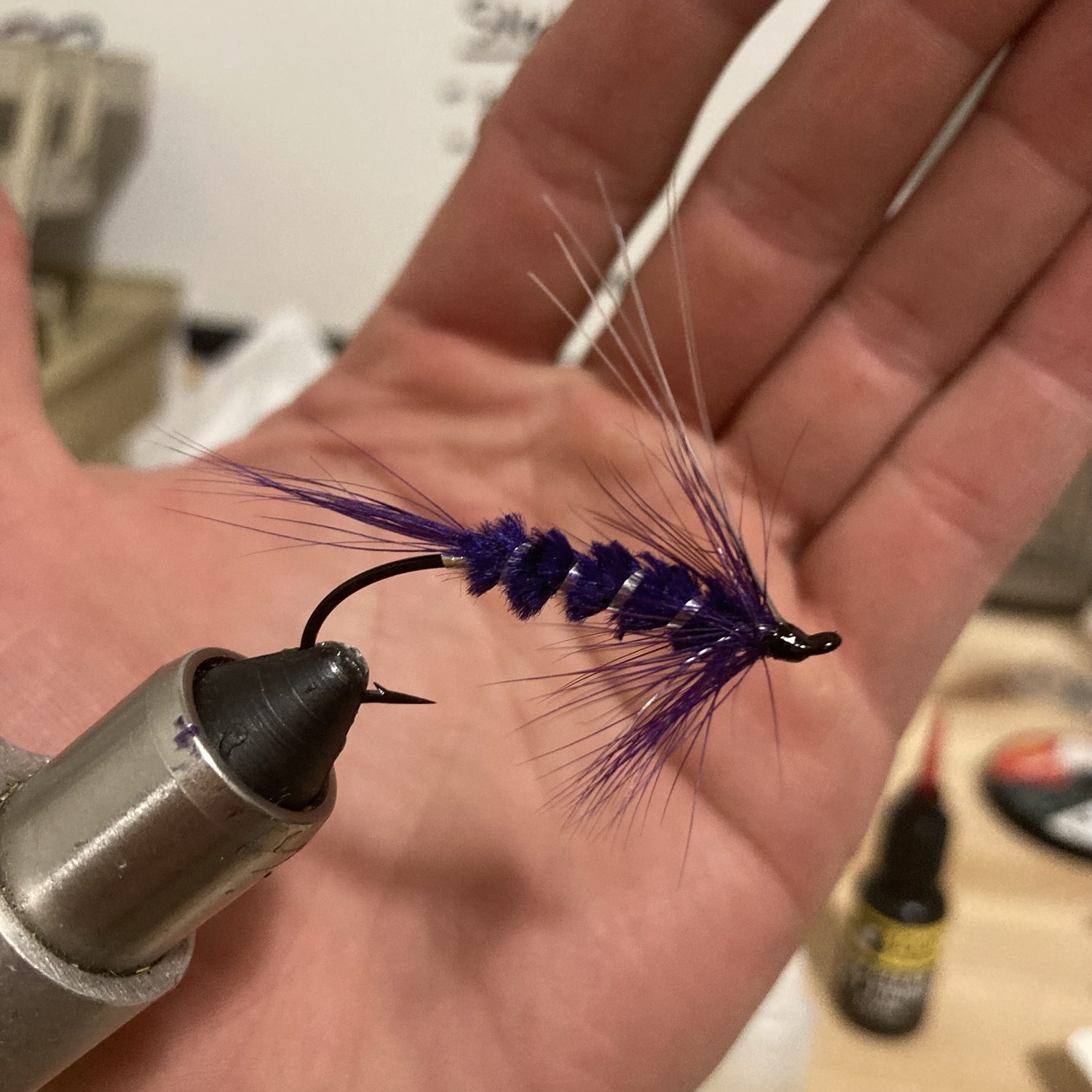
At the time, I didn’t own a two-hander. I was still learning how to swing flies on a floating line with my single-hand rod: an Echo Ion XL 9’ 8wt, usually reserved for chucking heavy nymphs or bull trout streamers. That morning, I tied on a size 5 Streetwalker with a 12-foot tapered leader.
I pulled into my first run of the day. The current was even, with a couple of boulders and depressions in a 100-yard stretch I knew held fish. The tall grass behind me made casting tricky, but the weight-forward line handled roll casts well. My double-haul overheads rocketed the line out.
Just 10 yards down the run, the line went tight. I dropped the rod to the side and set the hook. The reel screamed.
Steelhead on!
The first run peeled off 100 feet of line and another 50 feet of backing. For such soft current, I knew this was a big fish. After a few minutes of back-and-forth, I saw her jump—maybe 8 to 10 pounds, large for a Deschutes summer-run fish.
She ran again, almost into the backing. Eventually, she rolled over, exhausted, and I slid her into the net. A bright, wild hen, about 30 inches long and close to 10 pounds. I took a video instead of photos to keep her wet. Supporting her in cooler water just off the bank, I let her recover.
Then, with a strong kick of the tail—
She was gone.
What a way to land my first steelhead on the swing.

A Special Fish
Steelhead numbers are in rapid decline due to river mismanagement and broken promises. Dam operators continue to violate water quality standards, and conditions grow less hospitable for these incredible fish. Though large, steelhead are fragile—and we’re pushing them to the brink.
But these fish are too special to give up on.
If we want future generations to experience the joy of releasing a steelhead, we must speak up now. Not later. Not next season.
Now.
—T

Leave a comment