
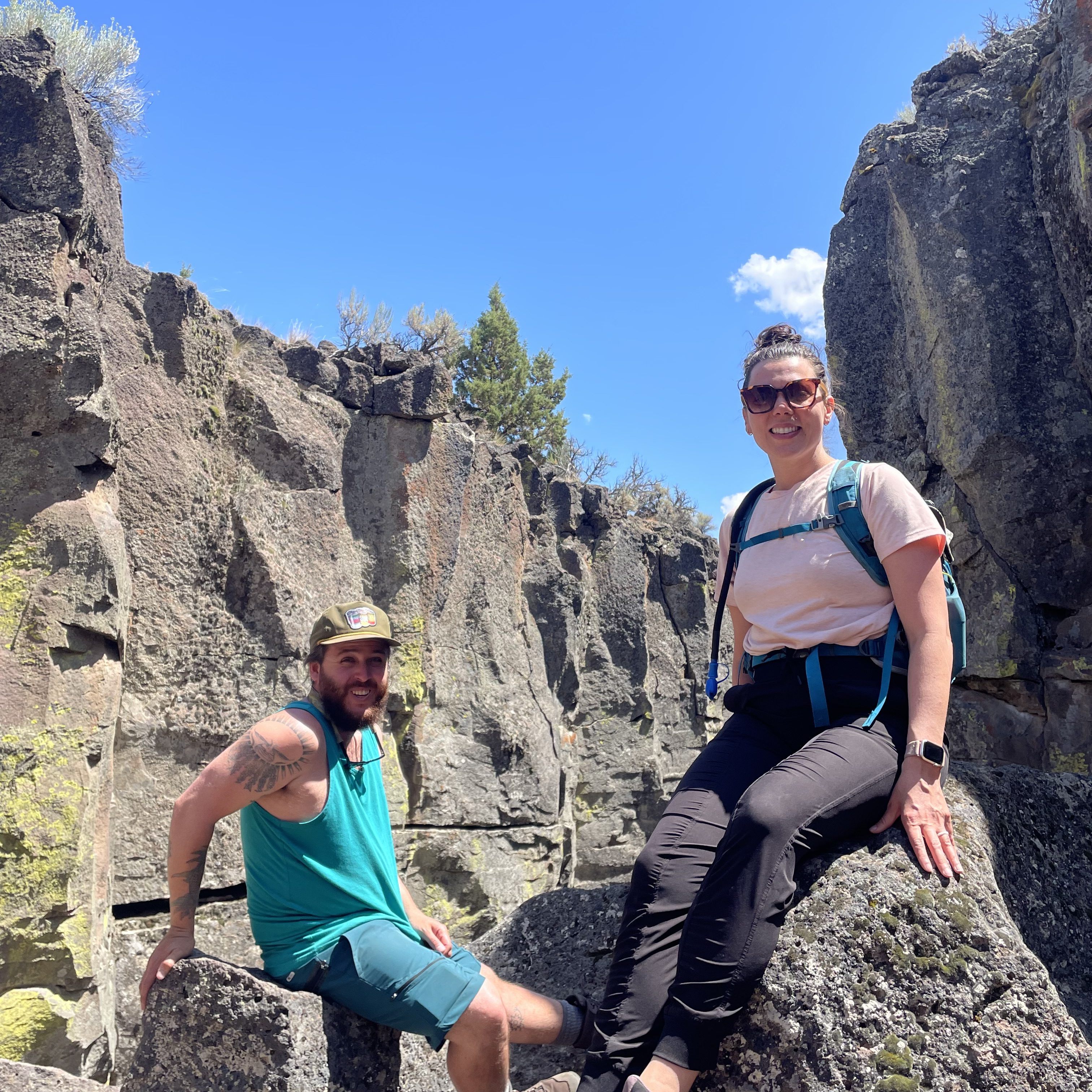
The Oregon Outback is a different kind of Oregon. Compared to the Willamette Valley or the Oregon Coast, this place feels wild and untamed. Think sagebrush, arid terrain, and a step back in time to the golden age of ranching in Central Oregon. We did an overnight camping trip here to escape the crowds and disconnect—even if just for one day.
The Oregon Outback: What and Where
Most people outside the state think of Oregon as heavily forested, rainy, and infested with hippies and vanlifers. That couldn’t be further from the truth. In fact, the entire area east of the Cascade Range is dry and considered high desert. Southeastern Oregon is even drier and predominantly flat, with the exception of a few volcanic formations.
The Oregon Outback is sparsely populated and probably has more cattle than people. Hay farms are sprinkled throughout the sagebrush ecosystem, alongside the occasional abandoned singlewide trailer. The region is better known for its geological formations and volcanic legacy than for its fishing. Think landmarks like Fort Rock, Hole in the Ground, and Crack in the Ground.
The Camping
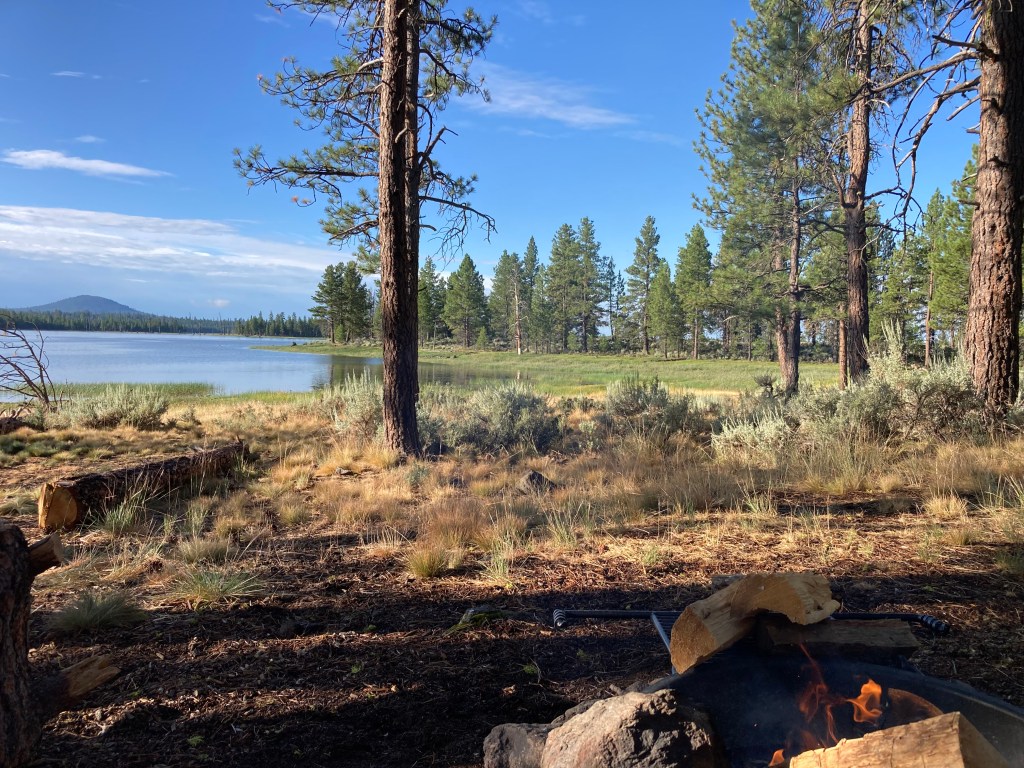
We set up camp near one of the few lakes that dot the Oregon Outback. These bodies of water—and the surrounding marshlands—serve as oases and sanctuaries for birdlife. Our campsite was in a developed USFS campground in the Fremont-Winema National Forest. From our campfire, we watched deer stop in for a drink and Forster’s Terns diving for minnows lurking in the reeds.
The road in was covered in cinder and flanked by basalt rimrock, as much of Central Oregon is.
One thing to note is the overwhelming quiet in this wilderness. We were many miles from the nearest town and even further from any notable population center. No humming motors, no rumble from the highway—just birds chattering and splashing in the nearby reservoir. The cherry on top? No cell service—a feature I specifically seek out when choosing where to camp.

Bass on the Fly: Fishing in the Desert
When we first arrived at the lake, an algal bloom was in full swing. The water was so green we were convinced there might not be any fish at all. It didn’t help that the most recent fishing report was nearly ten years old and mentioned a lake drawdown that had killed most of the fish.
Still, we gave it a shot. That afternoon, we hopped on paddleboards and trolled the muck with a couple of woolly buggers. The mission was mostly to explore and see if anything was alive out there. We saw nothing. As dusk rolled in, we scanned the lake with binoculars for signs of fish—also nothing.
The next morning felt different. Waking to birdsong is always a privilege. Over a crackling fire and sips of hot black coffee, we scanned the lake again. There were bugs on the water. Maybe some fish activity further down the shoreline? It was hard to tell.
Mike and I finished our coffees (and a couple of Miller High Lifes) and rigged up again. Hiking along the shoreline, we stumbled across some shattered obsidian—ancient arrowheads? Who knows. Eventually, we emerged from the weeds and took up stations on rocks lining the marshy edge.
We both tied on poppers. Mike used his 6wt, and I stuck with my trusty St. Croix 5wt. A few casts later, Mike convinced a largemouth bass to investigate his fly. I switched back to a dark woolly bugger for confidence’s sake. An hour of casting yielded a bass every five casts. The fish weren’t fazed by the algae matting the surface.
Then it happened. One cast in, my line suddenly drew tight. I strip-set into what I thought was a rock—until the “rock” started moving. This was the first fish of the day that put a serious bend in my 5wt. It thrashed in the shallows, displacing water like a wake. A few minutes later, it was in the net: a bigass largemouth bass.
Cowboy Dinner Tree: The Real Reason for the Trip
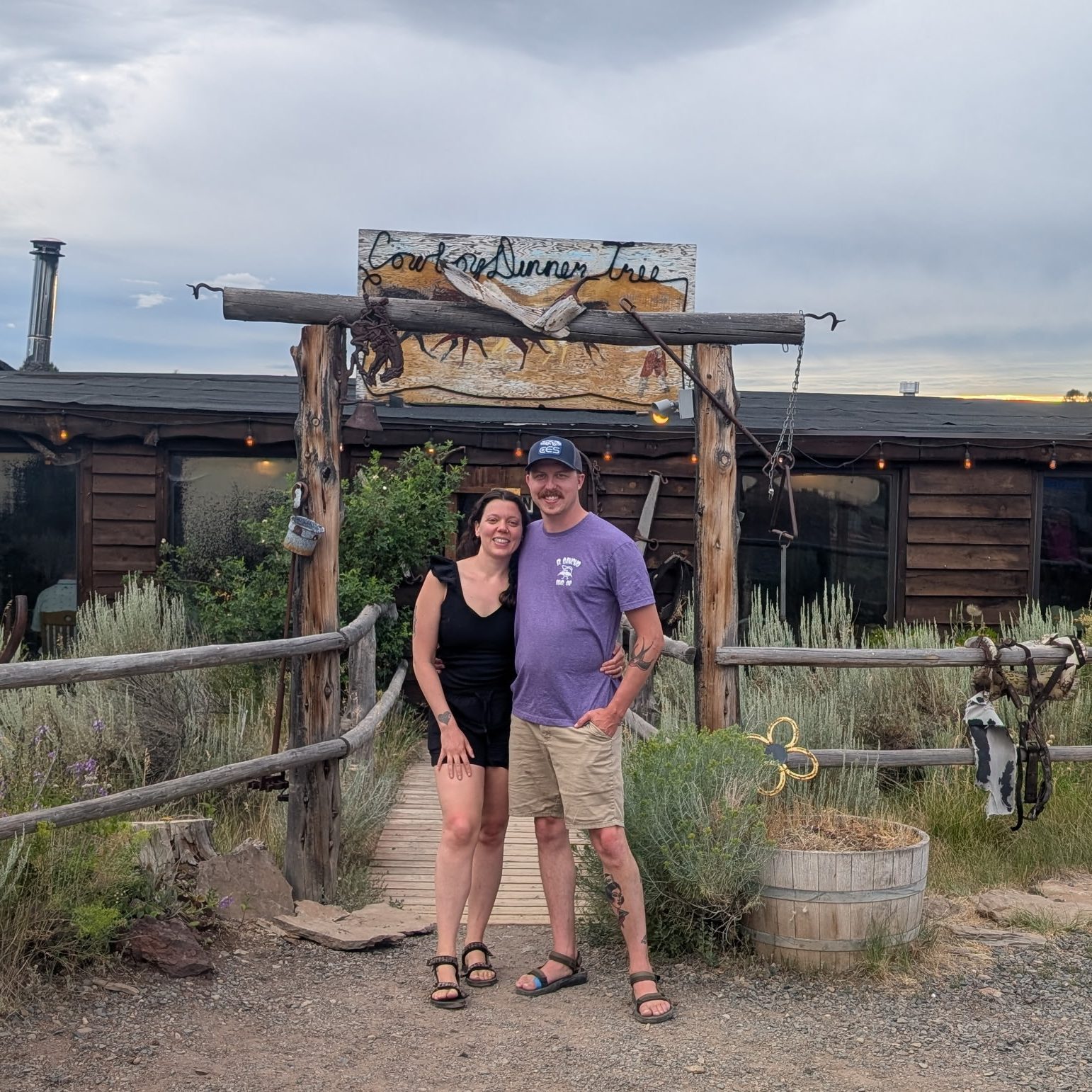
The other reason we came out to the arid wilderness—besides camping—was a reservation we made a month earlier at the Cowboy Dinner Tree. This place holds an almost mythical presence in Central Oregon and is an experience every Oregonian should have at least once.
Cash only. No cards. No checks. No KIDDING!
The restaurant is unlike anywhere I’ve ever eaten. Old wood, low ceilings, and dusty western memorabilia everywhere. The building was converted from an old cowboy bunkhouse in 1992 by a local couple hoping to preserve the history of cattle driving in the Outback.
The site had been used for decades by cowhands pushing cattle to the Sycan Marsh—halfway there, it was a spot for shade, biscuits, and beans from a chuckwagon under a big juniper tree.
Dining here is by reservation only, served family-style, and beautifully simple.
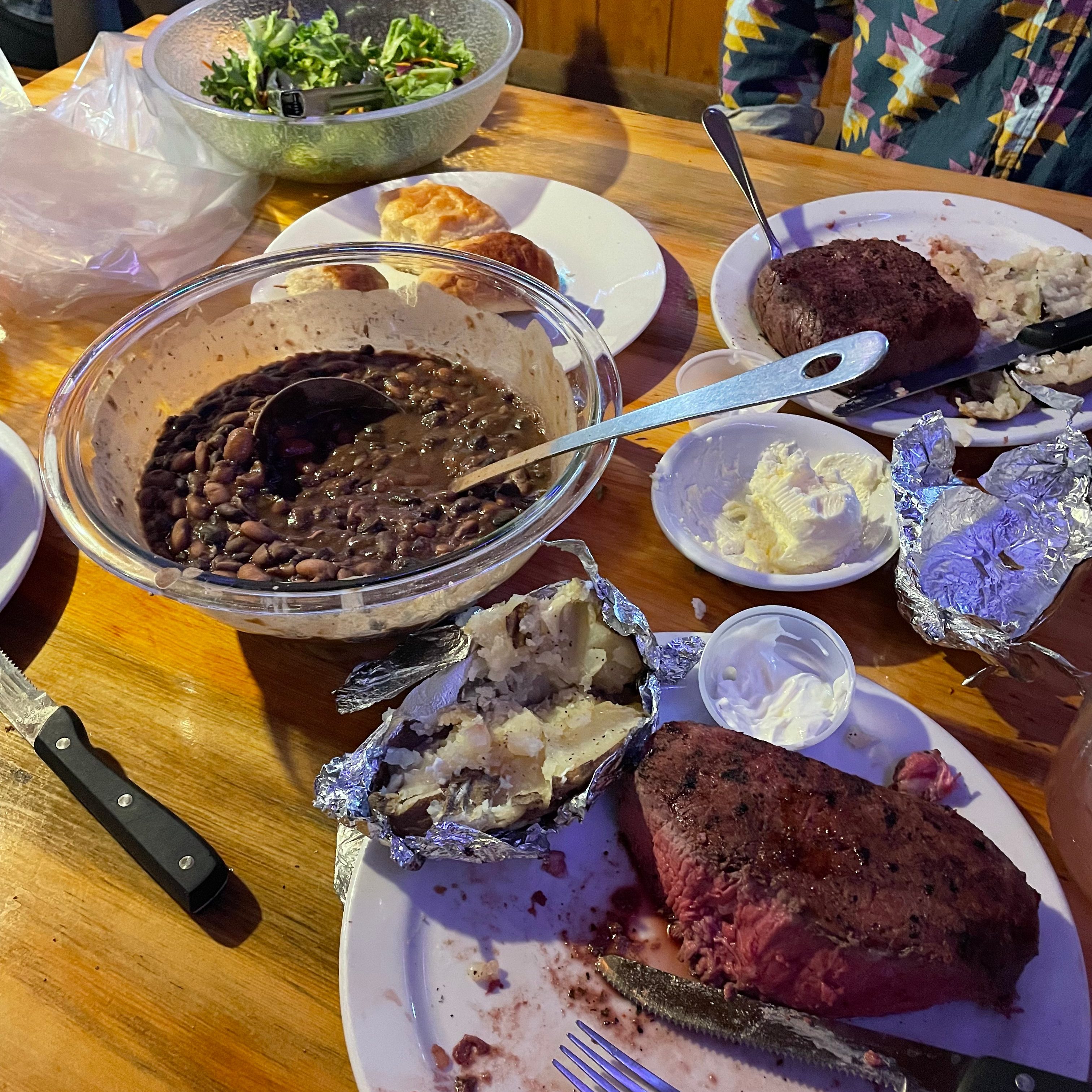
You start with a bowl of salad for the table and warm yeasted dinner rolls. Then comes the largest bowl of beans you’ve ever seen—easily 2–3 quarts. But the main event is the entrée: you choose between a 2-lb steak or an entire roasted chicken, each served with a baked potato. Kate, Mike, and I all opted for the massive steak.
Cooked perfectly to medium rare and well-seasoned, we each made it about a third of the way through before admitting defeat. Then, out came dessert: strawberry-marionberry shortcake.
Pure bliss.
Thankfully, they provide to-go bags—we left with enough leftovers to fill a cooler.
Rugged Hospitality
The Cowboy Dinner Tree embodies the spirit of the Oregon Outback: rugged, wild, and nostalgic. People don’t come to this part of Oregon for fine dining or Instagrammable waterfalls. They come to experience life as it once was—surrounded by the warmth of family and friends.
They come for the taste of the Old West, to gather around a fire after a long day—not unlike the cowboys did generations ago. Only now, the fires are accompanied by s’mores and a couple of beers. The laughter around the flames? That part hasn’t changed.
– T

Leave a comment