
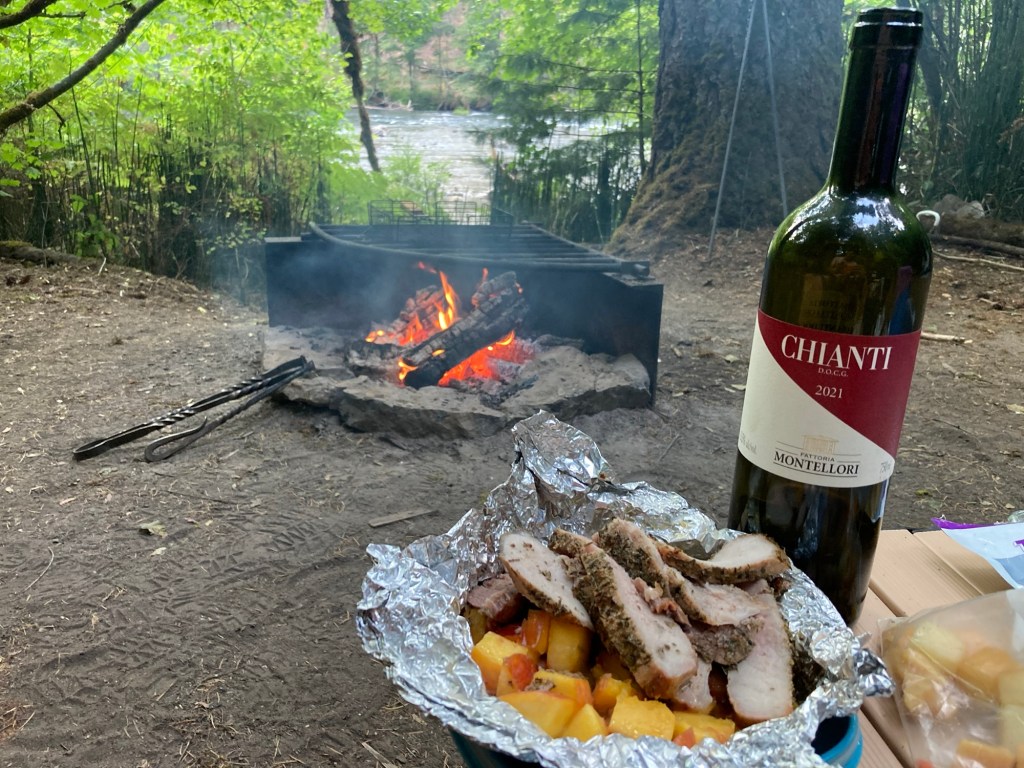
Camp cooking can seem daunting for a lot of folks—especially when it comes to using an open fire. Most of us grew up eating canned chili, prepackaged foods, and foil packet meals that didn’t quite hit the mark.
To me, camp cooking at its finest evokes the picture of a crackling fire, meat gently sizzling, and good company indulging in some crispy beers. Well, that’s exactly how Kate and I like to get dinner done. I’ll let you in on the secret.
A Good Meal Starts with a Good Fire
No exceptions—and it isn’t as difficult as it sounds. Start by setting up your dining area upwind of the fire (smoky eyes while you’re trying to eat is no fun). Always use the forest-service-provided fire ring or build your own out of stones. The ring protects your fire from the wind, focuses the heat, and designates a brush-free burn area.
In the name of safety, always have a fire extinguisher, a shovel with sand, or a tub of water nearby.
We like to start about 45 minutes before cooking time. A paper towel doused in a couple tablespoons of cooking oil goes in the center. Build a teepee of twigs around the paper towel, then a larger teepee of split kindling, and finally a teepee of split firewood. Light the oil-soaked paper towel, and you’re on your way.
Cooking Over Coals, Not Fire
The term “cooking over live fire” is a bit misleading. Cooking directly over flames is inconsistent and dangerous—one moment it’s a raging inferno, the next you can’t even get butter to melt.
Hot coals are the best and most consistent way to cook over a campfire. To get a good supply, you’ll either need charcoal or a hefty amount of firewood. A quick-searing steak doesn’t take much, but anything that needs longer cooking requires a solid coal bed.
Ideally, you’d develop coals in one fire and shovel them into your cooking ring. In reality, most of us are working with a single small ring, so manage it as best you can. Just make sure you’ve got a good, steady bed of coals before you start cooking.
Gauging Heat
This part is simple. Hold your hand over the coals at the height of your cooking surface and count:
- 2 seconds = high heat
- 3–4 seconds = medium-high heat
- 5–6 seconds = medium heat
- 7–8 seconds = low heat
The Pork Chops Themselves

One of my favorite camp cooking books is Seven Fires by Francis Mallmann. It’s packed with Argentine recipes built for fire, and I adapted his recipe for Peached Pork to be more camping-friendly. Pre-mixed seasonings and pre-chopped produce are the keys to camp cooking success.
Instead of the pork loin roast Mallmann calls for, I used inch-and-a-half-thick pork chops gifted by a client. The chops were seasoned with salt, minced garlic, and an Italian herb blend. I cooked them over medium heat on the coals. (If they’d been thinner, I’d have gone with medium-high.)
While the chops were cooking, I stuffed a foil packet with chopped peaches, butter, and a pinch of salt. The packet went next to the coals to soften and caramelize. Pro tip: the peaches actually turn out better in a skillet because you get more caramelized bits, but foil works great in a pinch and saves cleanup.
Once the pork was cooked and rested, I pulled the chops off the bone and slathered them with the buttery peach sauce. A bagged store-bought salad rounded out the meal.
And holy shit, were those pork chops good.
Camp Cooking Takeaways
Camp cooking can be simple if you boil it down to a few basic rules:
- Cook over coals, not open flames
- Prep your produce ahead of time
- Use pre-mixed seasonings
- Optimize your dish usage
Follow these tips and you’ll level up your campfire meals. There’s no excuse for crappy canned stew when you can grill pork chops just as easily as you would on the Weber kettle at home. Rustic camp cooking is pure joy—as long as you’re smart about the prep.
– T

Leave a comment