
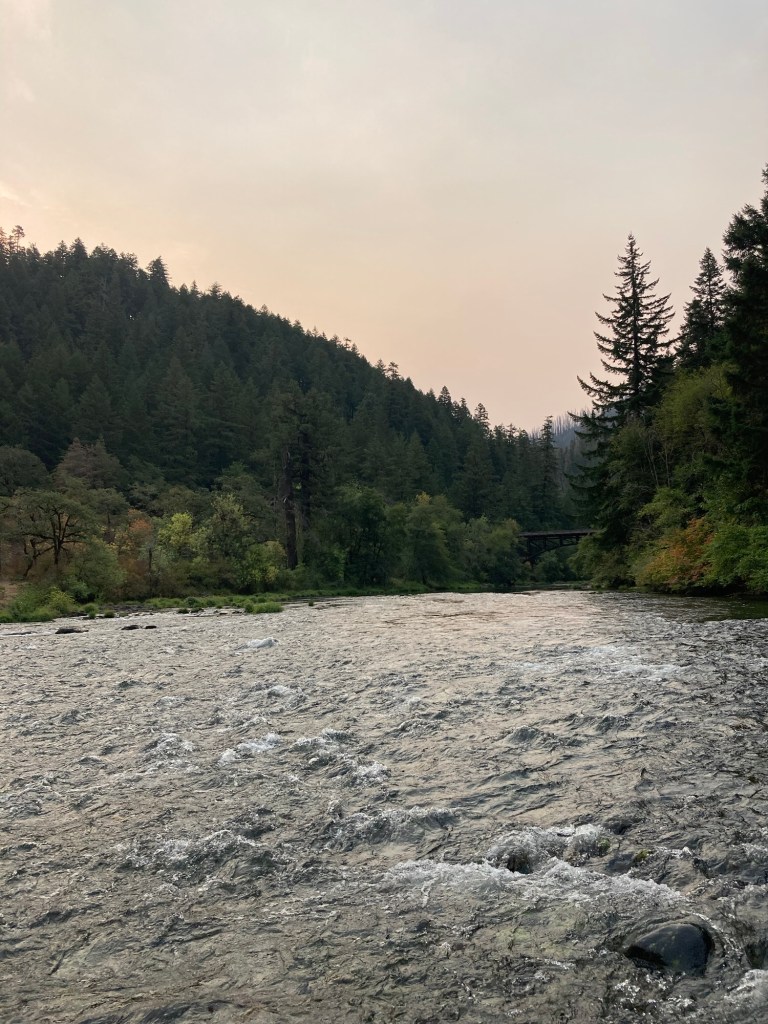
The North Umpqua is famed for its run of summer steelhead. Fame doesn’t come from abundant returns—far from it. The river is known as the finishing school for fly anglers hoping to shake hands with one of these special fish. While the summer run is modest, the ones that do make it to the Steamboat Creek confluence are spirited and cunning. They’ve survived gear fishermen wreaking havoc on the lower river and seen every type of fly swung through the 33 miles of designated fly-fishing-only water. This is my story of thousands of casts made over three years that led to me finally hooking my first North Umpqua steelhead.
The Challenge
Fishing regulations are strict on the North Umpqua to protect dwindling summer steelhead runs. No added weights or attachments to the line, leader, or fly—no split shot or strike indicators. Angling is restricted to a single, barbless fly. Between July 1 and September 30, flies can’t even be weighted. That means your only real shot is with a swung fly on a sink tip—and a lot of hope that you picked the right fly.
The fish are few and far between, and they hold in some of the most technical water you’ll ever swing. At the time of writing, only 1,671 summer steelhead had been counted at Winchester Dam. That’s just 27 fish per mile—about 891 fish in the 33 miles of fly water. The structure doesn’t make it easy either. Basalt bedrock channels create cliff faces and wicked current seams that whip your fly out of control. The river is complex, powerful, and unforgiving.
Year One – The Initiation
My first encounter with the North Umpqua came during a family camping trip to Toketee Lake in July 2023. Knowing the river held summer steelhead, I snuck away one morning with my trusty 8wt single-hand rod. A size 5 Mack’s Canyon brought a few cutthroat to hand, but no steelhead. A few swings with a skater? Same result.
I had no idea where the buckets were, what techniques worked, or anything useful that might put me on one of these fish. A couple weeks later the North Umpqua closed to steelheading for the rest of the season due to poor returns. Initiation complete.
Year Two – The Obsession Deepens
Summer 2024 gave me a couple more shots. With a switch rod in hand, I swung with a bit more insider knowledge. By then, I had more steelhead hours under my belt from the Deschutes and at least knew where fish should be holding. My technique had come a long way since the last time I fished these fabled waters.
I even ventured out during the winter with intruders and egg-sucking leeches, hoping a big fly would entice one of the winter fish. In January 2025 I picked up my RB Meiser spey rod and hit the North during February’s high water. A few bumps, a few plucks—but no dice.
Year Three – Perseverance Meets Payoff
2025 became the year of determination. In April I made a day trip for winter steel and hooked up—only to lose the fish after a five-second run. Brutal.
By Labor Day weekend, the fire inside me was raging. Spey rod in hand, I fished harder than ever. Thankfully Kate had Starlink for her CPA studying, because I was gone by daybreak every morning. Each day brought fish showing but not committing. A pluck in Hayden’s Run, a pluck in the Kitchen Pool, jumpers in the Boat Pool and Sawtooth. They were there—I just couldn’t seal the deal.
Sunday brought a glimmer. I was fishing Sweetheart near the Steamboat confluence when an older guy, Mike, hooked an eight-pounder in the Sawtooth tailout. I reeled in so he could land it, then snapped a few photos for him. Mike told me he’d been fishing the North for 30 years. He suggested I try a couple nearby spots the next morning. Sounded like solid advice—after all, that was the second fish he’d hooked above me that day.
Monday was my last chance. At first light I aimed for the famed Camp Water. I wanted to start at The Station, but another angler, Tyson, beat me to it. Instead, I slid down into the Sawtooth tailout and Hayden’s Run.
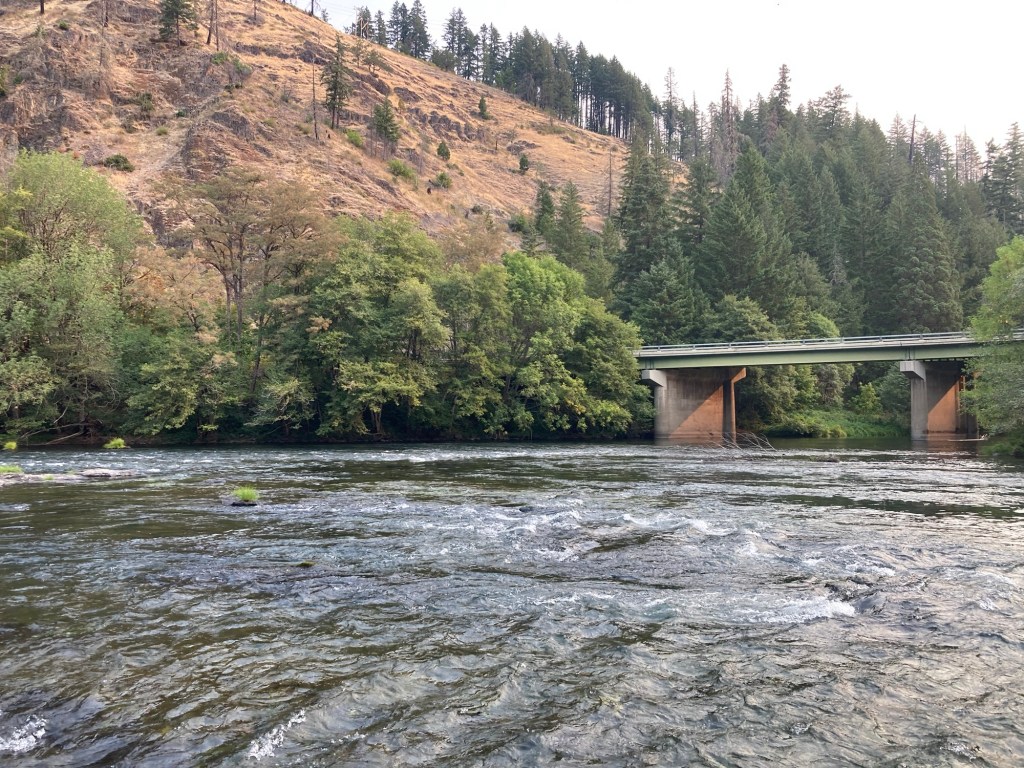
Fish were already jumping. I fished Sawtooth with integrity—nothing. Then I worked carefully through Hayden’s, swinging all the way under overhanging branches. The currents there are gnarly: fast cascades through bedrock channels clashing with slower turbulent flows near the bank. On the hangdown, under a branch, I got plucked—but couldn’t connect.
Running out of time, I crossed to the highway side to fish the same water from a new angle. Last five casts. I sent my fly 60 feet across, threw an aerial mend, and let it sit behind a basalt chunk. Then it started to swing. Suddenly—the line went tight. Fish on.
The fight was hand-to-hand combat. My 13’ RB Meiser 7wt bent deep but held firm, while my Danielsson H5D reel stopped blistering runs. The fish tried ducking behind shelves of sharp bedrock that threatened to cut my leader, but I wrestled it out. A jump, an upstream dash.
Advantage: angler.
Finally, I coaxed the 6–7lb fish into softer water at my feet. The battle was won. I lifted my rod to net my prize—when a sharp head shake slipped the hook. Slack line. Fish gone. No photos of this one, folks.
Three Years of Patience and Persistence
Thousands of casts. Gallons of coffee. Countless early mornings. Three years of persistence for one moment. That’s the reality of swinging flies for ghosts.
Fishing the hard way gives you a deeper respect for the river and its fish. It makes every grab unforgettable. Why fish this way when it means fewer hookups? For me, it’s the anticipation of the pull, the violent fight of an inherently aggressive fish, and the meaning behind the rare hookup.
Some fish take years to catch. That’s exactly what makes the chase unforgettable.
-T

Leave a comment