

I’ve Googled this topic countless times over the past few years of learning how to swing flies for steelhead. What I’ve found is that there are very few solid resources on how to properly set the hook when a steelhead grabs your fly. Too often, articles simply say “don’t trout set” without breaking down the nuances of effective hook setting depending on your presentation.
As it turns out, the best discussion of this subject comes from The Complete Steelheader by John Larison. I’ll do my best to summarize what I’ve learned from John, and hopefully give you more than just another reminder of what not to do.
The Importance of a Solid Hookset
I shouldn’t have to explain why a good hookset matters. After everything we put ourselves through to catch these fish—waking up at 3 a.m., driving hours, braving the cold darkness to be the first to swing a piece of water, casting the perfect presentation in anticipation of the one grab we might get all day—it could all be wasted if you trout set at the first sign of a pluck.
Regardless of presentation, setting the hook requires patience and discipline. Steelhead often tap, pluck, or mouth the fly before you feel solid weight on the reel. The key is waiting for that moment, then setting the hook in a way that matches your presentation.
Swinging With a Floating Line
When a fish takes the fly mid-swing, it usually strikes and turns back to its lie. Ideally, it turns downstream, driving the hook into the top jaw or corner of the mouth. But often, the fish will move across the current and slip the hook.
To improve your odds:
- Maintain tension and stay in contact with the fly through the entire swing.
- Hold a loop of about two feet of line so you can feed slack when the fish takes, allowing it to fully turn.
- Once you feel the weight on the reel, raise your rod smoothly but firmly toward the bank. The fish’s own weight will drive the hook home.
Swinging With a Sinking Line
Takes on a sinking line are often subtler than on a floating line. Sometimes, you’ll just feel tension slowly build. When this happens, a solid strip set is your best move. If it’s a fish, you’ll drive the hook home. If it’s a snag, your fly will keep swinging.
Don’t jerk the rod back. Even if you free the hook, the fly will rip unnaturally through the swing and force you to recast.
Once you hook a fish:
- Raise the rod tip slightly to lift your sink tip off the bottom and away from rocks or wood.
- After the first moments of the fight, lower the rod tip to keep steady pressure on the fish.
- Be sure to keep the rod angled towards the downstream bank, no matter how high you have your rod tip raised.
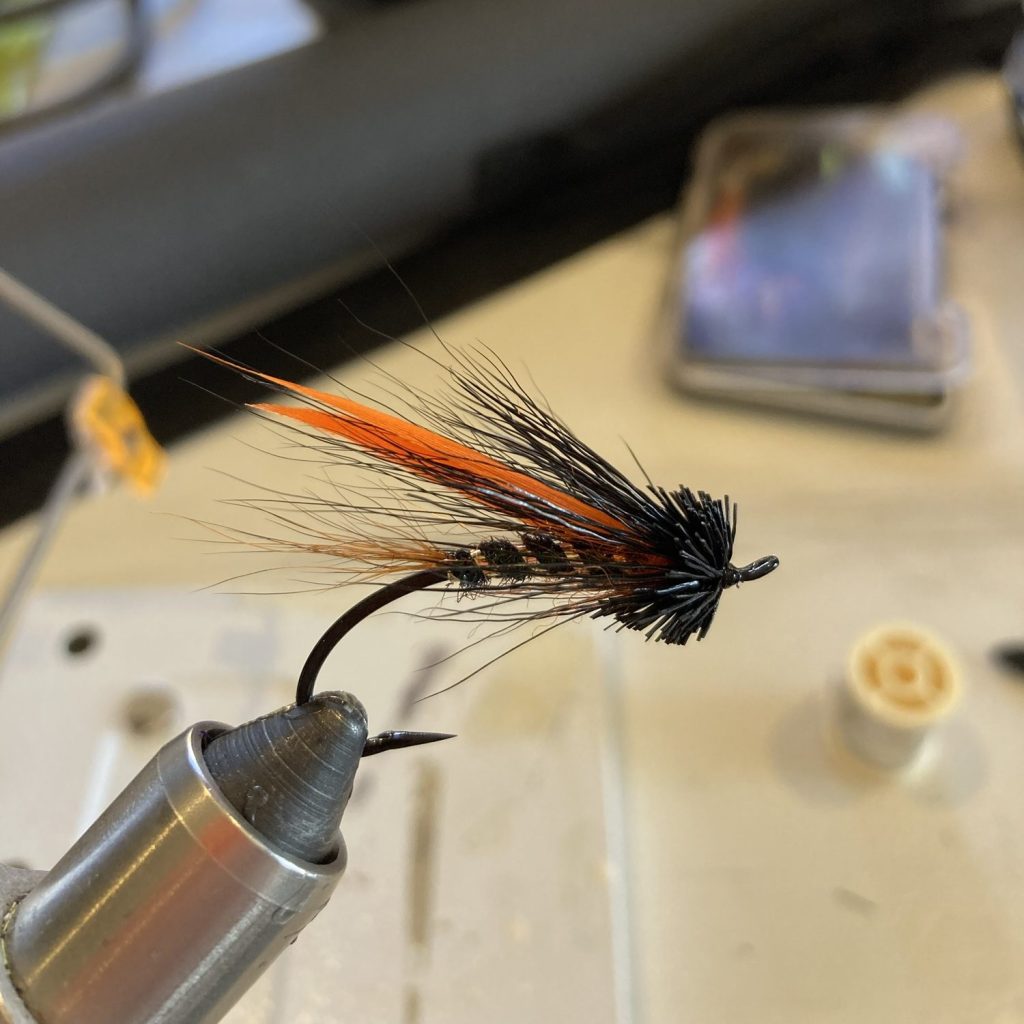
Greased-Line Presentation and Skating Dry Flies
Watching a steelhead rise to a skated or greased-line fly is electrifying. The problem is that the adrenaline rush makes it almost impossible not to trout set.
The right move:
- Continue the swing as though nothing happened, even if the fish grabbed your loop of slack.
- Avoid imparting any extra movement. A willing fish may come back.
- If it refuses, try the same cast again. Still no? Downsize to a smaller hairwing and fish deeper.
When the fish commits, you’ll feel steady tension build. At that point, give a smooth, firm pull to seat the hook.
Dead Drifting Dry Flies
Catching a steelhead on a dry fly is one of the most challenging and rewarding experiences in fly fishing. But again—resist the trout set.
Unlike trout, steelhead often miss the fly or just nip it. The best way to time your hookset is to force yourself to wait—say “God save the Queen” or “I raised a steelhead!” before lifting the rod.
Keep in mind:
- A fish may take upstream, mid-drift, or downstream.
- Set the hook in the opposite direction of the fish. Usually, that means angling the rod towards the downstream bank.
Tying It All Together
If you remember nothing else, keep these rules in mind:
- Stay in contact with the fly through the swing.
- Hold a two-foot loop of line for the fish to take.
- Be patient—wait for solid weight before setting.
- Angle your rod toward the downstream bank.
We put so much effort into chasing these fish, and often only get one chance. Make it count. Setting the hook on a steelhead requires patience, persistence, and mental toughness—the very qualities that define steelheading itself.
Stay calm when you feel the grab.
—T

Leave a comment