
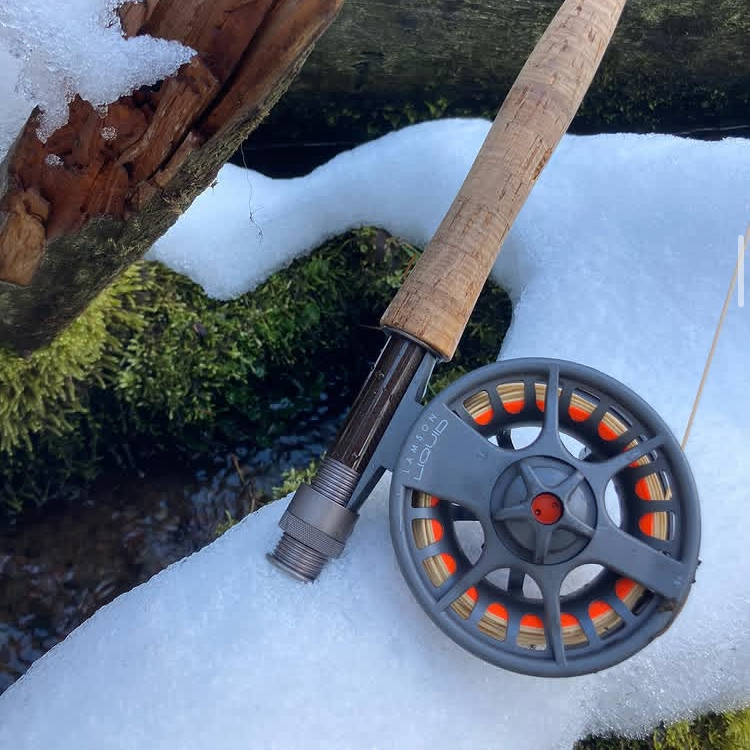
Ask most fly shops or bloggers what your first fly rod should be and you’ll almost always get the same answer: the ubiquitous 9’ 5-weight. It’s a solid choice on paper. The 5-weight handles most trout and small bass, and has enough power to deliver a variety of flies to their targets. The 9-foot length seems ideal — not too long, not too short. Enough backbone to get the job done without sacrificing too much accuracy.
However, I don’t believe the 9’ 5-weight is the answer to every fly fishing situation — or even most. Far from it. Anyone who recommends a rod without asking a few key questions is doing you a massive disservice.
1. What Species Are You Targeting?
The perfect bass rod isn’t the perfect trout rod, and it definitely isn’t the perfect steelhead rod. Different rods are built for different species — but not for the reasons you might expect.
Most freshwater fly rods can fight anything from small trout to big bass. I’ll leave saltwater out of this since a bonefish rod has no business tangling with a 100-pound tarpon.
Your fly rod is a tool to get the fly to the fish. While a 5-weight can cast most flies, it struggles to handle the line and power needed to throw bass poppers or large streamers. A 5-weight will fight the fish just fine, but you need the backbone of a 6–8 weight to cast heavy, wind-resistant patterns effectively.
Take musky flies, for example. Some anglers use a 9-weight because they need to throw what’s essentially a 10-inch tube sock lashed to a fly line. It’s not about fighting the fish — it’s about turning over that giant fly.
2. What Style of Fishing Do You Like?
Euro nymphing versus dry-fly purism. Stripping streamers versus swinging flies. Each discipline requires a specialized tool to do it well. The 9’ 5-weight can handle all of them, but it doesn’t excel at any of them.
For example, fishing dries or indicator nymphing with a 9’ 5-weight is fine. Other rods might perform those tasks better, but the standard setup will put fish in the net.
For euro nymphing, though, I want a long rod with a sensitive tip and powerful butt section. Purpose-built euro rods protect tippet better and fight fish above their weight class. The longer reach also helps you hit seams that are tough to access with just nine feet of rod.
For streamer fishing, I prefer a fast-action 6–8 weight depending on fly size. A 5-weight can throw small streamers like Woolly Buggers, but anything bigger collapses the cast instantly. If you’ve ever tried casting a lead-eyed Sex Dungeon on a 5-weight, you know that fly isn’t going far. The heavy lines needed for big flies will overload a standard 5-weight to its breaking point.
Swinging flies can be fun on a 9’ 5-weight — especially with a single-hand spey-friendly line like those from OPST. Smaller soft hackles swing beautifully on smaller water. But for longer casts or heavier flies, you’ll quickly crave something longer that stores more power through a deeper casting stroke.
3. Where Are You Fishing?
The rod I bring to the Crooked River isn’t the same as what I bring to the Deschutes or the Metolius.
On the Crooked, I’m usually casting small dries or dry-droppers for smaller trout. On the Deschutes, I’m fishing big water with heavy flies — and the afternoon wind will test my patience. A heavier rod with a heavier line makes all the difference.
If steelhead are in the system, I never nymph with my 5-weight. There’s always a chance of hooking one of these special fish, and I want to land it quickly without exhaustion. I’ll use my 7-weight switch rod or an 8-weight single-hand setup if I’m nymphing — though I’m usually swinging a spey rod when steelhead are running.
Be realistic about where you fish and what you’re casting. Your rod should match the water, the flies, and the fish you’re after. Once you start thinking that way, the 9’ 5-weight doesn’t seem so “universal” anymore.
So, What Should You Buy Instead?
Before picking up another “do-it-all” rod, think about your local waters and the types of fishing you enjoy most. Here are a few alternatives that might surprise you:
- 9’6” or 10’ 4-weight: A fantastic all-around rod. The lighter weight is perfect for smaller rivers, and the extra length adds versatility. It’s long enough for mending indicator drifts, but short enough for accurate dry-fly work. The extra length also makes it a great choice for trying your hand at Euro-nymphing or singlehand spey.
- 9’ 6-weight: Honestly, I wish I’d bought one instead of my 5-weight. The 6-weight shines when wind picks up or when you’re throwing heavy rigs and streamers on big western rivers. It’s a much better match for the Deschutes or similar big water.
- 8’6” 3-weight: A wildcard pick — but if you hike into small creeks or fish mostly dries for small trout, this rod is pure joy. It loads easily and makes modest fish feel like giants.
Wrapping It Up
Your “go-to” rod might not be what you expect. Don’t take a shop’s word for it — or a random blogger’s. Ask yourself the right questions so your choice has purpose.
The rod you always reach for should do exactly what you ask of it, every single cast. If you only own one rod, make that choice count. Go deeper than the 9’ 5-weight — and you might just find the missing link in your fly fishing evolution.— T

Leave a comment