
A Quick Housekeeping Note: I’ve been posting consistently each Tuesday and Friday, but life has been getting pretty busy in my little household. I can’t keep up with writing high quality stuff twice weekly, and I’m definitely not willing to let quality slip. Moving forward you can expect the same juicy, mouthwatering content each Tuesday instead of the usual twice weekly. Thanks for being a good sport. Now back to the good stuff…
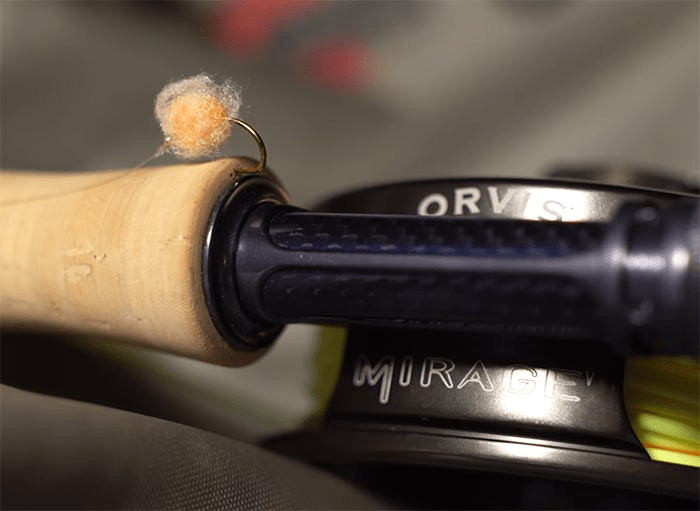
You know the situation is dire when the eggs come out. A lot of fly fishers shy away from eggs and other “junk flies” — and I get it. Eggs seem like cheating because they’re so damn effective. Still, I always have a selection in my box once winter hits. Usually, they make their appearance after I’ve been swinging for steelhead and need a little ego boost. Here’s a primer on my favorite egg fly and why it deserves a place in your winter fly box.
What the Hell Is a Nuke Egg?
The Nuke Egg is, at its core, a few turns of egg yarn with a milky veil surrounding it. It’s a lethal pattern because it gives your typical egg fly a more translucent, less aggressive look. It shines by imitating an egg that’s been drifting in the current for a while — maybe one that’s been recently fertilized, or still coated in the goo that binds a clutch of eggs together.
Whatever the case, it just works. Every time.
A Note on Ethics
Egg flies sometimes get a bad rap because some folks fish them over active redds. No bueno. It’s seriously uncool to catch fish that are in the middle of creating future generations. Imagine if someone hooked you in the face while you were in the middle of doing the deed. Yeah — that’s what I thought.
The truth is, egg flies excel when there are fish spawning in the system. The right way to fish them is well below the redds. Not the next hole down, not a couple hundred yards downstream — way down. Trust me, the fish will still be enticed by that protein-packed snack drifting tantalizingly in the current.
How Do I Fish It?
Egg flies, in my opinion, should bounce around almost weightlessly in the current. I like mine to have neutral buoyancy — meaning the fly neither sinks nor floats when placed in water. That makes all the difference, since real fish eggs have a slight weightedness to them but don’t plummet to the bottom.
To get the flies down, I pair them with something heavy — usually a 4.6mm tungsten-beaded nymph. The heavy bead helps compensate for the pushy currents on the Deschutes and counteracts the egg fly’s lightness. Whatever anchor nymph you use, make sure it can drag your egg down with it.
I tie the heavy fly to the tag end of my nymph rig and put the egg at the point. I like to give the Nuke Egg about 16–20 inches of line coming off the knot or swivel so it can dance naturally in the current.
You can fish this fly almost anywhere — fast riffles, slow runs, or deep pools. Just adjust the weight of your rig accordingly. The egg performs well in fast water thanks to its fluorescent color and larger profile. It’s equally effective in stained water for the same reason, and it excels in slow, deep pools because of its natural profile.
How Do I Tie It?
This is an easy tie that’ll fill a fly box fast. I only use Semperfli EggStatic chenille because of its fluorescence and tiny flecks of flash that give the fly that “slushy” appearance. Experiment with colors to find your favorites — mine are Steelhead Orange and Atomic Yellow. I’d bet the Orange Tobiko variation would work great, but I haven’t tried it yet.
I tie the fly on a curved 2X-heavy nymph hook with a wide gape, usually sizes 8 through 14, depending on what’s drifting in the system. The key is to add a few wraps of wire to the hook shank. The chenille and veil trap small air bubbles that can keep the fly from sinking. Without those wraps, your egg won’t bounce or “dance” properly in the current.
The only tricky part is the veil. Pinch off a small clump of egg veil and align the fibers carefully — don’t cut them off the yarn bundle, since you want those wispy, uneven ends. Lay the fibers sparsely around the hook so they surround the egg, with about a third extending past the hook eye. After a few pinch wraps to secure, preen the forward fibers back and build a small thread dam to keep them angled rearward. Whip finish, add a touch of head cement, and you’re done.
Recipe:
- Hook: Size 8–14 curved nymph hook (Tiemco TMC 2488H or Ahrex FW540/541)
- Thread: White, orange, pink, or red – your favorite kind
- Underbody: Lead or lead-free wire
- Body: Semperfli EggStatic 8mm chenille
- Veil: Hareline Egg Veil
Final Thoughts
This fly quickly replaced the classic slush egg and is now the only egg pattern I carry. I love the way it looks when wet and how it moves in the current when tied correctly. I can’t keep fish off this thing, and it’s my go-to confidence pattern when steelhead season starts to wear me down.
Give this fly a tie — I promise you’ll be impressed.
—T

Leave a comment