

Ever since I picked up my copy of Roger Fletcher’s Drift Boats & River Dories, I’ve been wanting to make the journey out to Lowell’s Boat Shop in Amesbury, MA. While Fletcher doesn’t specifically discuss the shop itself, it quickly became obvious that the origins of the classic McKenzie River drift boat can be traced back to America’s oldest continuously operating boat shop.
I became interested in Oregon’s drift boating history when I saw my first wooden drift boat float past me on the Deschutes River. Its flat bottom, high sides, and sexy sheer lines immediately caught my eye and sent me down the rabbit hole, exploring how this design came about out of necessity—pioneers sending boats through the McKenzie River’s rapids many years ago. Since then, I’ve read thousands of words on the history of these iconic vessels in hopes that one day, in my own shop, I can recreate and refine the designs that once conquered Oregon’s remote waterways.
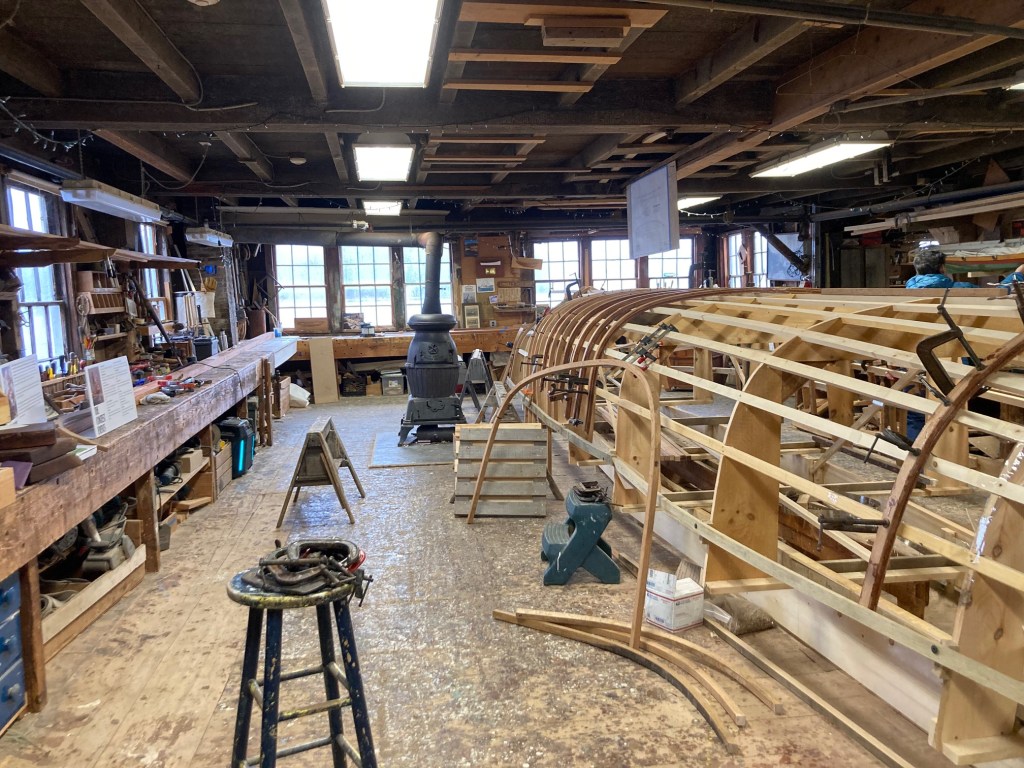
Lowell’s Boat Shop
Lowell’s Boat Shop is the birthplace of the Banks-style dory. While it isn’t the boat we see punching through rapids on the McKenzie or the Deschutes today, it’s easy to spot the shared DNA with modern drift boat designs. The flat bottom, straight sides, and rugged build were all essential for riding atop waves and slipping between rocks on Oregon rivers. The original design actually derived from Simeon and Hiram Lowell’s surf dory—famous for its ability to ride over breaking waves at the mouth of the mighty Merrimac River as it empties into the Atlantic Ocean.
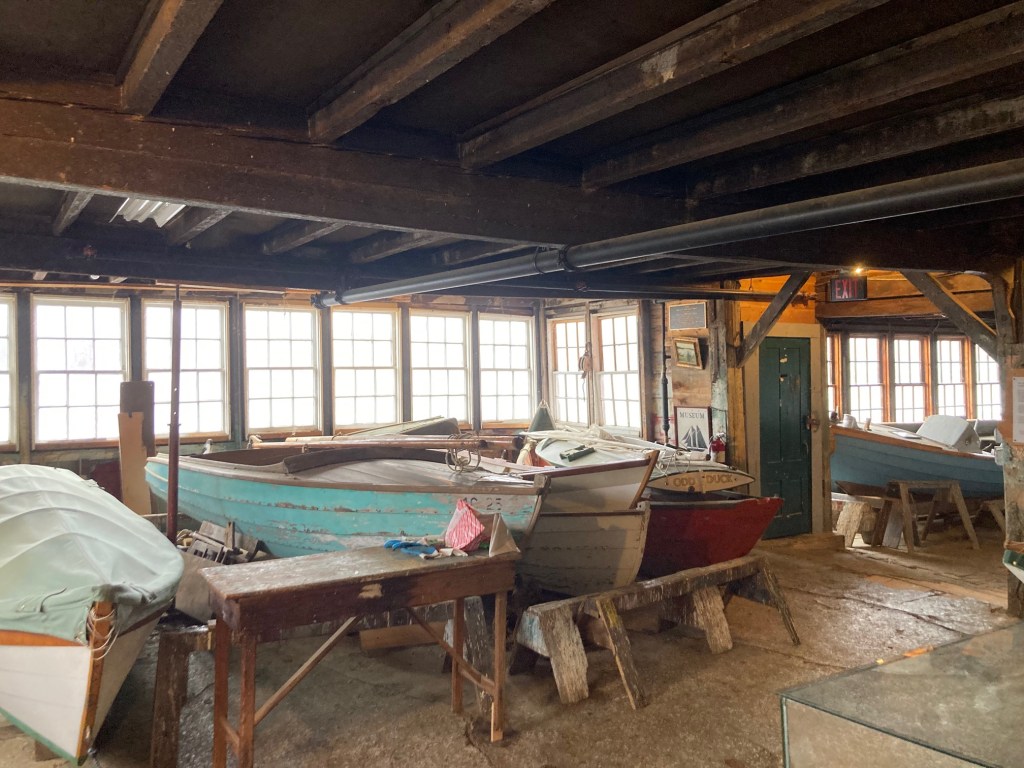
The Banks dory, which developed from that original surf dory, later incorporated straight sides and a stackable form, making it an ideal mass-produced working boat. Many of these qualities eventually became essential demands of river guides out West.
The boat shop itself was founded in 1793 by Simeon Lowell on the banks of the Merrimac River in Amesbury, MA. As the nation’s oldest continuously operating boat shop, it pioneered a production process that made its surf dories a staple of New England’s commercial fishing fleet. In 1911, Lowell’s produced over 2,000 wooden boats—each built by hand—inside the historic timber-framed building. Despite their reputation for quality, the boats typically lasted only a handful of years against New England’s harsh coastline, making them “disposable” in the sense that they were constantly replaced.
Today, Lowell’s still produces wooden boats but primarily functions as a museum and classroom space, preserving the craft and culture of traditional wooden boatbuilding.
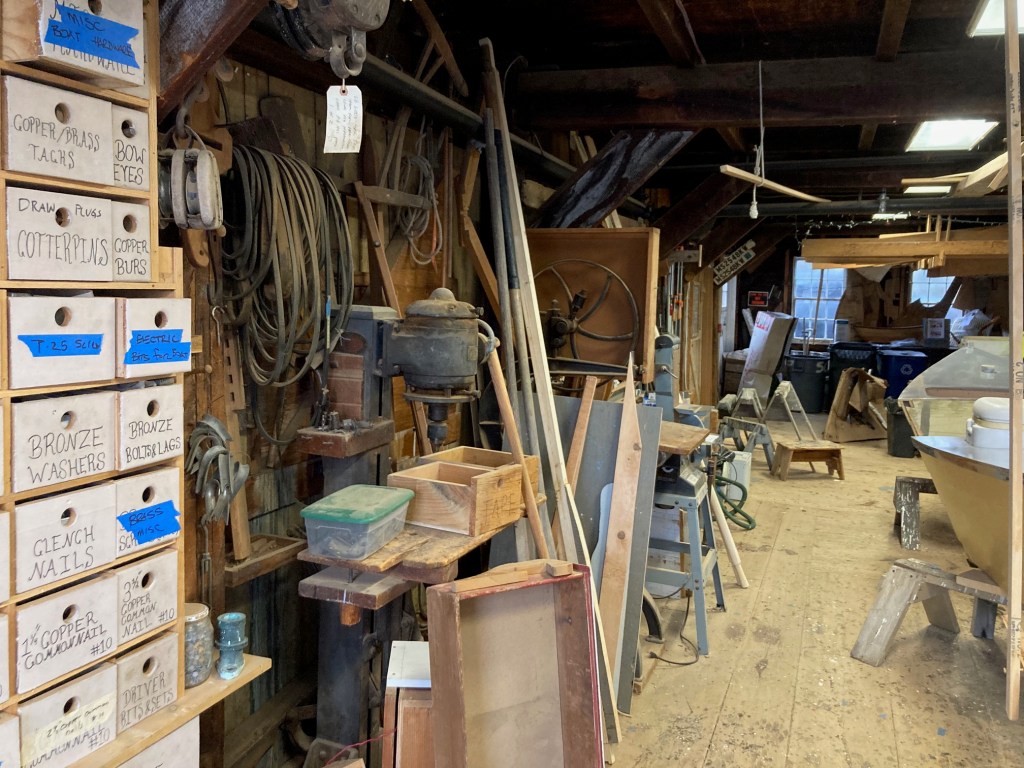
The Building Itself
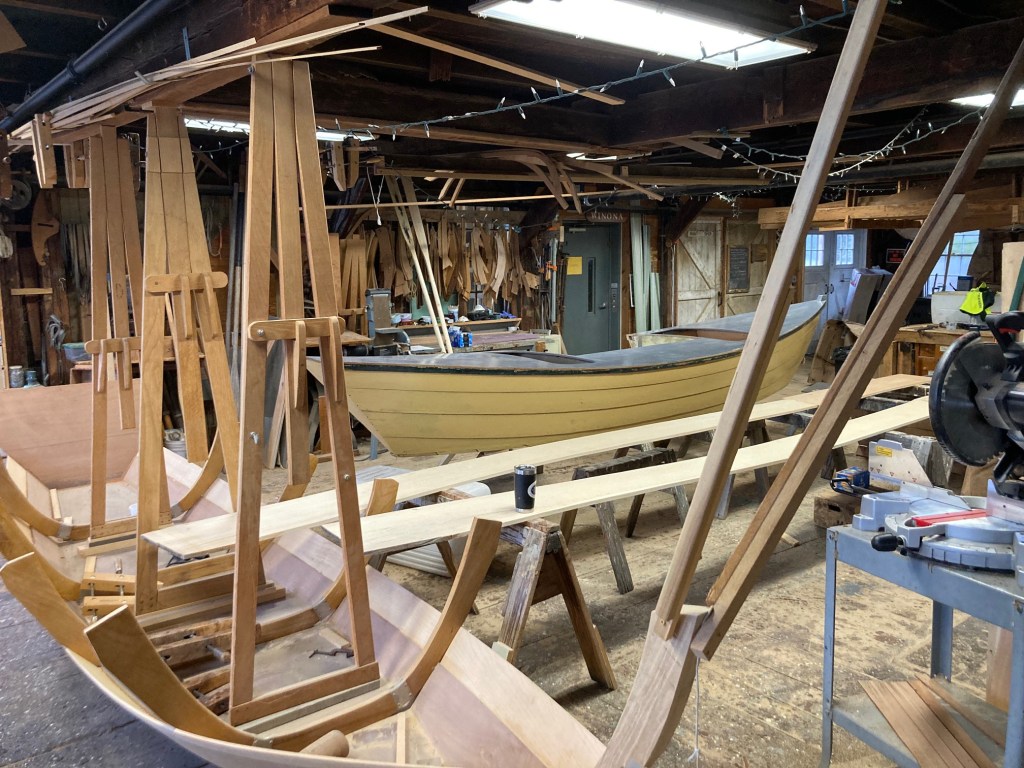
During my visit, I was most struck by the building. The original 232-year-old structure still stands, weathered by salty air and held together by boat knees and braces. Giant timbers support a structure that seems determined to be reclaimed by the river below. The floors buckle and twist from two centuries of settling. Crossbeams bear carved annual production figures—most notably the 1911 record boasting 2,011 boats built in a single year.
The floors are coated with what’s lovingly called “Lowell’s Linoleum”: a thick layer of marine paint drips and spills, in some places up to six inches thick. Walking across the uneven floorboards, you trip over inch-or-two variances where paint has broken away to reveal the aged timber beneath.
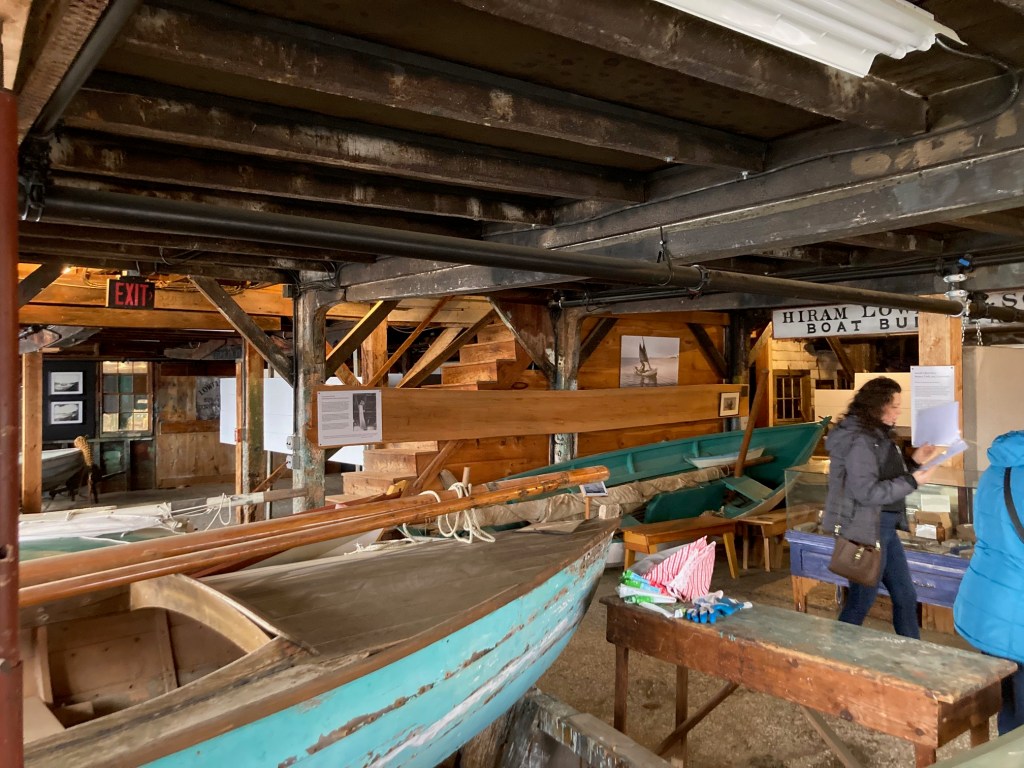
The multi-level shop is a treasure trove of antique tools that would make any collector drool. Hammers, wooden clamps, hand-crank drills, wooden snatch blocks, cast-iron bandsaws, and rows of handplanes fill every surface. A wall of bins stocked with copper and silicon-bronze fasteners sits beside a window overlooking the Merrimac. The lower level is littered with old boats—paint peeling, wood weathered—each well over a century old. An inconspicuous latrine along the southern wall hangs over the river, its seat opening directly to the cold waters below.
An Experience to Remember
Maybe one day I’ll nerd out and write a comprehensive history of wooden drift boats in the Pacific Northwest, but Lowell’s Boat Shop felt like the right place to start. It’s a moving experience to stand in the place where drift boat design was conceived and to see 232 years of progression in the wooden relics scattered around the property.
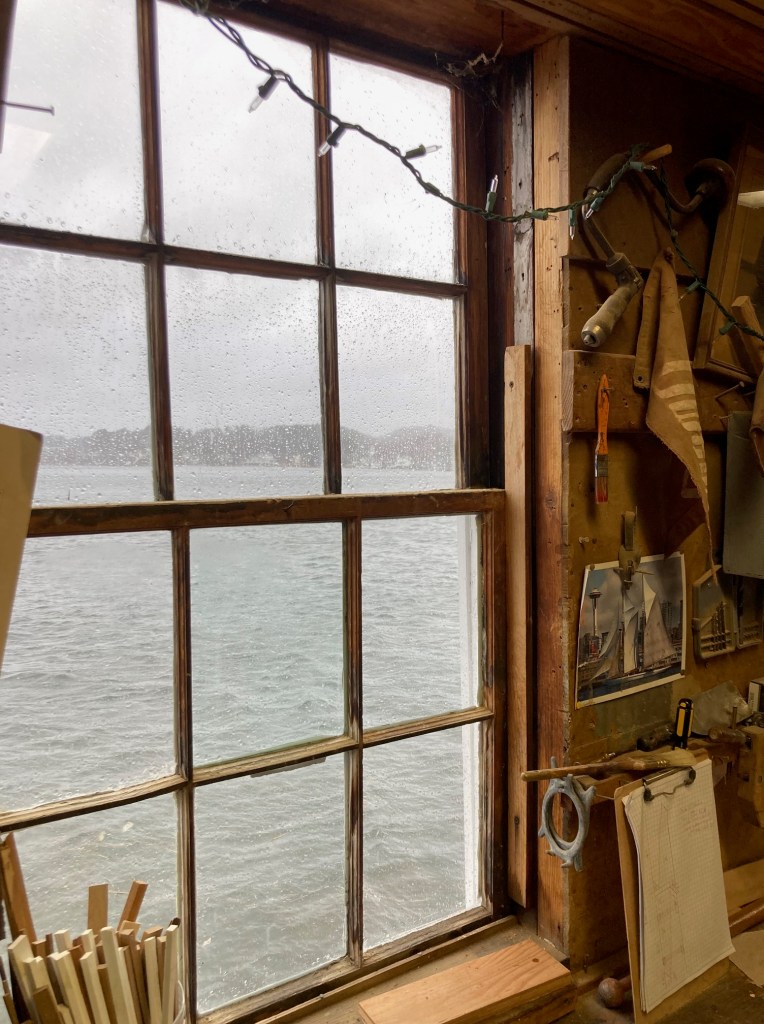
The shop is a reminder that traditional boatbuilding is accessible to anyone with a few hand tools and some know-how. You don’t need fancy machinery to build the wooden boat of your dreams. Just look at the hand saws, drills, and century-old planes and chisels lining the walls of Simeon and Hiram Lowell’s legacy shop.
Signing off.
–T

Leave a comment