
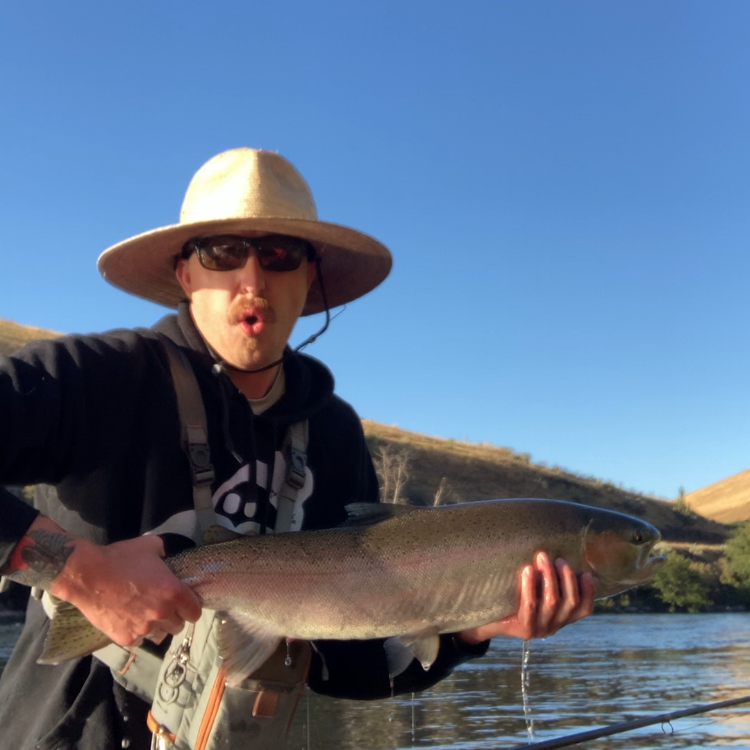
It’s easy for a steelhead angler to get caught up in the buzz: Which fly do I use? Is pink hotter than purple today? Do I need to slow down the lift before sweeping into my cast? Maybe it’s just the barometric pressure. We’re all tangled between fly selection and dialing in the perfect cast — but there’s more to it.
The greatest steelhead anglers recognize that the ability to read water is what sets them apart from 95% of fly fishers. The simplest explanation for why the rest of us don’t catch fish is pretty straightforward: we aren’t casting where the fish are. And while steelhead are technically trout, their behavior is anything but trouty. If we want to shake hands with one, we need to get inside their heads and think a little differently.
Steelhead Are Built Different
Though they spend their first couple of years living like resident trout, those trouty habits fade quickly. After growing up in their home streams, steelhead make the long journey to the ocean, where they fatten up while dodging constant pressure from big, bad predators. Only a small percentage—around 5–10% of smolts—survive long enough to return. Those that do are battle-hardened and much smarter than your average trout.
Once they migrate back to freshwater, their behavior changes dramatically. For one, they have very few threats as the biggest fish in the river, aside from a prowling grizzly or a lowlife poacher. Running chinook salmon will put steelhead off the bite but still, they’re cautious. Beyond the occasional exuberant surface breach, they move like ghosts — conditioned to self-preserve after thousands of years of evolution.
Steelhead also aren’t in the river to eat. Their sole mission is to get upstream as quickly as possible, spawn, and return to the salt. They enter freshwater as heavyweights and slowly slim down the longer they’re in the system. Because they’re not feeding, they stick to dedicated travel lanes — underwater highways — and stop only when they need to rest in holding water. They must conserve energy to complete the journey to their spawning tributaries.
Travel lanes and holding spots become obvious the more time you spend staring at the river. I like to ask myself: What route would I take if I were swimming upstream? Suddenly, pockets of slack water, even current, and tighter bank seams start to reveal themselves. It pays to focus your casts on pockets that sit along or adjacent to these travel lanes.
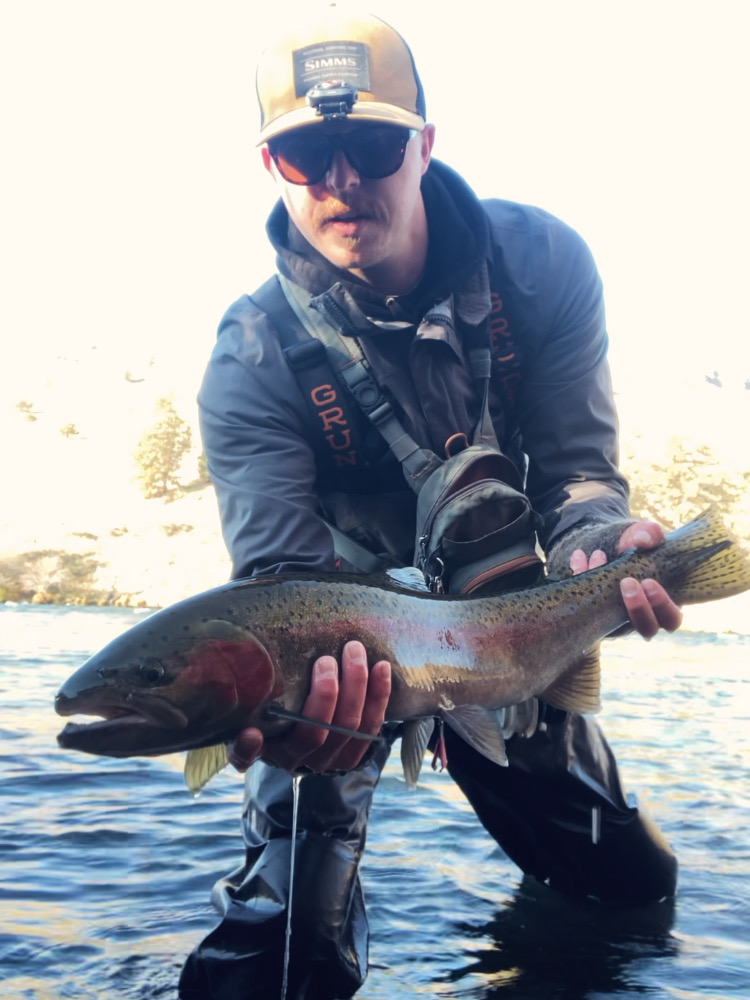
So, Where Are They Hiding?
It’s a cop-out answer, but…it depends.
The type of water we want is soft, but still moving at about a walking pace. It should be even, not churning. And while the surface gives clues about current speed, what’s happening beneath can be slightly different. Since steelhead generally prefer 4–6 feet of holding depth, you can assume underwater structure — boulders, shelves, drop-offs — is slowing the current below. That alone narrows the search considerably.
Mornings and evenings often offer the best chance at a handshake. Since steelhead tend to travel under cover of darkness, we target them most effectively when they’re still active at the end of a night of moving. Tailouts and the heads of rapids are consistent producers.
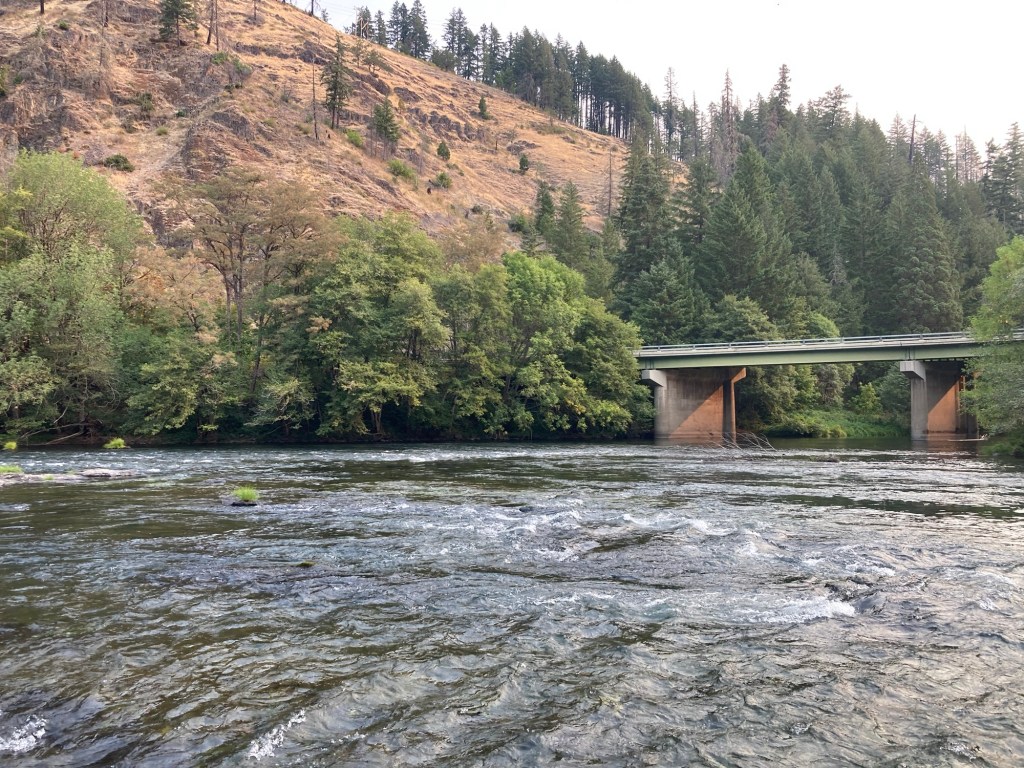
Tailouts are ideal because the river shelves upward before dumping into a rapid. It’s the first slow water a steelhead encounters after charging through whitewater, and it’s easy for an angler to identify. Fish may rest there for hours before continuing upriver. Tailouts are also a pleasure to fish — perfect for dries, muddlers, and skaters. Look for slow water in the tailout that creates a gentle, washboard-like texture on the surface. That’s a dead giveaway for holding structure.
Rapid heads are trickier. Fish might be nosed right into the pocket at the lip of the rapid, and the only way to reach them is to sink your fly quickly and keep it in the zone long enough for them to notice. A better bet, in my opinion, is to target the first major piece of structure below the rapid — the spot where current begins to even out. I’ll fish the rapid head carefully with a bigger fly, then work diligently in front of and behind the big boulder or shelf 30 feet below. You’ll see it by watching for subtle surface disturbances: a slight bulge, a slowdown, or a subtle v-wake.
Many anglers picture long, classic runs when talking about steelhead water. Those do hold fish, but they’re a bit more complicated. Long runs are rest stops — like pulling into a gas station on a road trip. Choose runs with structure: shelves, drop-offs, color changes, boulders, or depth variation. Because long runs don’t have much happening on the surface to camouflage fish, steelhead rely more on structure itself to feel safe. Luckily, the long runs are a great way to get into a casting rhythm and enjoy the process, but with a couple key pointers: Slim down your offering, step carefully, and minimize mends. I also stay tight to the bank; alders shading water as shallow as knee-deep offer enough security for a resting fish.
A Couple of Rules to Live By
Here are a few key points I keep in mind when I’m swinging flies for steelhead:
- Steelhead tend to hold in the same spots. If you get a grab behind a boulder today, odds are you’ll find action around that same boulder tomorrow. Keep a log of encounters and revisit those spots at the same time year after year. Note the date, place, conditions, time of day, and fly. Steelhead are creatures of habit.
- Steelhead are smart but lazy. These fish are big because they were the smartest in their brood. But none of them want to sit in churning, fast, difficult water. Think about where you would rest if you were a lazy fish.
- There is no such thing as a desperate steelhead. If the fish wanted your fly, it would have eaten it. Don’t overwork the same water or get frustrated when you don’t find a willing participant. Steelhead are challenging because they’re patient — use that as a chance to work on your own patience. Just be sure to fish each run and bucket with integrity.
This Is Not a Comprehensive Guide
It takes a lifetime on the water to truly understand steelhead holding water, and I’m lightyears away from becoming a master myself. Reading water is so nuanced that one blog post could never cover the entire topic. I may break down different types of holding water in a future series, but for now, here are a few of my favorite in-depth resources:
- Steelhead Fly Fishing — by Trey Combs
- A Steelheader’s Way — by Lani Waller
- The Complete Steelheader — by John Larison
These books have shaved years off my learning curve. But as powerful as they are, there’s no substitute for time on the water.
Catch me there, my friends.
—T

Leave a comment