
I want to get something out of the way before diving in: you can spend as much—or as little—as you want on a spey setup for any time of year. I’ll explain my two core summer rigs and when I choose to use each of them. You can absolutely fish for summer steelhead on a single-hand rod very effectively—though I’m partial to the two-handed approach.
Method 1: The Cheap Switch Rod
- Rod: 11’1” Fenwick Aetos 6/7 weight switch rod
- Reel: 7/8 weight Redington Behemoth
- Line: 400gr Rio Scandi Body
One of my favorite rods in my quiver is also one of the cheapest. I love the rod and hate the reel—even though the reel feels right at home in this configuration. I was looking for a compact two-hander that wasn’t too heavy and would balance with a Redington Behemoth that was gathering dust in my garage. The Fenwick Aetos switch rods aren’t made anymore, and you can only find them secondhand. I picked mine up for $135 on Facebook Marketplace, still wrapped in plastic.
The rod is light, has decent action, casts well, and performs well above its price point.
The Redington Behemoth? Ugly, graceless, heavy. But it takes a beating and delivers enough drag to stop a hot summer fish. I line it with a 400gr Rio Scandi Body, which has a 23 ft head. It throws light sink tips up to T-8, but really shines with intermediate VersiLeaders. It’s a blast to tie on a size 5 hairwing and let ’er fly.
Method 2: My Dream Summer Run Setup
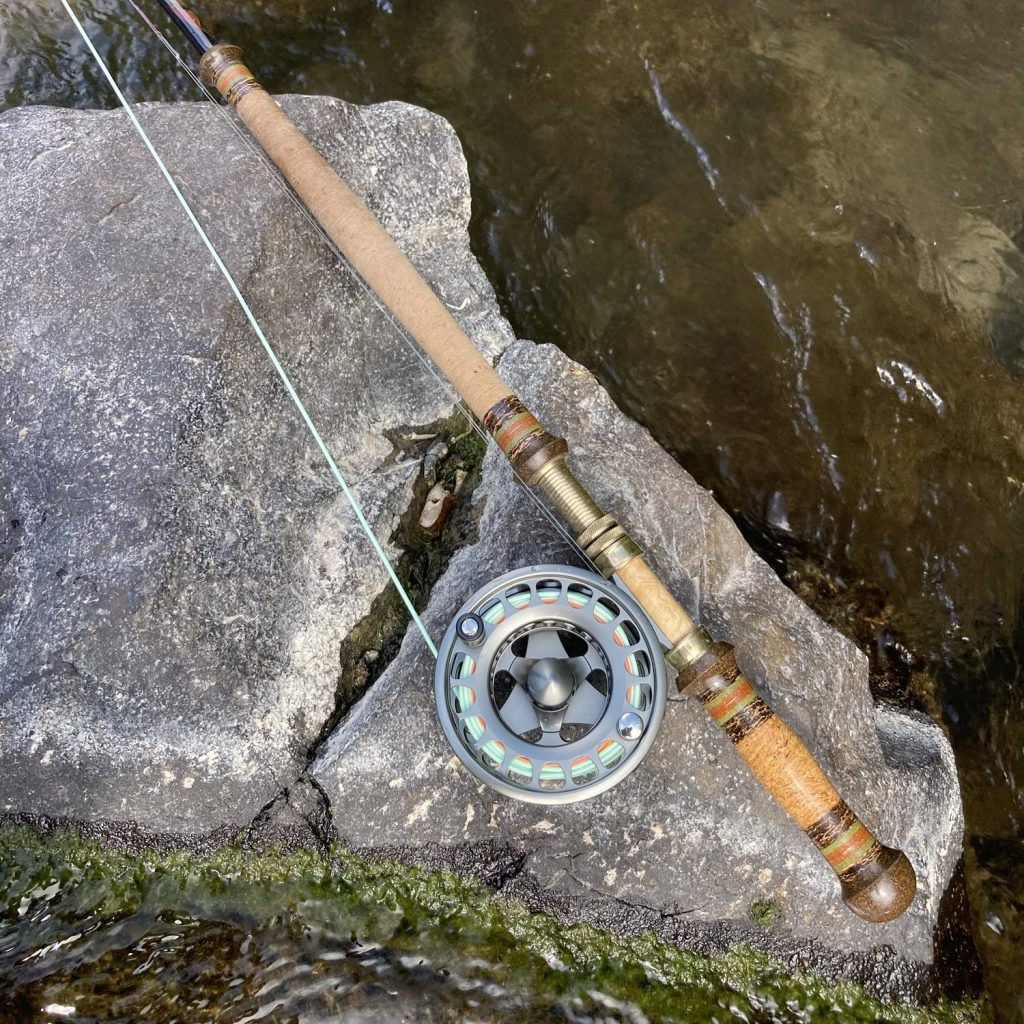
- Rod: 13’ RB Meiser Highlander 6/7/8 weight spey rod
- Reel: Danielsson H5D 9thirteen
- Line: Steve Godshall Scandoid or Bridge Tributary, depending on wind
My favorite rod is a gift I received from my fiancée: a custom Meiser Highlander spey rod. The stick is a work of art, and I had the privilege of being involved in the build process. If you can swing it, reach out to Nick Moses at RB Meiser Rods—he’ll treat you right. I use this rod as my “daily driver” spey rod year-round. I did a deep dive in another post about why I love this rod so much.
To balance this cannon of a rod, I ordered my favorite reel brand: Danielsson. Their reels offer incredible value, and I’ll probably write a dedicated article on why I love them so much.
Line choice is where things get interesting. When it’s windy, I load up a 524gr Steve Godshall Scandoid line with a 30 ft head. I usually run 12–15 ft of 10 lb Maxima to my fly. When the sun’s overhead, I’ll swap in a 10–14 ft polyleader and fish a few feet deeper in the column.
On still mornings, I switch to my Bridge Tributary line, designed by champion caster and line maker Tim Arsenault. It weighs 525gr and has a 42 ft head—and holy shit, it’s a dream to cast. I taper a 15–20 ft mono leader down to 8 lb Maxima and let the rod do all the work.
Why All the Different Setups?
I use two different rods to fish three different lines because, ultimately, the line fishes the fly. The switch rod excels in tight quarters under aspen trees, while the full spey rod provides unmatched casting efficiency.
The longer belly of a proper spey line is a pleasure to cast and delivers delicate presentations to wary fish. Lines like the Bridge Tributary allow me to cover a run quickly—I don’t have to strip in 30 feet of running line every time I recast. Cast, swing, step, repeat. The Tributary’s 42 ft head is long, but still manageable. Its only real weakness shows in the afternoon on the Deschutes, when 30 mph canyon gusts make it hard to hold a tight loop. By then, I’m switching to an intermediate tip on the Godshall line anyway—so it’s not a big deal.
The Business End
This is the easiest part of steelheading, but the one anglers tend to overthink. Just tie on a fly you have confidence in. If you don’t have confidence in anything, you can always trust a Green Butt Skunk.
If you’re fishing a floating line with a long head, taper a 15–20 ft leader down to 8 lb Maxima and call it good. Tie on a hairwing with a Turle Knot and start fishing. I have a separate post that talks about the nuances of different fishing knots.
If you’re using a floating Scandi line, do the same thing but add a VersiLeader or polyleader and tie on 5 ft of Maxima Ultragreen before your fly. Again, use a Turle Knot.
Don’t fish Skagit lines in the summer. Skagit lines slap the water. Summer steelhead are more likely to take a fly on or near the surface, and they’ll chase a fly that’s presented well. Skagit setups are made to turn over heavy tips and big flies—not weightless classics and long mono leaders.
None of this matters if your fly’s not in the water.
-T


Leave a comment