
The default line in most fly anglers’ arsenals is usually a full-floating line—and for good reason. Floating lines don’t get wrapped around rocks while you’re wading and tend to be the most versatile for the wide variety of angling situations you’ll encounter. Outfit that same floating line with a set of sink tips and you’re off to the races, fishing just about every water type and presentation you can conceptualize.
As valuable as sink tips are, they aren’t ideal for a specialized set of situations where depth mastery is the key to success. Let’s dive into three common scenarios where a full-sinking fly line truly shines.
What Is a Full-Sinking Line?
Exactly what it sounds like. A full-sinking fly line is a long, continuous sinking taper that may or may not include a short floating or intermediate “handling” section near the running line. Many of the best modern full-sink lines replace that floating portion with a low-buoyancy intermediate to maintain a better connection with the fly and reduce drag.
These lines exist for one purpose: getting your flies down and keeping them down.
A common misconception is that full-sink lines are simply heavier than floating lines. Not true. The overall weight matches your rod’s line rating—but the density is much higher, which compresses the weight into a thinner diameter. That slim profile cuts through water and allows flies to sink fast and stay deep. These lines are often paired with bulky streamers or weighted patterns, so the front taper is usually loaded with extra mass to help cast large flies efficiently.
Challenges of the Full-Sink Line
Let’s be honest: full-sinking lines aren’t the easiest to fish. Here are a few trade-offs to keep in mind:
- Snags: When wading, the line can wrap around rocks or logs on the riverbed.
- Casting Difficulty: You can’t pick the line up off the water like a floating line. Instead, use a roll-cast pickup to bring the line to the surface before your cast.
- Misconception of Sinking Too Fast: Full-sinking lines don’t plummet to the bottom like a rock. In fact, your retrieve speed and cadence greatly influence how the fly behaves in the water. A steady retrieve keeps the fly at a consistent depth and slows the descent. Always choose an appropriate sink rate for the depth and current.

Use Case 1: Streamer Fishing
This is the most common application for full-sinking lines in moving water. While floating lines and sink tips often struggle to keep big flies down, a full-sinker gets into the strike zone immediately—and stays there throughout the retrieve.
Tips for success:
- Match your sink rate to the water:
- Type 3 for moderate flow and depth.
- Type 6 or 7 for fast current or deep holes.
- Use a short leader (3–4 feet) for better connection and fly control.
- Perfect for swinging or stripping flies across ledges and undercut banks.
Gear I Recommend:
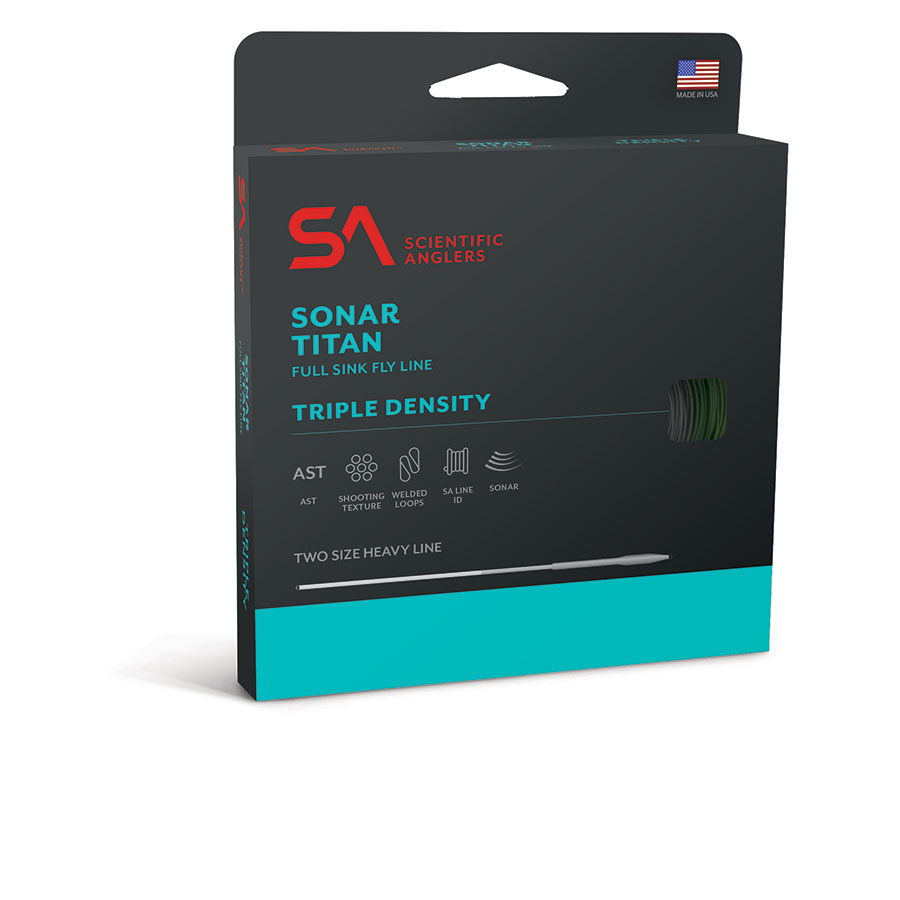
I personally favor the Scientific Anglers Sonar Titan, which I’ve found more durable than the Rio Outbound Short. I’ve seen the Rio crack and expose the mono core after limited use, whereas the Sonar Titan’s braided core and coating hold up to abuse. Tie on a 3-4 foot Maxima Ultragreen leader and there ya go.
Use Case 2: Steelhead in Pocket Water
Pocket water can be deceptively tricky. Fast surface currents rip past calm holding lies in front of, next to, and behind boulders. Traditional floating lines often skate or pull the fly out of the zone too quickly.
A short cast with a full-sinking line dives quickly and keeps the fly swinging through these tight windows. We use this tactical approach to steelheading during summer runs when we know that the fish aren’t as likely to hold in long, deep pools.
Why it works:
- Delivers a precise swing through small seams.
- Cuts through micro-currents and avoids surface drag.
- Keeps the fly deep but under control during short swings.
Pro Tips:
- Fish a single-hand or switch rod for maneuverability.
- Stack mend upstream to help the line sink more effectively.
- Keep just enough tension on the line to control the fly throughout the swing without bringing it up to the surface.
This technique is especially effective on smaller rivers and canyon streams during low water conditions, where fish tuck into fast-and-shallow pocket water.
Use Case 3: Stillwater Fly Fishing
In lakes, depth is everything, especially during the height of summer. Floating lines are perfect for hatches close to the banks or fishing a bugger through some shallow weed beds, but the sinking line is your best friend for most Stillwater applications.
How to fish it:
- Use the “countdown method”—sink rates are measured in IPS (inches per second), so count down before retrieving.
- Retrieve styles vary:
- Slow hand-twist for leeches.
- Erratic strips for baitfish patterns.
- Hang the fly at the end of your retrieve to tempt followers.
Ideal for:
- Fishing drop-offs, deep ledges, or the thermocline.
- Slow retrieves with damsel nymphs and chironomids.
- Fishing from the boat.
Add the Full-Sinker to Your Arsenal
Full-sinking lines are essential tools when depth and control matter. If you’ve only ever fished floating lines or sink tips, you may be missing out on a whole world of fishable water.
I used to think my 15-foot sink tips were enough—until I picked up a full-sinker and saw what I was missing. Depth control, better swings, and consistent presentation changed the way I fished.
Grab your own full-sink line and experiment – you just might find your new favorite setup.
– T


Leave a comment