

Pretty much all of the water in Central Oregon is highly pressured. I remember one morning when I arrived at Mecca Flats on the Lower Deschutes at 6 a.m., hiked downstream, and started casting. Within an hour, there was one guy fishing above me and three others within 50 yards below. That’s the price you pay when fishing world-class fly water.
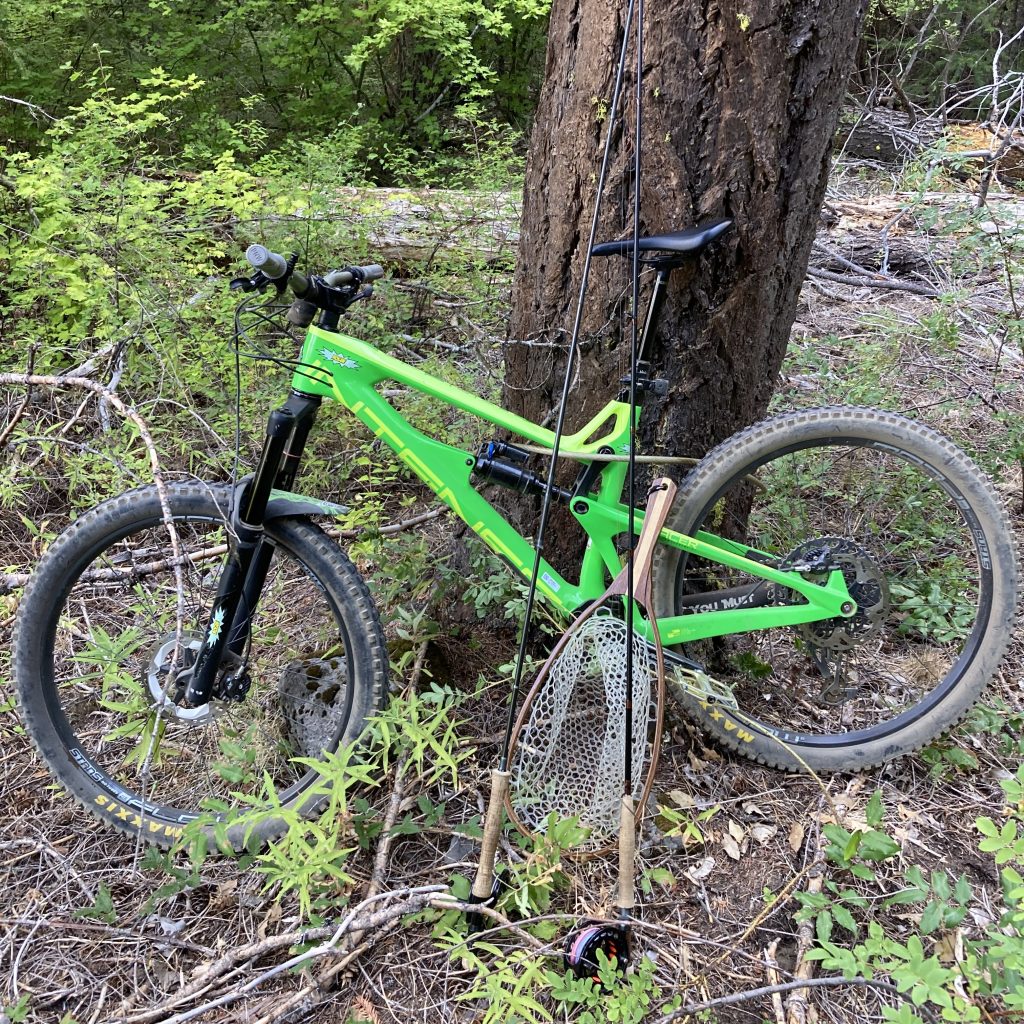
The solution, sometimes, is to bike or hike into remote locations in search of less-pressured water. This past weekend, I hopped on a bicycle and rode into the remote Metolius Basin in search of bull trout that might be receptive to a streamer.
Spoiler: I didn’t find any bull trout—but I did find something much more special.
Why Bike to Fish?
It’s no secret that less pressure = more fish. Fish that haven’t seen many flies are more opportunistic than ones that’ve seen 400 bad drifts in the past two hours. The truth is that some of the best fly water lies beyond locked gates, rough roads, and remote wilderness trails.
Most fishermen are lazy—and for good reason. Hiking in is reserved for the foolhardy angler who doesn’t mind 25 lbs of gear on their back, steamy waders, and heavy boots. Whether you hike or bike, it pays to pare down your kit to the bare essentials so you still have the stamina to make good casts and thoughtful drifts.
Biking into remote areas brings a few added challenges:
- You need to lock and stash your bike securely.
- Multiple rods can be awkward unless stowed properly.
I made the mistake of carrying two fully rigged rods once. Never again. Do yourself a favor and keep your rods in their tubes, packed safely, and rig them up streamside.
Fishing for Bull Trout is a Different Game
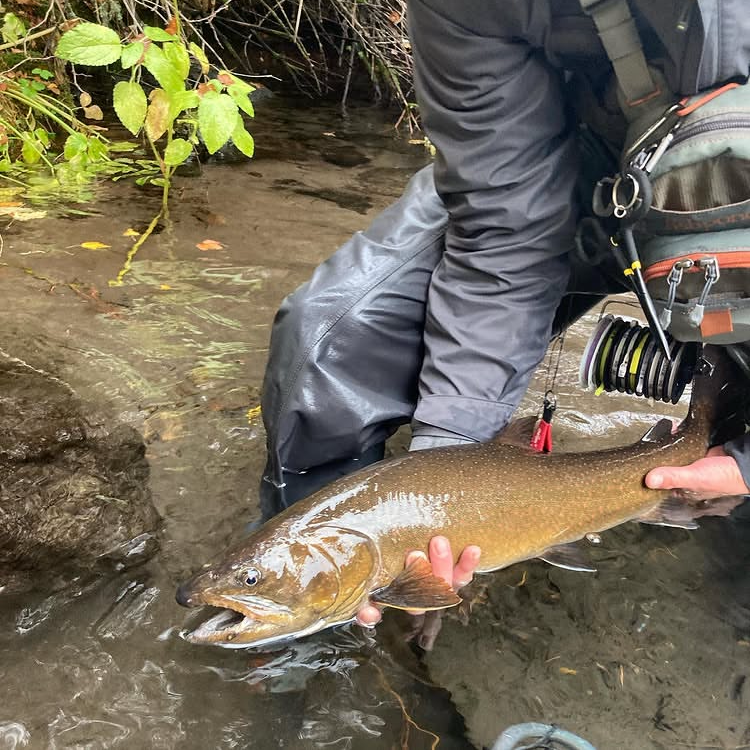
Bull trout aren’t actually trout—they’re a type of char, similar to their cousin the brook trout. You can spot them by their red, cream, and pink-colored spots and the milky white ridges along their fins.
Like most char, bulls are serious predators. On the Metolius, anglers chase them with streamers as big as 8 inches. I’ve personally seen a bull trout chase down a 14-inch rainbow I was reeling in.
I approach bull trout lies a lot like I would brown trout:
- Slow water with structure is the name of the game—deeper pools with boulders, log jams, or undercut banks.
- I fish streamers with just enough weight to get down but not so much that they plummet into the woodpile.
If you can keep your fly within 18 inches of the bottom and hold it there, you’re in the zone. Sinking lines are your friend—as long as the handling section floats. Nothing’s more frustrating than a full-sink line wrapping around your boots and boulders while you’re trying to double-haul.
Matching the Season with Streamers
On the Metolius, what works changes with the seasons:
- Rainbow trout and whitefish patterns do well year-round. Think olive-over-white for trout or tan/brown-over-white for whitefish.
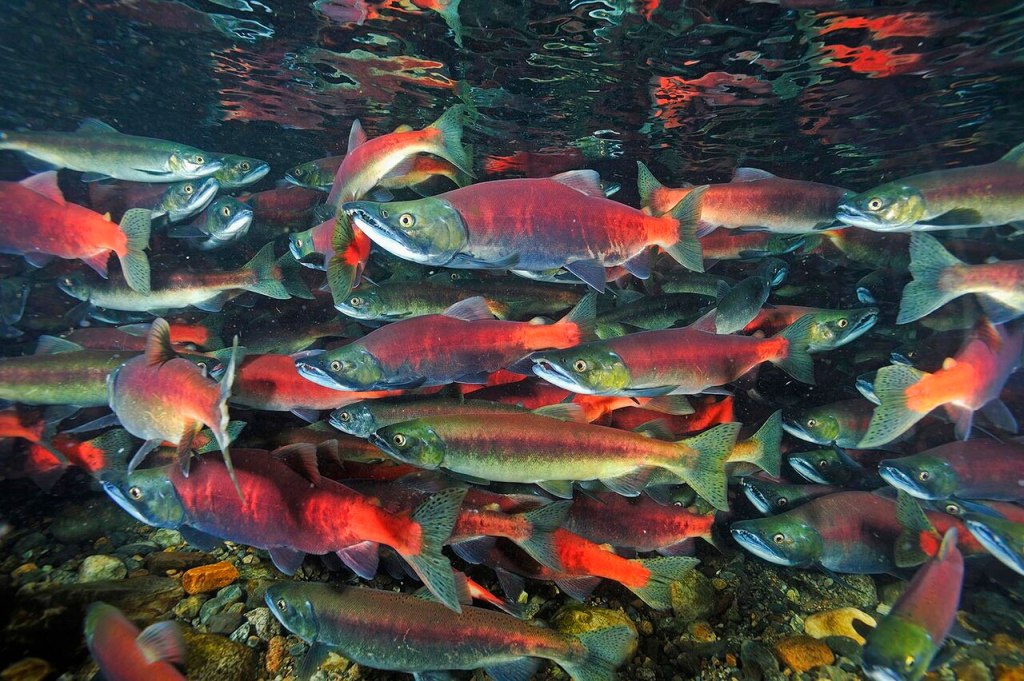
- During the kokanee migration, the game changes. Bulls follow the kokanee upriver from Lake Billy Chinook, and a red or pink streamer with an olive head becomes the hot ticket.
- If stripping isn’t your style, dead-drifting a nuke egg during the spawn can account for both bulls and redbands.

Stripping Streamers: My Sunday Recap
My tool of choice that day was a 4–5″ rainbow trout imitation, stripped through pools at a blistering pace. I wanted to mimic an injured baitfish darting into cover. The streamer was a Double Deceiver-style pattern—bucktail, fluorescent pink rubber legs, and tied on heavy saltwater hooks. I added some lead wraps on the back hook to keel the fly just enough and make it whip through the water erratically. Otherwise, it was unweighted and fished on a 7 IPS full-sink line. I like my streamers to be just heavy enough to get down since I prefer the action of unweighted streamers, at least for wounded fish patterns.
The fly accounted for one solid fish.
I cast upstream into a seam and let the fly sink for a few seconds. Then I began a quick strip through the pool and across an underwater shelf. From under a submerged log, a hefty redband—maybe 15 or 16 inches—shot out and T-boned the fly. I strip-set, picked up the slack, and quickly brought the fish in with my 8-weight.
The rest of the day was spent alternating between stripping streamers and following up with a jig streamer on my euro rod. As usual, the jig streamer pulled its weight, and I finished the day with one of my most productive sessions on the Metolius.
Lessons Learned: Biking Into the Backcountry
Biking into the wilderness is always a gamble. Sometimes you find prime water. Sometimes you find nothing but rapids.
Most of the water I hit this weekend was the latter—either unfishable whitewater or banked in by brush thick enough to snag your soul. But when you do find that pocket of water that looks fishy and actually is, it’s pure gold. The fish are unpressured and eat with reckless abandon.
Add in a few miles of pedaling, some backcountry solitude, and maybe a couple wildlife sightings—and it all just feels more earned. The silence out there? You don’t get that when you park next to ten other rigs at the trailhead.
In the end, no matter how many fish you catch, a day that costs you some sweat equity just feels better.
– T

Leave a comment