
Over the years, I’ve walked past plenty of old fiberglass rods sitting at garage sales and antique stores—missing guides, degraded corks, and the like. The picture painted confirmed the stereotype: glass rods are outdated and belong in the past. It wasn’t until I started reading about fiberglass rods through sources like The Fiberglass Manifesto that I began to give them an honest look. It took some time, but I finally forked over the cash and bought one. And guess what? I just might be the newest “glass geek” on the river.
The Rod Material Evolution
Modern fly rods came to be in the 17th and 18th centuries, when rod makers made the leap to splicing and joining pieces of wood to create tapers. Rods were made from a variety of wood species until the 19th century, when bamboo began to set the standard as the most pliable material for crafting finely tapered rods. Bamboo remained the medium of choice until the early 20th century, when composites entered the market and quickly became the state-of-the-art material.
The war economy of the early to mid-20th century brought with it fiberglass and resins. Shakespeare commercialized the fiberglass rod around 1946 and popularized the process. Wrapped fiberglass cloth soaked in resin became the standard until 1973, when graphite came onto the scene. The new material was faster, more refined, and lighter than fiberglass. The result was a smoother-casting, more accurate fly rod. The only material that has come close to dethroning graphite is boron, but for now, graphite remains the industry standard.
Why I Bought a Fiberglass Rod
Fiberglass boasts a few key features that caught my eye. I was looking for a rod that was cheap, compact, and durable for fishing small streams. I wanted solid tippet protection since I’d likely be fishing dry flies on 5–7x tippet, which is easy to break with a fast graphite rod. I also wanted something with a slower action to round out the versatility of my rod quiver. Luckily, fiberglass fits the bill:
- They’re cheap: A decent fiberglass rod can be purchased for less than $250, and the Scott F-Series rounds out the top end of the market at around $695.
- They’re compact: Most fiberglass rods are produced in lighter weights and shorter lengths—all the way down to the 5-foot class. They’re easy to pack in your luggage or on a backpacking trip.
- They’re slow: The slower action protects light tippet and promotes soft dry-fly presentations.
- They’re durable: Fiberglass rods don’t shatter. In fact, you can bend some rod tips almost to the cork. Don’t worry about bushwhacking with these things.
What’d I Buy?
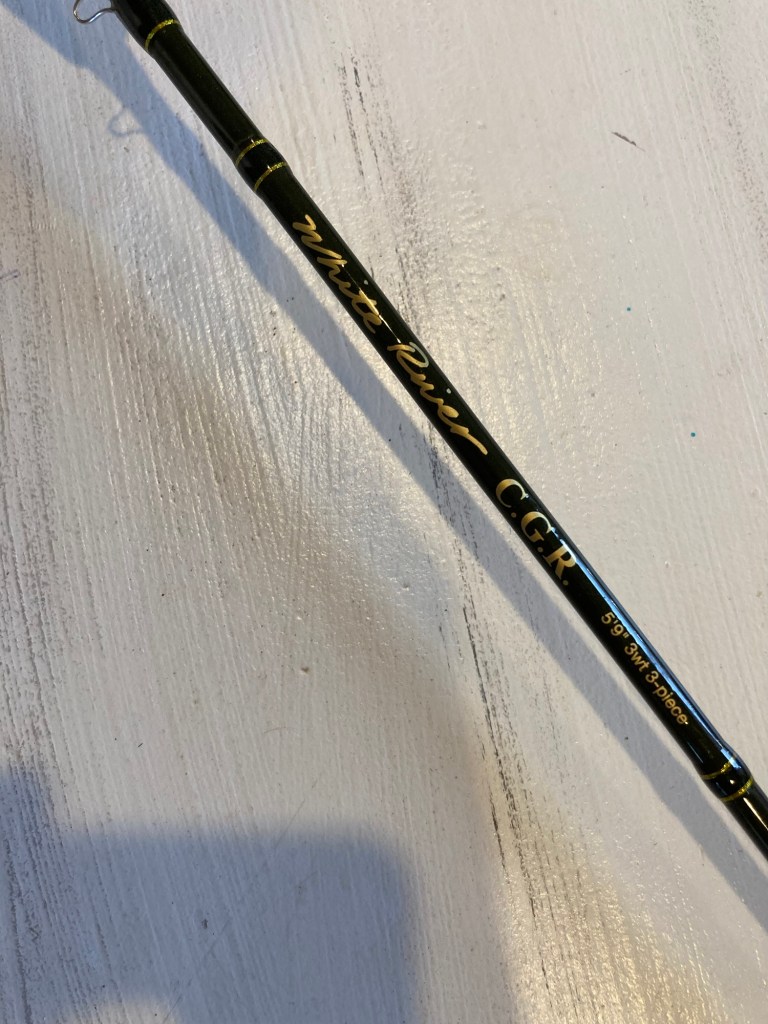
My first foray into fiberglass is a 5’9” 3wt White River CGR, formerly known as the Cabela’s CGR. I picked the rod up for $90, and I’d happily pay that price again. There was no way I was going to invest a ton of cash into a pack rod—especially with the intention of experimenting with a new material.
First and foremost, don’t expect high-end performance out of this rod. It is not refined, and the ferrules are on the loose side. I need to check that they’re snug about every 15 casts. The cork is also cheap and loaded with filler, and it’s an odd shape.
But…
Holy shit, is this thing fun to fish.
The rod loads deep into the cork and unfurls like one of those paper noisemakers you find at a birthday party. It’s slow—ultra slow. Like casting overcooked spaghetti slow. Presentations are unintentionally gentle, letting the fly softly settle into the surface film.
When a fish finally eats, the rod absorbs much of your power on the trout set, making hooksets more difficult. But that extra delay gives fish a split second longer to commit, so maybe that’s a tradeoff. And if you hook a little 4-inch dink, it’ll bend your rod like a steelhead on a 5wt—just with a deeper, more satisfying arc. You really feel the give-and-take when fighting fish.
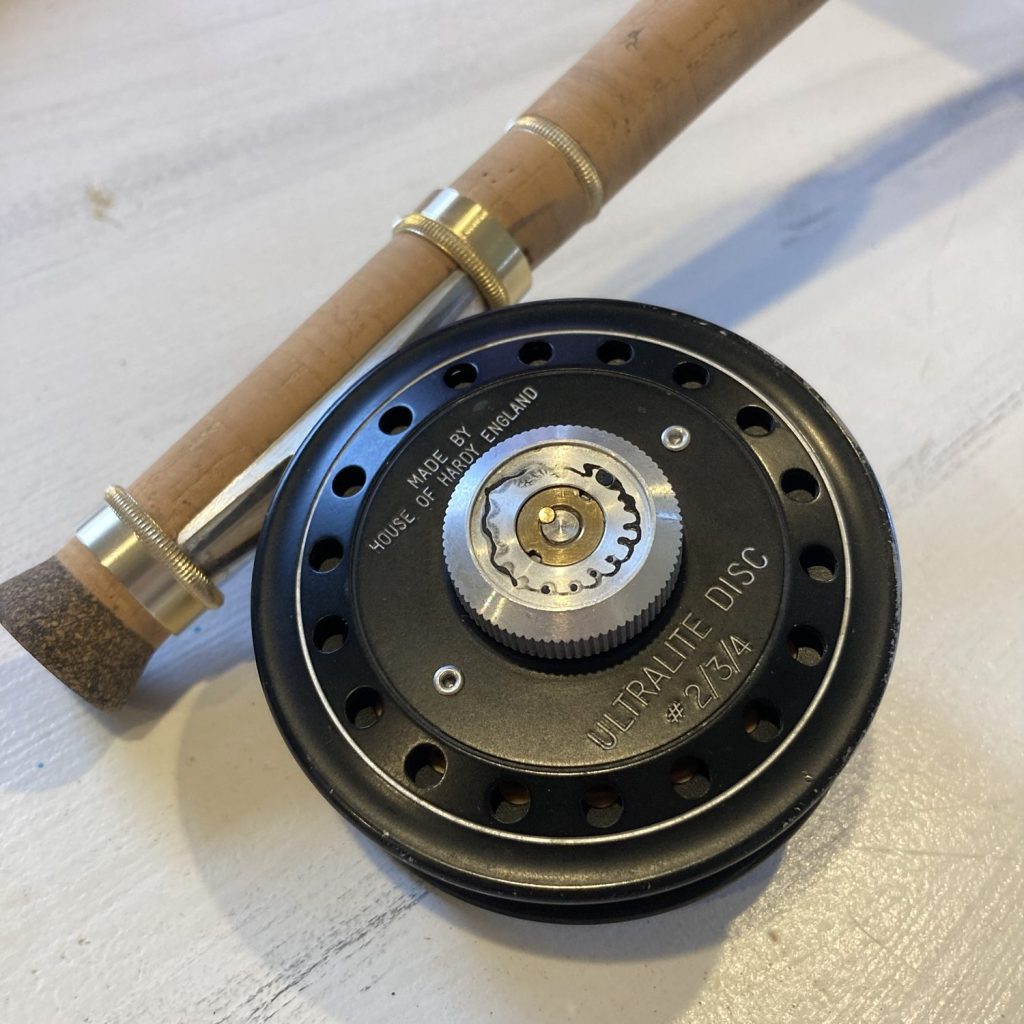
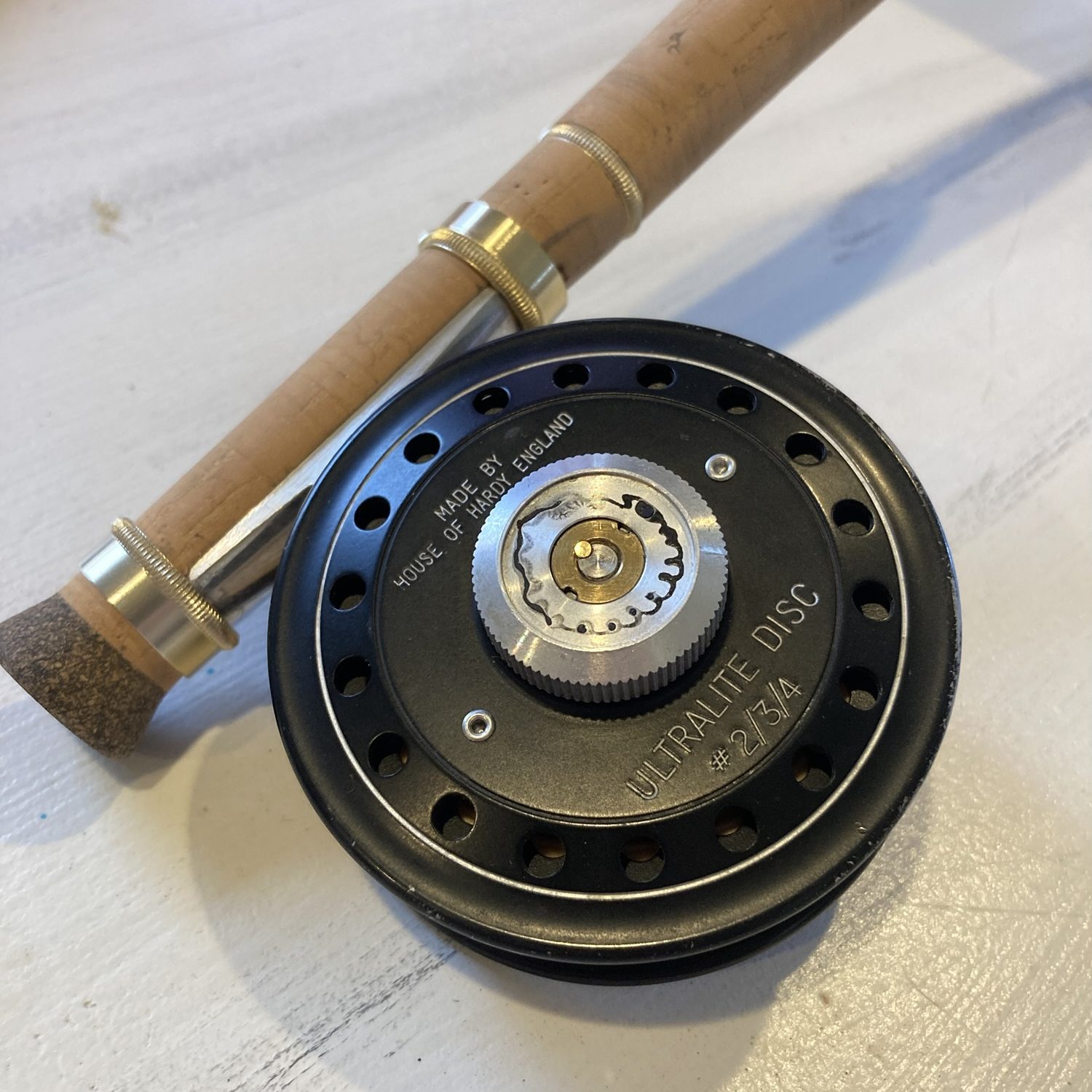
I paired the rod with a Hardy Ultralite Disc reel—one of the older models (not to be confused with the highly collectible click-pawl JLH). It has a basic disc drag on its compact 2 ¾” frame. The click is immensely satisfying—that’s why I bought it. It’s designed for 2–4wt rods, and to be honest, it feels like I’m driving a 1998 Accord with chrome Cadillac rims. The reel is too nice for the rod, but it’s a sweet little combo. Maybe I’ll start a collection and become a classic reel historian—who knows?
Fiberglass Captures the Essence of Fly Fishing
Feeling the bend, experiencing the load, and watching it all happen in real time. If you haven’t experienced the joy of fishing fiberglass, you’re missing out.
This cheap little rod just might turn me into a full-blown glass geek. It’s proof that a great time can be had on inexpensive gear—and that fly fishing doesn’t need to cost a fortune.
Meet me in the Cascades on some seriously small streams. I’ll be the guy with a huge smile on his face.
—T


Leave a comment