Blog

  • What to Wear for Winter Fishing

    Nothing matches the peace and solitude spent on unpressured winter water.

    Frosty mornings, frozen guides, snow on the boots. The dedicated set of anglers who know fishing doesn’t stop in the winter are all too familiar with cold conditions. During the colder months, I’ll admit I often shack up with a hot toddy, a bowl of soup, and my trusty fly-tying vise. But no amount of flies tied can substitute for getting out on the water—and sometimes the urge is too much to ignore. Dressing for winter fishing is a system that, once you get it down, is foolproof.


    An Anecdote on What Not to Do

    One fateful Sunday morning in January found me loading up the truck at daybreak, coffee in hand, staring at a frozen windshield. The 45-minute drive out to my favorite spot on the Metolius felt extra long as I watched the dash stubbornly hold at 4°F. It was cold as balls out.

    I got to the river, threw on my Simms waders, and laced up my bargain-bin felt boots. That day made me decide never to skimp on boots or waders again. My buddies rolled up and we hiked through the snow to our winter hole. The hand warmers we brought were useless, and with every step my felt soles collected more snow—by the time we got to the river there was a solid 4-inch layer of compacted ice on the bottom of my boots.

    I kicked off the snow, took a swig of whiskey, and made my way down to the water. As luck would have it, I tripped and landed in a thorn bush. With my first step into the 40-degree water, my waders instantly filled up. Oddly enough, that water felt warmer than the air—for a moment, I was almost comfortable. That didn’t last. My fly line froze to the guides with every single cast, forcing me to dunk my reel to break the ice, only for it to refreeze seconds later. Once I stepped out of the water, I was miserably cold. It didn’t take long before I trudged back to the truck in defeat. Never again.


    Be sure to wear layers when winter fishing. I always wear a synthetic or merino wool base layer and then build on top of that as conditions dictate.

    The Layering System

    Besides investing in good waders and boots, layering is the right way to dress for winter fishing. Several light layers will keep you warmer than one heavy jacket and give you the flexibility to adjust as conditions change. Sweat and moisture are the real enemies. Here’s the formula:

    • Base Layer (next to skin)
      • Wicks moisture away.
      • Best materials: merino wool, synthetics.
      • Avoid cotton at all costs.
    • Mid Layer (insulation)
      • Traps body heat.
      • Options: fleece, down, synthetic puffies.
      • Match thickness to conditions.
    • Outer Layer (protection)
      • Shields you from wind and water.
      • Best bet: waterproof, windproof, breathable shells.
      • A good rain jacket or wading jacket is essential.

    Covering the Extremities

    Most anglers stick to thick socks and hand warmers, but that’s rarely enough.

    • Hands: Fingerless wool gloves are my go-to. Wool stays warm when wet, and the open fingers let me tie knots without taking them off.
    • Feet: Either one solid pair of merino socks, or thin synthetic liners under loose wool socks. Avoid anything tight—it cuts circulation and makes you colder.
    • Head/Neck: A wool beanie or balaclava paired with a hooded jacket locks in warmth. Don’t overlook a neck gaiter or buff.

    Some of the best opportunities present themselves when the temps start dropping.

    Special Considerations for Anglers

    • Waders: A high-quality pair (I use Grundens Vectors) keeps you warm without restricting movement. Check out my review on the Vectors.
    • Boots: Korkers Darkhorse with interchangeable soles let me adapt year-round. In winter, studded Vibram soles beat felt, which ices up quickly. If you only own one sole, make it studded Vibram.
    • BOA vs. Laces: BOA systems outperform laces in winter—wet laces freeze, making adjustment nearly impossible.
    • Shell Jacket: Always wear it over your waders to block splash and heavy rain from sneaking in.

    My Personal System

    After a lot of trial and error (and frozen gear), here’s my go-to setup for winter fishing:

    • Base Layer
      • Smartwool Intraknit Active Base Tight (under fleece bottoms)
      • Smartwool Active Fleece Tight
      • Random Costco thermal shirt (surprisingly solid)
    • Mid Layer
      • Button-up flannel
      • Columbia puffy jacket
    • Shell Layer
      • Outdoor Research rain jacket
      • Grundens Vector waders
    • Hands & Feet
      • Fingerless wool gloves my fiancée crocheted (sentimental + functional)
      • Darn Tough socks (thickness/length depending on temps)

    Wrapping Up

    Winter fishing can be magical if you dress for the conditions. The quickest way to ruin a beautiful snowy day is with the wrong clothing—or one bulky jacket that leaves you sweating and freezing. Thin, versatile layers are key, and maybe a hip flask of rye whiskey for morale. With the right system, you’ll stay comfortable and enjoy some of the least-pressured fishing of the year.

    What are your go-to cold weather hacks? Share them in the comments—I’m always looking to steal a good idea.

    —T

  • Danielsson F3W Review: A Minimalist Fly Reel That Outperforms the Rest

    I choose to pair a Danielsson F3W with my euro rod due to the full-cage design and low startup inertia.

    It’s no secret that I don’t like paying a lot of money for fly reels. At its core, a fly reel basically exists to store your fly line. Yes, drag helps to stop runs from powerful fish, but I’d hesitate to buy a reel just because the drag is top-tier. Plenty of anglers run click-pawl reels that sound amazing but have no drag beyond the palm of your hand. 

    A good fly reel should have style and features that resonate with the angler — at the right price point. At the mid-$200 price range, the Danielsson F3W is my favorite reel. In fact, it might be my favorite all-around trout reel.


    History of the Danielsson Brand

    The Swedish reel manufacturer came on the scene in the 1980s as a collaboration between Tomas Danielsson and Loop Tackle Design. Loop is well recognized for their robust line of spey rods and reels. Throughout the partnership, Danielsson developed and manufactured reels for Loop and is now credited with popularizing the large-arbor design — a standard feature in most fly reels today. Large arbors allow quicker line pickup and reduced line memory.

    In the early 2000s, Danielsson and Loop parted ways. Danielsson launched his own company with a focus on direct-to-consumer marketing and performance over branding. He reclaimed his designs and began shipping reels directly from the factory in Sweden — no middlemen.


    Overview of the F3W Series

    Because they are shipped from Sweden, pricing is determined in part by exchange rates and subject to change. Shipping charges are waived depending on your order size.

    The F3W comes in three sizes: 2six, 4seven, and 7ten. The sizes correspond to the range of fly lines each reel can store. Across the lineup, you’ll find the same key features: lightweight design, large arbor, full-cage construction, and sealed drag.

    The braking system uses clutch plates that can be custom-configured to produce various levels of drag — though you’ll probably never need to adjust them. All reels are precision-machined from corrosion-resistant aluminum and pressure-tested to ensure waterproof drag systems up to 100m.

    The design is minimalist and bulletproof. Each reel comes in a satin-black finish. Not flashy, not obnoxious — just understated and beautiful in its simplicity. I’ve fished my F3W every single week for over a year, and it still hasn’t shown a hint of sand rash. The drag is just as smooth and subtle as the day I unboxed it. Then again, I’m diligent about taking care of my gear.


    On-the-Water Performance

    For those who care about drag performance, the F3W delivers. Startup inertia is low, and the drag is silky smooth. The range of settings is impressive: at the low end, you can palm the reel, while at the high end, you’ll struggle to turn it.

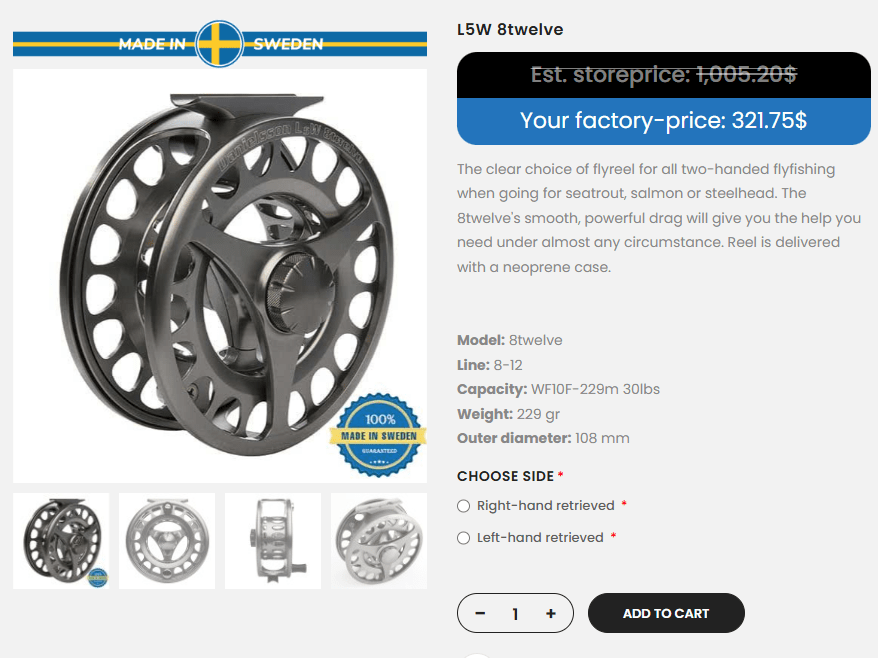
    I’ve had no problems putting the brakes on hot redbands in pushy Deschutes and Metolius currents with the F3W 4seven. While I don’t own it myself, I don’t doubt that the 7ten — paired with a single-hand rod — could stop a running steelhead. If you want a reel for your two-hander, look to the L5W and H5D series.

    The click is subtle but satisfying. It’s not the same classic song of a Hardy Marquis, but it has its own voice.


    The Value Proposition

    This reel offers high-end features at a mid-level price point. It’s built for anglers who value performance and reliability over bells and whistles.

    If you’re looking for a reel with wild cutouts, bright green anodization, or brown-trout spotting patterns, this isn’t the reel for you. If you want fancy wood accents or a status-symbol brand name, again — not for you.

    But if you’re a utilitarian angler who just wants a reel that works every time, the F3W is exactly that. I firmly believe it’s a buy-once, fish-forever piece of gear. And unlike a lot of premium reels, you won’t “cry once” when you swipe your card.


    Final Thoughts

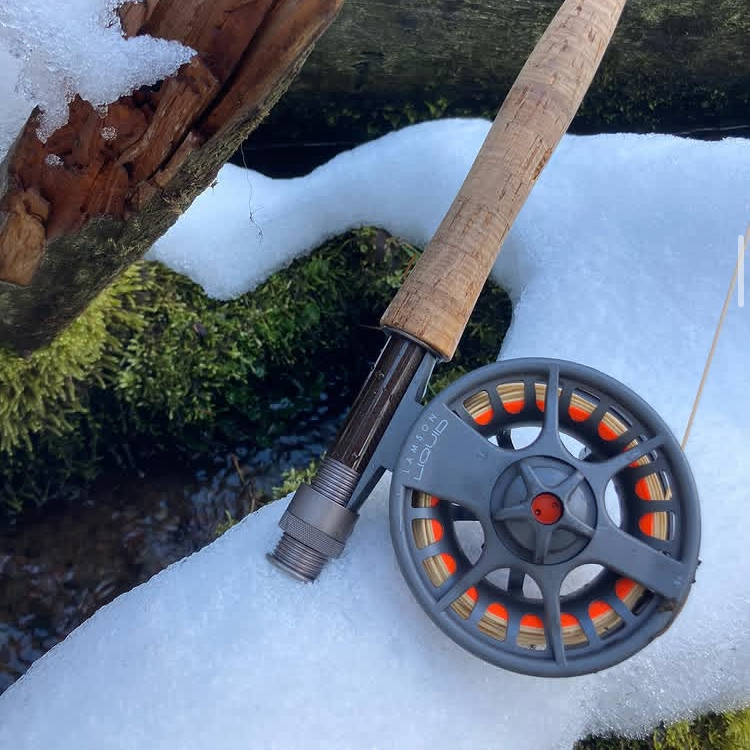
    I love the F3W series so much that I’m slowly converting my entire single-hand lineup to this reel. My Lamson Liquid has served me well, but it lacks the finesse of the Danielsson. The F3W is lighter, has a larger arbor, and pairs better with modern performance fly rods. For me, it beats out any other mid-priced reel — even the American-made ones. There’s just no substitute for Swedish engineering and solid fundamentals.

    Would I love for Danielsson to sponsor me? Sure. But it’ll never happen. The company doesn’t employ salespeople, run influencer programs, or invest in flashy marketing. They don’t even have an affiliate program. And that’s exactly what makes them special. They stick to their values: offering the best reel for the fairest price.

    If they ever moved into dealer partnerships, I’m confident we’d pay at least 50% more for these reels. But they won’t. And that’s a beautiful thing.

    –T

  • My Top 3 Favorite Summer Steelhead Flies for Success on the Swing

    Summer steelhead season is a special time of year. Warm water for wet-wading, aggressive surface-oriented fish, and long days stepping through runs make for some of my favorite swinging conditions. The best part? The fishing only gets better going into fall.

    Summer steelhead flies are different from winter patterns: they’re smaller and generally cast on Scandi or Classic Spey setups. Casting involves efficient touch-and-go strokes and tight loops that make your heart sing. And then there’s the thrill of raising a steelhead to a skated muddler — an experience that simply doesn’t compare to winter fishing. While summer fish tend to run smaller, the sheer level of action makes up for it entirely.

    In this post, I’ll share three of my favorite summer steelhead flies and why they work.


    What to Look for in a Summer Steelhead Fly

    Summer steelhead patterns tend to be smaller — much smaller — than their winter counterparts. While we often swing big intruders and leeches with trailer hooks on sink tips during the colder months, summer fishing calls for size 5–7 flies tied on traditional steelhead irons or bomber hooks. On rivers like the Deschutes, these smaller patterns are the norm. On others, like the fast-moving North Umpqua, I’ll size up slightly for quicker runs.

    I like to fill my summer box with three main types of flies: traditional hairwings, muddlers tied in different profiles, and small strip leeches for when the water colors up in the fall. The common thread is materials that breathe: soft hackle collars, bucktail and arctic fox wings, and buggy features that make a fly come alive in the water. Each fly type also lends itself to a slightly different swing technique.


    Hazel’s Lum Plum

    Amy Hazel has a special color of purple chenille that she uses to tie the bodies of her famous Lum Plum. I just use a purple chenille off the shelf.

    This fly was born and bred on the Deschutes and has proven itself on summer steelhead rivers across the Pacific Northwest. At its core, it’s essentially a purple Green Butt Skunk. The touch of flash in the overwing recalls the Streetwalker, while the spotted guinea hackle adds a subtle fluorescent kick. It’s a fly I won’t hit the water without.


    Green Butt Skunk Muddler

    My take on a Green Butt Skunk muddler. You can adjust the size and thickness of the cow elk muddler head to produce a desired fishing effect. I’ll admit the wing came out a bit long on this one.

    The Green Butt Skunk is ubiquitous and consistently effective. Credited to Dan Callaghan, who in the 1950s added a green chenille butt to the original Skunk on the North Umpqua, the pattern remains a staple. The bold black-and-white contrast, paired with the rear hotspot and red tail, continues to produce steelhead year after year.

    My muddler variant is designed for skating on a floating line or fishing just under the surface with an intermediate tip. It features a fluorescent green butt, black ice-dubbed body, oval tinsel ribbing, and a red cactus chenille bolster. A white bucktail underwing and a black cow elk muddler head complete the fly. Adjusting the thickness of the muddler head changes how high the fly rides — cow elk, being more buoyant than deer hair, creates a more pronounced V-wake.


    Strip Leech or Steelhead Matuka

    This Steelhead Matuka is a super easy tie and super fishy. You can add an orange or pink hotspot head as your heart desires.

    I believe every summer box should include a leech pattern. In fast, bouldery pocket water, a larger profile helps grab a fish’s attention. Sparse flies can be too subtle in heavy current. I also rely on leeches when the water goes off-color in the fall — their larger, swimmy profile dramatically improves odds. A light sink tip in the right situations will also increase your hookups, but I like fishing for summer fish on a greased line as much as possible.

    For my Matukas, I keep it simple: tied on an Alec Jackson steelhead iron with a black bunny strip, ice-dubbed body, and a spotted guinea collar for fluorescence. For strip leeches, I lash a black bunny strip to a trailer hook, attach it with supple line like Spider Wire to a 25mm intruder shank, and finish with ice dub, a touch of flash, and a fluorescent hotspot at the head.


    Bonus Fly: The Charlie Muddler

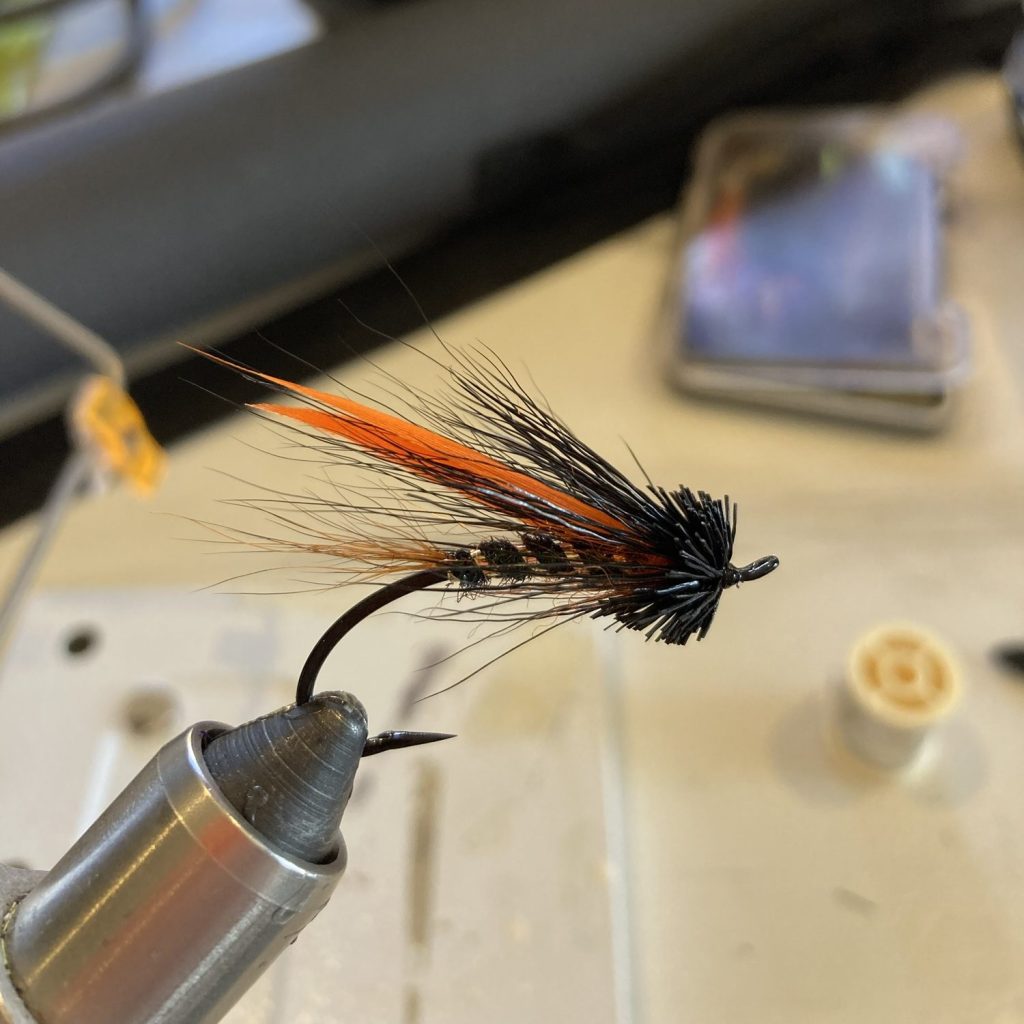
    One of my variants on the classic Charlie Muddler. I subbed out the golden pheasant tippet for some fluorescent orange bucktail.

    This little fly is a joy to fish. Sparsely tied and fished in the surface film, it’s inspired by Bill McMillan’s steelhead caddis and was created by Steve Szeliga during COVID. Steve Szeliga mentions one of his favorite ways to fish the fly is to get the fly down and let it come under tension in front of a known holding lie. The fly lifting to the surface will elicit an explosive grab.

    I tie mine with a pheasant tippet tail, ice dub or floss body ribbed with flat tinsel, a bucktail underwing, and a goose/turkey overwing. A sparse cow elk muddler head seals the deal. You can also use a bit of STS trilobal dub or ice dub to veil the bucktail and goose/turkey butts.  Adjust hook size and weight for different water types, and don’t be afraid to experiment with colors. These buggy muddlers also entice redbands and browns on the swing.


    Closing Thoughts

    I chose these flies because they cover a wide range of summer steelhead scenarios. Low, clear water calls for smaller, sparse ties, while stained or turbulent conditions benefit from larger, bolder profiles.

    More important than the fly itself is how you fish it: cover water methodically, step down with integrity, and fish with confidence. Presentation and commitment always trump pattern. At the end of the day, steelheading is as much about patience and persistence as it is about hookups. Fish what excites you, and you’ll stay motivated for that next explosive grab.

    Stay strong, and stay fishy.

    —T

  • September – The Best Time to Fish in Central Oregon

    September on the Lower Deschutes.

    September is my favorite time of year to fish in Central Oregon. Anglers are spoiled for choice and blessed with better conditions as the fall bite kicks in—right as kids head back to school. It’s the stretch of the season I look forward to most, and here’s why.


    September Is Prime Fishing Season

    You can’t beat September weather for fishing. Temperatures begin to cool, water stays clear, and the days are still long enough for a full outing. As fall storms roll in, we’re finally treated to overcast skies after months of blinding sun. These storms are a blessing—fish often gorge themselves during the sudden pressure drops before the wind picks up.

    By September, trout seem fully recovered from the stress and blinding rays of summer. Cooler water holds more oxygen, and with winter looming, fish are eager to fatten up before bug life slows down. Hatches thrive this time of year: more mayfly activity, the first hints of October Caddis, the annual appearance of Fall Green Drakes, and even some small stoneflies.


    The Waters We Fish in September

    The Deschutes River
    The Deschutes is my top September river. Big redband trout paired with steelhead on the swing make for unforgettable days. I wait all year for steelheading here—September is when catch rates pick up. Fish move from the lowest reaches of the canyon, over Sherar’s Falls, and spread through the system. By October, action runs from the mouth all the way up to Pelton Dam. Quick tip: resident trout rarely key in on October Caddis. Rather, steelhead dry flies that mimic October Caddis tend to be quite effective for a couple of weeks.

    The Crooked River
    The Crooked settles into reliable shape in September. While flows are often at the mercy of dam regulators, fall usually brings stability. Hatch activity is steady, with plenty of midges and mayflies. The evenings are still bright, making for great after-work sessions when the bugs pop.

    The Metolius River
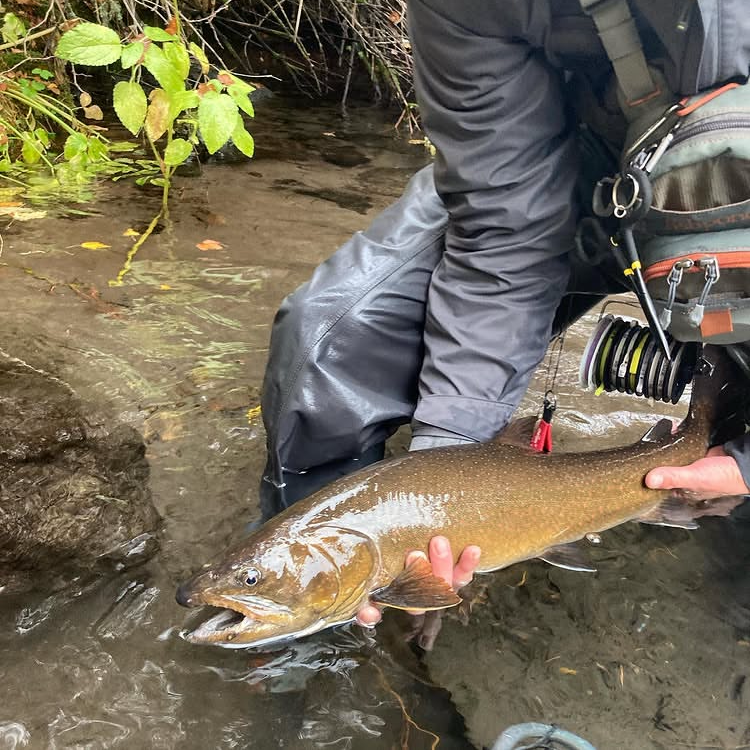
    The Metolius in September is pure fun. Local anglers await the annual Fall Green Drake hatch – a fleeting thrill. These large mayflies need optimal conditions to hatch, but when the stars align the trout go on a brief feeding frenzy. This is also kokanee migration season, and big bull trout follow, feeding on eggs and even the kokanee themselves. It’s the perfect time to put away the white-colored staples and swing large red and olive streamers. I like to break out my switch rod to throw the heavy stuff in tight quarters like the Met.

    The Lakes
    Don’t overlook the lakes. As fall sets in, dry fly action returns on overcast days, and trout feed heavily before ice forms. Streamers work well, especially in waters with browns, brookies, and tiger trout. Cooler temps push fish into the shallows, spreading them out and making them more accessible to bank anglers.


    September Fishing Considerations

    • Dress in layers: Cold mornings and warm afternoons call for thin, stowable layers. A light rain jacket or windbreaker is always worth packing. Bring your waders along too.
    • Be versatile: Hatches are strongest mornings and evenings, so bring both dry flies and nymph rigs to stay productive through midday.
    • Watch the weather: Overcast skies and pre-storm conditions often mean lights-out fishing. The trade off is that you might need to prepare to fish in howling afternoon winds.

    Closing Thoughts

    September is a special time for Central Oregon anglers. Get out while conditions are prime, and don’t miss the chance to experience some of the year’s best fishing. Winter will be here soon enough, but for now, enjoy every cast in these crisp fall days.

    —T

  • Scandi, Skagit, Full Spey: How to Line Your Spey Rod

    Bridge makes some seriously great fly lines. I fish the Tributary quite a bit.

    Besides choosing sink tips, this is easily the most debated and researched question when setting up your first spey rod. For the uninitiated, the topic is complex and confusing. For those with experience, there’s a nuance that goes far beyond the effort most fly anglers put into selecting a single-hand line off the shelf.

    I’ll let you in on a system I learned that takes a lot of the guesswork out of properly lining your first spey rod.


    Why the Line Matters So Much

    Just like a fly line for a single-hand rod, your spey line is the delivery system that casts your fly to the fish. There are even videos of master casters throwing fly lines overhead—without a rod—just to prove how much work the line itself does.

    Of course, rods are still essential. But it goes to show that your line is the most important decision you’ll make when dialing in a two-handed setup.

    Fly lines matter even more for spey rods, because two-handed casting is often about turning over big flies and heavy sink tips. One line probably can’t do it all. Heavy heads will slap the water and fail at delicate presentations, while long, light tapers won’t move a dumbbell-eyed intruder paired with 15 feet of T-14. Your line choice depends entirely on your goal.


    The Two-Handed System

    There are three main classifications of spey lines: Scandi, Skagit, and Full Spey.

    Spey lines are measured in grain weight rather than the standard AFTMA line weights. This is because spey rods are designed to cast a wide range of line weights and tapers. Grain weight tells you much more than just matching “7 weight rod = 7 weight line.”

    Some lines are designed to cast leaders up to 20 feet long, while others require a sink tip to perform properly. Once you know the line name, head length, and grain weight, you’ll know exactly how that line is intended to fish.


    Scandi: For Lighter Payloads

    Scandi (short for Scandinavian) lines feature relatively short front tapers and are designed for touch-and-go casting—where the line briefly kisses the water as the rod loads.

    Casting Scandi is graceful and efficient, with tight loops and minimal effort. It’s satisfying to “cast off the tip” of the rod.

    • Best for: Summer and fall fishing, smaller flies like hairwings, skaters, and lightly weighted leeches.
    • Limitations: Struggles with heavy sink tips and large flies.

    Rule of thumb for choosing Scandi:

    • Grain weight ≈ rod weight × 60 (± 50 grains).
    • Head length ≈ rod length × 2.5 (± a couple feet).
    • Tips: Up to 85 grains; never longer than your rod.

    Skagit: For the Heaviest Tips and Flies

    If Scandi lines are family sedans, Skagit lines are heavy-duty pickup trucks. They’re short, fat, and built to throw heavy sink tips and weighted flies.

    Skagit heads always need a tip—floating or sinking—to taper energy into your leader. Without one, your cast will hinge and collapse.

    • Best for: Winter fishing, intruders, and heavy sink tips.
    • Casting style: Sustained anchor (letting the line fully touch down before the forward stroke).

    Rule of thumb for choosing Skagit:

    • Grain weight ≈ rod weight × 70 (± 50 grains).
    • Head length ≈ rod length × 1.8 (± a couple feet).
    • Tips: Usually 125–150 grains, never longer than your rod.

    I don’t personally love the clunky feel of Skagit casting, but when I need to punch a heavy fly and T-14 into the wind, it’s the only tool for the job.


    Full Spey: For the Traditionalist

    Classic mid- and long-belly spey lines are elegant, efficient, and rewarding—if you have the casting chops. These lines require excellent timing but reward you with smooth loops, delicate turnover, and long drifts without stripping in running line.

    • Best for: Big rivers, traditional flies, and anglers who love the rhythm of classic spey.
    • Limitations: Steep learning curve; not great for heavy sink tips.

    Rule of thumb for choosing Full Spey:

    • Line length ≈ rod length × 4 (or longer).
    • Grain weight: About 100 grains below the top of your rod’s grain window.
    • Leaders: Use polyleaders, versileaders, or long tapered mono (15–20 ft). Avoid heavy sink tips.

    For many anglers, the Bridge Tributary (a short-belly style line) is the perfect stepping stone into this world.


    Choosing the Right Line for You

    Most anglers eventually own multiple lines—because conditions, flies, and rivers change.

    • Tight quarters: Short Scandi or Skagit heads.
    • Wide open runs: Longer heads for efficient coverage.
    • Example: On the Deschutes, I’ll use a Bridge Tributary for skating flies in the morning, then swap to a Scandi with light sink tips to punch through afternoon winds.

    The best way to decide? Try them. Attend a spey clinic, demo lines from your fly shop, or trade with other anglers. Forums like speypages.com are also great for buying and selling used lines.

    Ultimately, it’s about your style, your water, and your goals. Personally, I love the feel of touch-and-go casting with my Bridge Tributary. Once I master it, I’ll move on to longer lines.

    Whatever you choose—don’t leave those lines in your shopping cart. Get out on the water and cast them.

    —T

  • Spotlight: R.B. Meiser Highlander CX Spey Rod

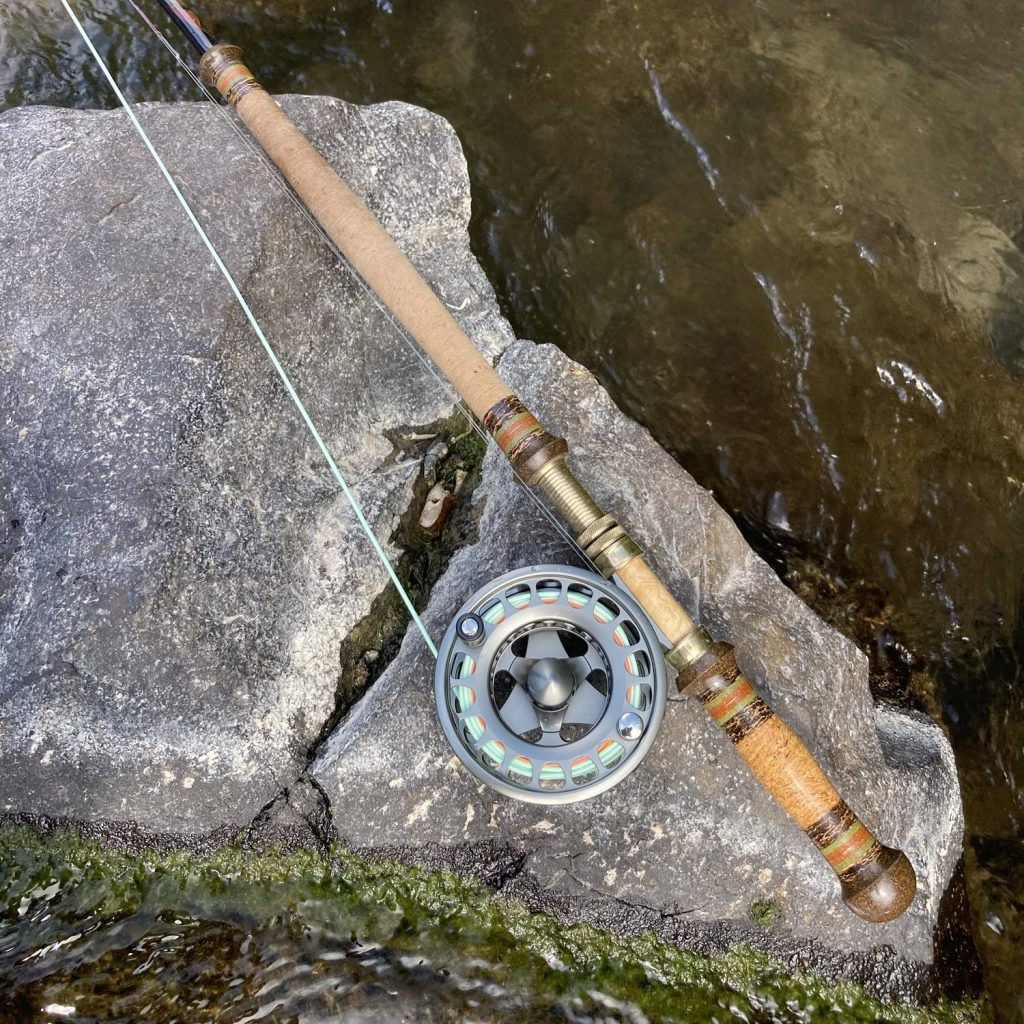
    My R.B. Meiser Highlander CX paired with a Danielsson H5D reel.

    This rod is my pride and joy. It’s my most valuable possession, and it sparks a strong emotional response every time I fish it. It was an engagement gift from my fiancée. When I asked her what my dream rod was, she listened.

    Before I dive into the rod itself, it’s worth mentioning the importance of fishing a rod you have a personal connection with. As fly anglers, we experience the outdoors through a piece of cork, and that piece of cork should feel just right. That’s why I’m a big advocate for going to your local shop, talking to the staff, and handling different rods instead of just buying the “best value rod” from some forum thread. You’ll know which rod feels right in your hand—no matter the price point.


    R.B. Meiser Rods Are Special

    I was chatting with a guide at my local fly shop about $1,000 rods and how they’re generally not worth the money. We both agreed that a good rod doesn’t need to be expensive, and that many brands are overpriced because of hype. But when I mentioned my own high-end Meiser and how much I loved it, he nodded and said:
    “Meiser rods are a work of art. They’re on a totally different level than these other $1,000 brands.”

    Bob Meiser and Nick Moses are humble guys doing the Lord’s work. Bob began crafting two-handed rods back in 1986, just as they were starting to gain traction in North America. His shop is credited with developing the first switch rods and the concept of a grain window for spey rods. There’s no denying the impact Bob and his team have had on the sport.

    Fast-forward to today: Nick Moses has taken on most of the rod building as Bob eases into retirement. Each rod is made one at a time, with only a few hundred produced per year. Clients can choose standard options or go through a custom build process to create something unique. I opted for the latter.


    The Process of Ordering My Rod

    My rod is equipped with some custom features and styling that make it unique.

    You read that right—it wasn’t as simple as entering a credit card number online. When I ordered my custom rod, it was Bob Meiser himself who picked up the phone. He was excited to hear what I wanted to achieve, and he gave me recommendations on lines that would pair well with both the rod and my style of fishing. After that, he passed the reins to Nick to bring it to life.

    When Nick and I first spoke, he was in the middle of moving the shop while finishing a holiday batch of rods. We set a time for me to swing by, get a tour, and consult on the build. He walked me through hardware, reel seat, and colorway options. If you can dream it, Nick can build it.


    My Highlander CX

    My rod is a 13’ 7-weight Highlander CX, built in four pieces. Technically, it’s a 6–8 weight thanks to its wide grain window of 450–700 grains. I chose the Highlander because I wanted a versatile, all-around rod I could wield in a variety of fishing situations. From technical touch-and-go casting to chucking heavy sink tips, the Highlander does it all.

    The rod has quick recovery speed balanced by a sensitive tip that picks up subtle strikes and swing changes. The blank features a uniform progressive taper, meaning power increases evenly from tip to butt. For how powerful it is, the rod feels light. Each cast has crisp authority, and each stroke responds cleanly. Casting off the tip feels effortless, while slowing down and leaning in engages the rod uniformly from butt to tip.

    The cosmetics are stunning. From the feather inlay to the stacked cork grip to the impeccable thread wraps, everything is dialed in. Speaking of cork, I love the grip on this rod. Nick left a little extra bulk in the middle of the top grip after I told him I liked a more substantial feel. The result is a grip tailored to my hands. The lettering is another highlight—Nick hand-paints the calligraphy before the final coat of epoxy. My rod proudly bears my name near the cork.

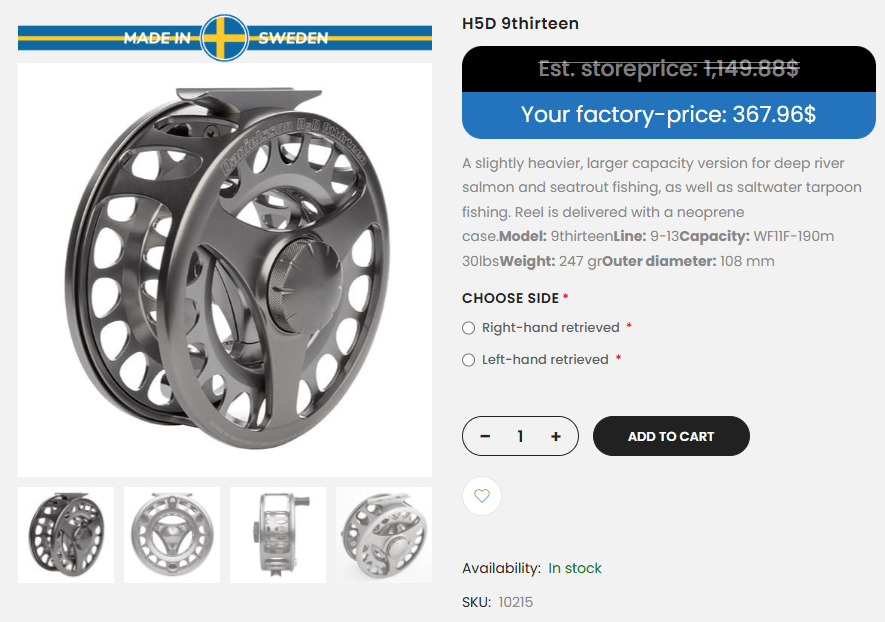
    I paired my Highlander with a Danielsson H5D 9thirteen—a reel designed specifically for steelhead and sea-run trout fishing with two-handers. At under $400, it’s a bargain for the performance. I’ll give it its own feature in a future post.

    The two lines I use most are an SGS Scandoid and a Bridge Tributary. The Scandoid, designed by Steve Godshall specifically for the Highlander CX, casts up to 12.5 feet of T-11, with a 30-foot head at 525 grains. The Bridge Tributary is my go-to for fishing traditional flies on a floating line when it isn’t too windy. Designed by Tim Arsenault, it clocks in at 42 feet and 525 grains and feels equally dialed for my rod. If you want more info about rigging for summer steelhead, check out this post.


    How It Stacks Up Against the Rest

    Plenty of other high-end rods compete with the Meiser on pure performance. Thanks to modern composites and manufacturing, excellent spey rods can be made today for a fraction of what they cost a decade ago. But where most rods fall short is soul.

    Not many rods today have it, though a few do. Kerry Burkheimer rods, for example, are handmade with soul in spades (and I hope to own one someday). Winston rods also deliver performance with hand-rolled blanks that carry their own character. But in truth, a rod’s soul is tied more to the angler than the rod itself. A soulful rod is one that speaks to you—one that complements your casting style and becomes part of the experience.

    There’s no rod that will suit you better than a custom build from a master craftsman. While most anglers won’t have the chance to fish a custom rod, I encourage you to bite the bullet at least once in your life. Yes, they’re expensive—but worth every penny. If not for the performance, then for the experience of helping build the tool you’ll use to connect with the world around you.

    If you’re looking to splurge on your next spey or switch rod, look no further than R.B. Meiser. You won’t regret it.

    -T

  • Three Years for One Steelhead on the North Umpqua

    Looking upstream of the Camp Water towards Mott Bridge.

    The North Umpqua is famed for its run of summer steelhead. Fame doesn’t come from abundant returns—far from it. The river is known as the finishing school for fly anglers hoping to shake hands with one of these special fish. While the summer run is modest, the ones that do make it to the Steamboat Creek confluence are spirited and cunning. They’ve survived gear fishermen wreaking havoc on the lower river and seen every type of fly swung through the 33 miles of designated fly-fishing-only water. This is my story of thousands of casts made over three years that led to me finally hooking my first North Umpqua steelhead.


    The Challenge

    Fishing regulations are strict on the North Umpqua to protect dwindling summer steelhead runs. No added weights or attachments to the line, leader, or fly—no split shot or strike indicators. Angling is restricted to a single, barbless fly. Between July 1 and September 30, flies can’t even be weighted. That means your only real shot is with a swung fly on a sink tip—and a lot of hope that you picked the right fly.

    The fish are few and far between, and they hold in some of the most technical water you’ll ever swing. At the time of writing, only 1,671 summer steelhead had been counted at Winchester Dam. That’s just 27 fish per mile—about 891 fish in the 33 miles of fly water. The structure doesn’t make it easy either. Basalt bedrock channels create cliff faces and wicked current seams that whip your fly out of control. The river is complex, powerful, and unforgiving.


    Year One – The Initiation

    My first encounter with the North Umpqua came during a family camping trip to Toketee Lake in July 2023. Knowing the river held summer steelhead, I snuck away one morning with my trusty 8wt single-hand rod. A size 5 Mack’s Canyon brought a few cutthroat to hand, but no steelhead. A few swings with a skater? Same result.

    I had no idea where the buckets were, what techniques worked, or anything useful that might put me on one of these fish. A couple weeks later the North Umpqua closed to steelheading for the rest of the season due to poor returns. Initiation complete.


    Year Two – The Obsession Deepens

    Summer 2024 gave me a couple more shots. With a switch rod in hand, I swung with a bit more insider knowledge. By then, I had more steelhead hours under my belt from the Deschutes and at least knew where fish should be holding. My technique had come a long way since the last time I fished these fabled waters.

    I even ventured out during the winter with intruders and egg-sucking leeches, hoping a big fly would entice one of the winter fish. In January 2025 I picked up my RB Meiser spey rod and hit the North during February’s high water. A few bumps, a few plucks—but no dice.


    Year Three – Perseverance Meets Payoff

    Looking from Hayden’s Run towards the Steamboat Creek confluence.

    2025 became the year of determination. In April I made a day trip for winter steel and hooked up—only to lose the fish after a five-second run. Brutal.

    By Labor Day weekend, the fire inside me was raging. Spey rod in hand, I fished harder than ever. Thankfully Kate had Starlink for her CPA studying, because I was gone by daybreak every morning. Each day brought fish showing but not committing. A pluck in Hayden’s Run, a pluck in the Kitchen Pool, jumpers in the Boat Pool and Sawtooth. They were there—I just couldn’t seal the deal.

    Sunday brought a glimmer. I was fishing Sweetheart near the Steamboat confluence when an older guy, Mike, hooked an eight-pounder in the Sawtooth tailout. I reeled in so he could land it, then snapped a few photos for him. Mike told me he’d been fishing the North for 30 years. He suggested I try a couple nearby spots the next morning. Sounded like solid advice—after all, that was the second fish he’d hooked above me that day.

    Monday was my last chance. At first light I aimed for the famed Camp Water. I wanted to start at The Station, but another angler, Tyson, beat me to it. Instead, I slid down into the Sawtooth tailout and Hayden’s Run.

    Fish were already jumping. I fished Sawtooth with integrity—nothing. Then I worked carefully through Hayden’s, swinging all the way under overhanging branches. The currents there are gnarly: fast cascades through bedrock channels clashing with slower turbulent flows near the bank. On the hangdown, under a branch, I got plucked—but couldn’t connect.

    Running out of time, I crossed to the highway side to fish the same water from a new angle. Last five casts. I sent my fly 60 feet across, threw an aerial mend, and let it sit behind a basalt chunk. Then it started to swing. Suddenly—the line went tight. Fish on.

    The fight was hand-to-hand combat. My 13’ RB Meiser 7wt bent deep but held firm, while my Danielsson H5D reel stopped blistering runs. The fish tried ducking behind shelves of sharp bedrock that threatened to cut my leader, but I wrestled it out. A jump, an upstream dash.

    Advantage: angler.

    Finally, I coaxed the 6–7lb fish into softer water at my feet. The battle was won. I lifted my rod to net my prize—when a sharp head shake slipped the hook. Slack line. Fish gone. No photos of this one, folks.


    Three Years of Patience and Persistence

    Thousands of casts. Gallons of coffee. Countless early mornings. Three years of persistence for one moment. That’s the reality of swinging flies for ghosts.

    Fishing the hard way gives you a deeper respect for the river and its fish. It makes every grab unforgettable. Why fish this way when it means fewer hookups? For me, it’s the anticipation of the pull, the violent fight of an inherently aggressive fish, and the meaning behind the rare hookup.

    Some fish take years to catch. That’s exactly what makes the chase unforgettable.

    -T

  • Campfire Pork Chops: Simple, Delicious, and Rustic

    An adaptation of Francis Mallmann’s recipe for Peached Pork

    Camp cooking can seem daunting for a lot of folks—especially when it comes to using an open fire. Most of us grew up eating canned chili, prepackaged foods, and foil packet meals that didn’t quite hit the mark.

    To me, camp cooking at its finest evokes the picture of a crackling fire, meat gently sizzling, and good company indulging in some crispy beers. Well, that’s exactly how Kate and I like to get dinner done. I’ll let you in on the secret.


    A Good Meal Starts with a Good Fire

    No exceptions—and it isn’t as difficult as it sounds. Start by setting up your dining area upwind of the fire (smoky eyes while you’re trying to eat is no fun). Always use the forest-service-provided fire ring or build your own out of stones. The ring protects your fire from the wind, focuses the heat, and designates a brush-free burn area.

    In the name of safety, always have a fire extinguisher, a shovel with sand, or a tub of water nearby.

    We like to start about 45 minutes before cooking time. A paper towel doused in a couple tablespoons of cooking oil goes in the center. Build a teepee of twigs around the paper towel, then a larger teepee of split kindling, and finally a teepee of split firewood. Light the oil-soaked paper towel, and you’re on your way.


    Cooking Over Coals, Not Fire

    The term “cooking over live fire” is a bit misleading. Cooking directly over flames is inconsistent and dangerous—one moment it’s a raging inferno, the next you can’t even get butter to melt.

    Hot coals are the best and most consistent way to cook over a campfire. To get a good supply, you’ll either need charcoal or a hefty amount of firewood. A quick-searing steak doesn’t take much, but anything that needs longer cooking requires a solid coal bed.

    Ideally, you’d develop coals in one fire and shovel them into your cooking ring. In reality, most of us are working with a single small ring, so manage it as best you can. Just make sure you’ve got a good, steady bed of coals before you start cooking.


    Gauging Heat

    This part is simple. Hold your hand over the coals at the height of your cooking surface and count:

    • 2 seconds = high heat
    • 3–4 seconds = medium-high heat
    • 5–6 seconds = medium heat
    • 7–8 seconds = low heat

    The Pork Chops Themselves

    Pork chops over an open fire.

    One of my favorite camp cooking books is Seven Fires by Francis Mallmann. It’s packed with Argentine recipes built for fire, and I adapted his recipe for Peached Pork to be more camping-friendly. Pre-mixed seasonings and pre-chopped produce are the keys to camp cooking success.

    Instead of the pork loin roast Mallmann calls for, I used inch-and-a-half-thick pork chops gifted by a client. The chops were seasoned with salt, minced garlic, and an Italian herb blend. I cooked them over medium heat on the coals. (If they’d been thinner, I’d have gone with medium-high.)

    While the chops were cooking, I stuffed a foil packet with chopped peaches, butter, and a pinch of salt. The packet went next to the coals to soften and caramelize. Pro tip: the peaches actually turn out better in a skillet because you get more caramelized bits, but foil works great in a pinch and saves cleanup.

    Once the pork was cooked and rested, I pulled the chops off the bone and slathered them with the buttery peach sauce. A bagged store-bought salad rounded out the meal.

    And holy shit, were those pork chops good.


    Camp Cooking Takeaways

    Camp cooking can be simple if you boil it down to a few basic rules:

    • Cook over coals, not open flames
    • Prep your produce ahead of time
    • Use pre-mixed seasonings
    • Optimize your dish usage

    Follow these tips and you’ll level up your campfire meals. There’s no excuse for crappy canned stew when you can grill pork chops just as easily as you would on the Weber kettle at home. Rustic camp cooking is pure joy—as long as you’re smart about the prep.

    – T

  • Grundens Vectors: The Waders I Fell in Love With

    As the summer begins its wind down and the rivers become flush with summer-run steelhead, I start shifting my focus to fall and winter fishing. With that comes cold mornings where I’m more inclined to suit up in my waders.

    Admittedly, I hate wearing waders. Even in the 45-degree Metolius River, I’m dumb enough to jump in wearing swim trunks, wading boots, and a hoodie in the early summer morning. However, I understand that not everyone shares my love of a good cold plunge—and that waders are an essential component of your fishing kit.

    I’ll break down why the Grundens Vector is my wader of choice, and what I believe makes for a solid pair of waders. (Grundens doesn’t pay me to give this review, but I’d definitely take some free stuff if they sent it my way.)


    Cheap Waders Wear Cheaply

    Don’t buy the cheapest waders off the rack unless you’re a newbie heading into your first winter fishing season. Even then, I’d be wary of buying the absolute cheapest pair.

    My very first set was a pair of Simms Tributaries, retailing just over $200. Yes, they kept the cold water at bay—but not for long.

    The waders would get pinhole leaks anytime I was within 10 feet of a thorn bush, and abrasion from hitting my knee on a rock would inevitably result in a larger tear. By the end of spring, the seams began weeping, which I hopelessly tried patching up with Aquaseal.

    I thought this might be a fitment issue, but I definitely had enough bulk in the knees to account for squatting. Long story short, I promptly replaced those $200 waders after suffering through a second winter in them. By that point, most of the fabric was covered in a thick layer of Aquaseal.


    What Should You Look for in a Pair of Waders?

    A decent pair of waders should have a few key features:

    1. Knee Pads
    Not just to protect your knees, but to add extra fabric to one of the highest wear spots. Knees take abuse from kneeling for fish pics, climbing rocks, and eating crap in pocket water.

    2. An Accessible Waterproof Zippered Compartment
    Great for when you’re packing light and don’t want a full pack. Keeps your phone and keys dry—and maybe a tub of Zyns too.

    3. Four-Layer Fabric (Waist Down)
    Anything less won’t last. The extra layers give warmth, insulation, and most importantly durability where it’s needed.

    4. Smart Seam Placement
    No seams in the crotch or across the knees. These areas stretch the most and will blow out if fit is too tight. You need extra fabric in the knees and crotch for movement since wader fabric doesn’t stretch like spandex. A tailored fit is not your friend when it comes to waders.

    5. A Wide Wading Belt
    This isn’t optional. A proper belt prevents water from filling your waders if you get dragged under. A thin or loose belt won’t save you.


    Nice-to-Have (But Not Essential) Features

    • Upper Zipper: Convenient, but an extra cost and a potential failure point. If you want one added later, there are shops that will retrofit your waders.
    • Gore-Tex: Overrated and unnecessary. The patent expired in 1998, and now lots of companies use identical tech under different names. You’re basically paying extra for the label. Save $200 and get a breathable fabric that isn’t branded Gore-Tex. (Pro tip: no fabric breathes once it’s wet anyway.)

    Best waders I’ve ever owned. Period.

    Why I Forked Up for the Grundens Vector Waders

    I hesitated to spend $500 because I’d always thought waders were somewhat disposable. Boy, was I wrong.

    Grundens backs all their waders with a 365-day warranty against ordinary wear or defects. They’ve been making foul-weather commercial fishing gear for almost 100 years—and it shows.

    The Vector waders are guide-quality, built for people who spend 200 days a year on the water. They’re made with 4-layer nylon fabric that’s both waterproof and durable, reinforced knees, and smart seam placement. After a year of brutal use, I haven’t touched a tube of Aquaseal.

    Fit is excellent, with plenty of size options. I’m 6’ tall, 175 lbs, and the Med-Long size fits perfectly.

    The booties are warm neoprene with a more anatomical fit than standard stockingfoot waders. Gravel guards stretch securely over boots without the weird hook that snags.

    Grundens also makes pricier options:

    • Vector Zip-Ups ($750)
    • Gore-Tex Wader ($600)
    • Bedrock Entry-Level Wader ($400)

    I can’t speak to the Bedrocks, but they include some features uncommon at that price point. If you’ve fished them, let me know in the comments.


    Good Waders Are Worth the Spend

    Not all waders are created equal, and not all expensive waders are bomber. But the Grundens Vectors are the best value I’ve come across.

    If you’ve only fished in cheap, leaky waders, you’ll immediately notice the difference. All waders will eventually leak, but you can set yourself up with a pair that makes the time before then more enjoyable.

    Give the Grundens Vectors a try—you won’t be disappointed. And, if you like this review, check out my post on 5 gear upgrades that are actually worth it.

    – T

  • The Punk Rock Side of Fly Fishing: Why Counterculture Belongs on the Water

    The stereotypical fly angler conjures imagery of retired men in vests, calmly walking up to the water with a healthy selection of five different size 20 dry flies. Look closer and you’ll see someone with entirely too much time on their hands, sporting a Sage rod that cost way too much money.

    The second fly angler is the flannel-clad family man in a flat cap, smoking a mid-tier cigar and sipping whiskey from a not-so-subtle hip flask. The classic bearded outdoorsman who hiked four miles down the railroad tracks to swing for steelhead on a greased line. A man bound by tradition, perhaps. Or maybe just the romantic idea of what tradition is supposed to look like.

    Fly fishing doesn’t have to be polished or buttoned up in a wool shirt. I prefer the idea of a sport that thrives on counterculture energy. Consider, for a minute, the typical punk rock values: DIY ethos, anti-establishment, community-driven, bound by one common idea.

    Now picture the effective fly angler: tying their own flies, rejecting the mainstream fishing culture sold at Bass Pro Shops, and finding freedom in the riffles of wild rivers and streams.


    Breaking Down the Gatekeeping

    A fundamental reason I started this blog is to show that the only barrier to entry in fly fishing is the time it takes to grasp the basics. No $1,000 rods. No boxes with 400 different flies. No $800 waders paired with $400 boots.

    The average Joe should be able to buy a $50 kit off Craigslist, walk down to the river with a handful of flies, and—with some practice—catch a native redband trout.

    The average Joe should also include the couch-surfer in Vans and skinny jeans, not just the upper-middle-class guy buying a new Patagonia jacket every shoulder season. As proponents of counterculture, we reject gatekeeping. Fly fishermen should reflect the same value.


    The Community Side

    Punk rock shows and fly shops are both places where misfits find each other. Fly anglers are bound together by the love of the process, just as punk rockers are united by the message behind the music.

    Fly shops are the confluence of DIY fly tiers, streamer junkies, dry fly purists, enlightened Euro-nymphers, and traditionalist steelheaders. All disciplines of our sport find community backed by an unhealthy fishing obsession.

    I sometimes fear that the community side of the sport could fade as the age of Amazon entices anglers with the promise of same-day rod deliveries (never mind you could just drive down to the fly shop and buy one right now).

    What scares me most is the thought of losing the exchange of ideas and experiences with friends and neighbors. The local fly shop is a hub for fly tying competitions, classes and clinics, beer-fueled rants, and used gear swaps. That sense of community might be my favorite part of fly fishing—well, that and the meditative effects of silence, solitude, and running water.


    Conservation is Rebellion

    What’s more punk rock than rebelling against Big Brother and his monopolistic cronies damming up our rivers and streams?

    As brethren in resistance, punk rockers have always pushed back against systems that exploit people. We recognize that one of the most noble things we can do is advocate for those without a voice. Fish can’t speak, last time I checked.

    As community-focused fly anglers, we owe it to future fishermen—and to the fish themselves—to push back against utility companies and corporations that seek to exploit our natural resources. We are advocates for the fish and the greater riparian ecosystems that the capitalist system threatens to destroy.

    Going a step further, supporting wild fish is a way of saying hell no to cookie-cutter, stocked-fish culture. (I might write a separate article in the future about the downsides of hatchery systems.)


    My Experience as a Fly Angler

    I try to blur the lines between punk rock and fly fishing—literally and conceptually. I’ve got a bunch of American Traditional tattoos, wear Vans and skinny jeans, and listen to a lot of angry music made by pissed-off people.

    I also tie my own flies and obsess over a sport steeped in rich Western tradition—a tradition I pore over in the yellowed pages of old books. I look a far cry from the mental prototype of a fly angler, but it’d be cool if future generations describe the average fly fisherman as a bootstrapping misfit with a healthy dose of conviction.

    It’s dangerous to follow the crowd and abandon your identity just to become part of the flock. I want to lower the barrier of entry into fly fishing, to entice new anglers with their own beliefs, stories, and perspectives to add to the culture of the sport.

    And by bringing more people into fly fishing, we create a greater body of influence to conserve our watersheds.

    Fly fishing is for everyone—especially those who don’t fit the mold. No dress codes. Just passion and enthusiasm.

    -T