Blog

  • A Weekend at the North Umpqua

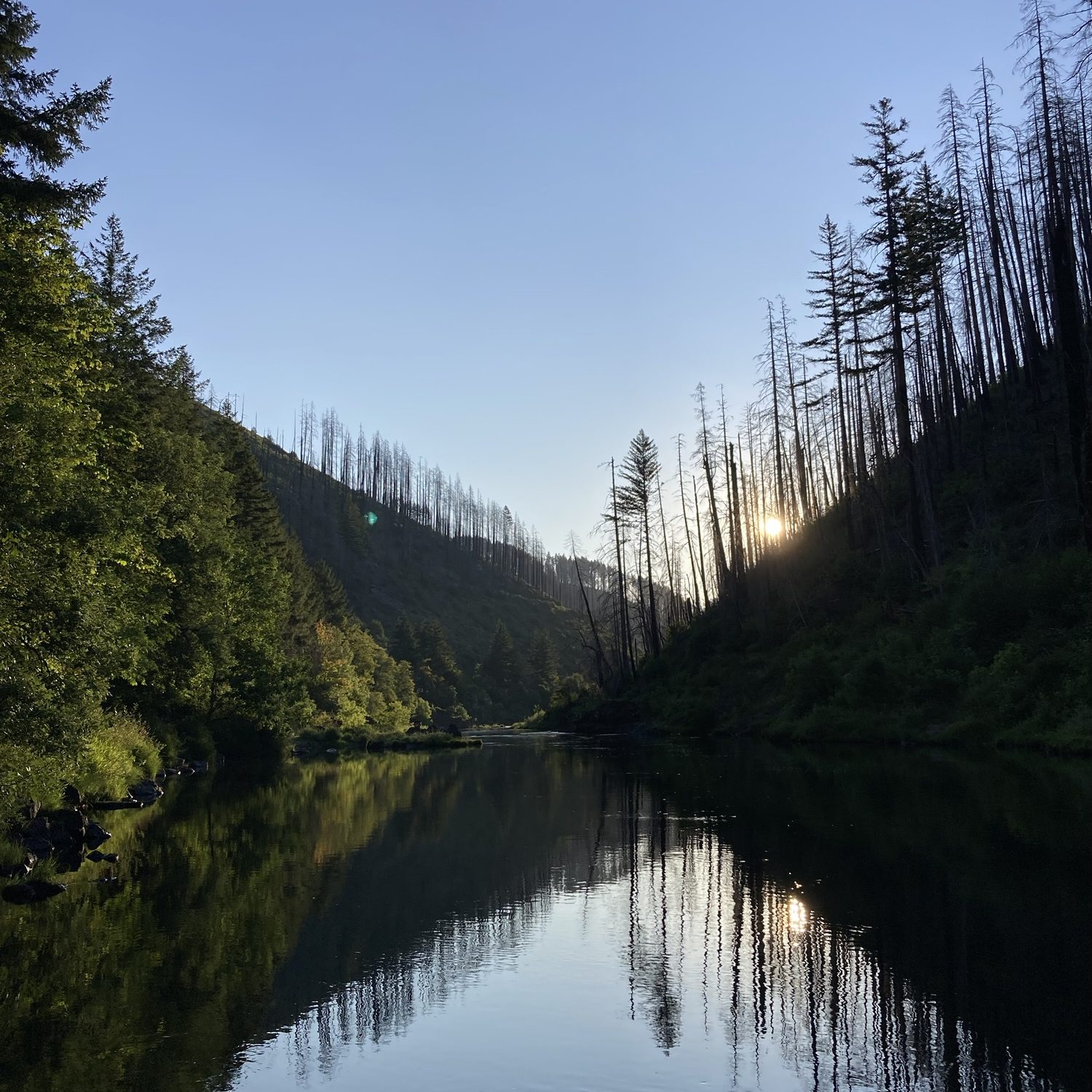
    Morning over the fly water on the North Umpqua River. This is one of the slower runs you’ll encounter.

    The North Umpqua River originates high in the Cascades—in the Mount Thielsen Wilderness, to be precise. It slides down the western slope into Toketee Lake, where we set up camp. The 33 miles of fly-only water below the lake are heavily regulated, wild, and beautiful. Like the Deschutes, the North Umpqua is home to Oregon’s wild native steelhead. The river is rich in history and is known as one of the most challenging and rewarding steelhead fisheries in North America.

    Setting Up Camp

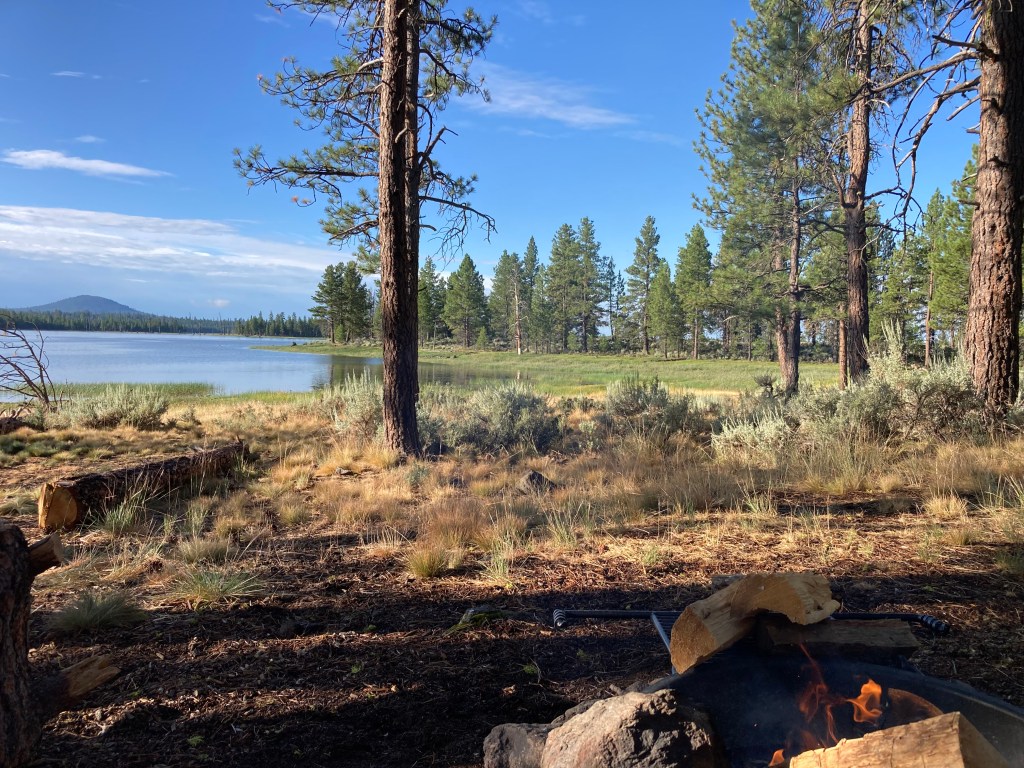
    It takes me about two and a half hours to drive from the north end of Redmond, where I live, to Toketee Lake Campground. It’s a straight shot down Highway 97 before heading west on Highway 138, past Crater Lake, and into the Umpqua National Forest.

    Toketee Lake Campground is one of my favorite places to stay for several reasons:

    • The campsites are tucked along a thin stretch of the river.
    • There’s plenty of room to spread out.
    • It’s a central location for a variety of family activities while staying close to my favorite fishing holes.

    Toketee Lake is big enough for paddleboarding, kayaking, or canoeing. It’s just a 4-mile drive to the Umpqua Hot Springs and a short walk from the Toketee Falls Trailhead. The campground sits at the inlet where the river flows into the lake—meaning the trout fishing is usually excellent.

    There’s plenty of structure here to shelter both brown trout and rainbows. The dry fly action can be stellar. Just out from the inlet are thick weed beds. Paddle out and your fins will get wrapped—guaranteed. But if you’re bold enough to cast into the weeds, you just might connect with one of the bigger fish that cruise the lake.

    The Fly Water

    The North Umpqua might be my favorite river to fish, not only for its beauty but for the fly-fishing history etched into its pools and banks.

    The water is cold—very cold. Both summer and winter runs of steelhead travel hundreds of miles from Reedsport to reach the Steamboat area. About two-thirds of the run head up Steamboat Creek, namesake of the Steamboat Inn, which has kept fly fishers warm and fed since the 1950s.

    The regulations on the fly-only section are stringent:

    • No fishing from floating devices
    • No indicators or attached weights
    • Single, barbless fly only
    • Between July 1st and September 30th: fly must be unweighted

    This level of restriction creates a competitive fishery that rewards traditional techniques and tests an angler’s skills. Success relies on:

    • Using sink tips to achieve proper depth
    • Reading water accurately
    • Managing line in conflicting currents

    And based on current fish returns, success tends to be rare.

    The Magic of the Floating Line

    The summer steelhead here are known for being surface-oriented. That means anglers get the privilege of swinging flies using one of the most enjoyable methods possible.

    The setup is simple:

    • Floating lines
    • 15-foot tapered leaders
    • Light flies like muddlers, bombers, and skaters

    Fish these early in the morning before the sun and crowds hit the water. Choose a run with even current, make your cast, and let the fly wake slowly across the surface. After 10am, your best bet is a traditional hair wing fly paired with an intermediate polyleader. Check out my other posts on rigging for summer steelhead for a more in-depth setup breakdown.

    My personal success came on the one morning I dedicated to swinging for steelhead during our long weekend. I left camp at 4:45am, careful not to wake my fiancée (she’s a light sleeper). Some of my favorite pullouts were already taken—word must’ve spread that the fish were showing up in the fly water.

    Eventually, I settled a few miles below Steamboat Inn at a smooth, glassy run. The head of the pool was turbulent, but it soon transitioned into a slow, even flow—4 to 6 feet deep—before reaching the tailout where the current picked up again.

    I started at the top of the pool, casting a size 5 black muddler tied in the style of a green butt skunk:

    • UV chartreuse thread butt
    • Slim black body
    • Red cactus chenille bolster
    • Black spun cow elk
    • Lady Amherst tailing, replacing the usual white wing

    The first half of the run offered nothing. Then, about 30 yards above the tailout, I heard a splash behind me and turned to see a chrome flash disappear into the current. That fish wasn’t interested in my muddler.

    Still, I swung the fly through the tailout. The water split around a submerged volcanic spine just beneath the surface. At the top of that spine, I saw a swirl, then a nose breach the water and pull my muddler under. The line drew tight—two deep pulses—and then nothing. I tried again. Nothing. Swapped flies. Still nothing. Such is the North Umpqua.

    The Rest of the Weekend

    The rest of the weekend was filled with great food and even better company. My brother, his wife, a longtime friend, and my fiancée joined me fireside. We cooked steaks, paella in the Dutch oven, and even breakfast s’mores. I might do a separate post soon with some of my favorite Dutch oven recipes.

    While the ladies hiked to the hot springs one morning, my brother and I explored the trout water above the Steamboat Creek confluence.

    This stretch is more riffled, bouldery, and generally trouty. A 5wt rod is overkill for most of the fish you’ll catch here, but you might need a 6wt in case a steelhead shows up. The technical dry fly fishing was a blast, and the cold, clear water let us watch trout inspect our flies before softly sipping them and disappearing behind their chosen boulders.

    Steelheading on the North

    I absolutely love this river and the challenge it represents. Fishing here is almost spiritual. While I have yet to land a steelhead from the North Umpqua, that fact speaks to the difficulty of the fishery.

    Hooking a fish here is the culmination of:

    • Years of practice swinging flies
    • Dozens (if not hundreds) of hours on this river
    • A masochistic willingness to get skunked

    We’re casting to fish that are already skeptical of flies, in what might be the most technically demanding fly water in North America.

    But it’s that possibility—that the next swing could be the one—that keeps me coming back. That, and the memories.

    – T

  • My Home Waters: The Deschutes

    Floating through the canyon on the Deschutes.

    The first trout I ever caught on a fly rod was on the Deschutes River. Not several miles down a trail or in a section only accessible by boat. Instead, it was an elk hair caddis thrown haphazardly by a pulloff on the highway.

    The fish came after many patient months of learning to cast, learning how to undo hundreds of tangles, and figuring out how to select flies for the conditions. My first trout on a fly came from the Deschutes, so it will always hold a special place in my heart. Since then, I’ve chased native fish on the fly up and down Oregon. This weekend on the North Umpqua really sticks out.

    A Living Landscape

    The Lower Deschutes is only about a 45-minute drive from my home in Redmond—longer if you want to get to the good spots. The river originates as runoff from the Cascade Lakes and proceeds to tumble 250 miles toward the Columbia River. Along the way, the river takes on many different personalities.

    The Upper Deschutes is cold and alternates between waterfalls and slow-moving glass fit for an inner tube. This section, forested and full of log jams and undercut banks, fosters brook trout, brown trout, and some rainbows.

    The Middle Deschutes is also considered the “town section.” The river becomes clogged with paddleboarders, kayakers, and floaters as it courses through Bend and carries on toward Lake Billy Chinook. Along the way, it funnels through tall rimrock and earns a wilder character. The easily accessible sections will give up a couple of browns or rainbows, but the holes at the bottom of cliffsides tend to be the fishiest water. The river enters Lake Billy Chinook and mixes with the cold, clean water of the Metolius and the warm, polluted water of the Crooked.

    The Lower Deschutes officially begins at the bottom of the Pelton-Round Butte Dam complex. This area north of Madras is where the real magic happens. The river courses through a deep and wild canyon that will make you feel insignificant.

    The section between Warm Springs and Trout Creek Campground is called the “day stretch” due to the volume of guide boats taking their clients out for a day trip on the water. It should be noted that it is illegal to fish from a watercraft on the Lower Deschutes—and everyone is damn serious about it.

    The area around Maupin, a small rafting town, is very fishy and has great road access. While the rest of the river is best accessed by boat, Maupin provides a base camp for anyone wanting to fish off the roadside 10 miles north or south of town.

    There’s a stellar fly shop here—The Deschutes Angler. The shop is run by Amy and John Hazel, pioneers in modern steelheading. They can be credited with popularizing the spey rod in the PNW. They’re a wealth of knowledge and passionate about conserving this precious waterway.

    The area below Mack’s Canyon is truly wild. Here, the road ends and the only access is by boat or a long hike down some abandoned railroad tracks. Most boats down here will spend three days floating and fishing their way down to the river mouth at the Columbia River. The area is a brief glimpse of what the river looked like without the interventions of man—before the dams were put in. Wild, scenic, and unforgiving are words that encapsulate the lower reaches of the Deschutes canyon.

    The salmon fly hatch in May draws thousands of anglers from around the world.

    Trout and Steelhead: A Four-Season Fishery

    Most of the year, we fish for native redbands on the Lower Deschutes. The fishing really kicks off in May when the salmonfly hatch begins. Bring big bugs: Chubbies, Clark’s Stones, big Stimulators, and the like. I like to fish a dropper under these big bugs—usually a Pheasant Tail or Nick’s Fatass Caddis nymph.

    In June, we switch to caddis patterns for the next month or two. Any of your classic caddis patterns will work here, but a dark X-Caddis is probably my favorite. Bring plenty of your standard nymphs, as always.

    Fall is when the fishing gets really special. The trout fishing is spectacular—streamer fishing, killer nymphing, mayfly hatches.

    Personally, I get fixated on the steelhead. Deschutes steelhead are notoriously willing to rise to a fly presented on a greased line. Think bombers, Steelhead Bees, and skaters when the sun is off the water. In the middle of the day, use a sparsely tied wet fly or an egg-sucking leech to get the job done. No need to go insanely deep since the fish will move for your fly. As the weather cools down, however, we start to throw smaller intruders and Hoh Boh Speys on T-11.

    A Couple Notes on Deschutes Etiquette

    1. Don’t high- or low-hole anyone.
    Especially if you’re floating. The section below the dam complex is 100 miles long. Give everyone some elbow room.

    2. Never fish under someone swinging a fly.
    This is considered a cardinal sin on the Deschutes—even if it’s a 200-yard run. If you come across your favorite run and see someone swinging flies, politely ask if you can fish behind them. Almost every single time, they’ll say yes and appreciate that you had the consideration to ask. But fish in front of someone, and there might be some fightin’ words—and you’re definitely the one in the wrong.

    Your Home Waters

    Each of us has a piece of home water that we hold near and dear. For whatever reason, it excites us and recurs in our daydreams. Whether it was a special memory or simply the beauty, we keep coming back to the same stretches of river.

    You owe it to yourself to become an expert on your home water and advocate for its conservation. As fly anglers, we develop an intimate understanding of the holistic ecosystem that surrounds the fish: the bugs, the birds, the changing seasons.

    It wasn’t until I started fly fishing that I began to notice the disastrous effect humanity has had on the Deschutes River: warm water flowing out of the dam, pH and temperature swings that encourage algae growth, inconsistent insect hatches, and the decreasing sound of songbirds chanting in the background.

    You’ll only understand if you devote patience to learning your own home waters.

    Learn More

    To learn more about conservation efforts on the Deschutes, check out the Deschutes River Alliance.

    -T

  • How to Ethically Handle Wild Trout for Catch and Release

    I’m strictly a catch-and-release angler—well, maybe more like 95% of the time. Still, I believe catch and release is the most sporting way to fish for wild trout. We have a moral and ethical responsibility to advocate for our local rivers and preserve them for generations to come. After all, the fish will outlast us long after we keel over.

    I’m here to talk about how to ethically handle wild trout for catch and release. I’ve seen too many fish go belly-up within 30 seconds of being “released,” usually because someone needed a crappy iPhone photo. We can—and should—do better.

    One of the most gorgeous redbands I’ve had the pleasure of releasing.

    Why Practice Catch and Release in the First Place?

    For starters, in some places, it’s the law. Don’t be that guy who keeps fish in a stream that’s already on the decline. The game warden may not have seen you, but Jesus did. So did Santa Claus, and that’s why you got coal in your stocking instead of the $1,000 Sage your wife promised you.

    The bigger reason—and why regulations exist—is because catch and release benefits the river. These fish already face enough stress: polluted tailwaters, pH imbalances, swinging temperatures, and declining insect hatches thanks to poor water management. Catch-and-release fishing reduces mortality, which gives anglers more opportunities to hook into fish. More fish in the river means more spawning, which (when done right) leads to greater abundance overall.

    So how do we practice ethical catch and release? Let’s break it down.

    Don’t Overplay Your Fish

    That half-pound dink you caught on your 5-weight doesn’t need to be played out for five minutes. In fact, most steelhead don’t either—if you’re applying proper side pressure and playing fish strategically. Here’s what to do:

    Set the hook with authority. Use the butt of your rod to apply side pressure. Play the fish in softer water rather than letting it wear you out in heavy current. And for the love of trout, fish barbless and use the right tippet size. (I’ve got an entire post on why barbless hooks are the way to go.)

    Keep ‘Em Wet!

    Always wet your hands before handling a fish. That slime coat protects them from infection, and your dry, chapped hands will rub it off—guaranteed. Also, use a rubberized landing net instead of those old-school nylon mesh ones that damage scales and fins.

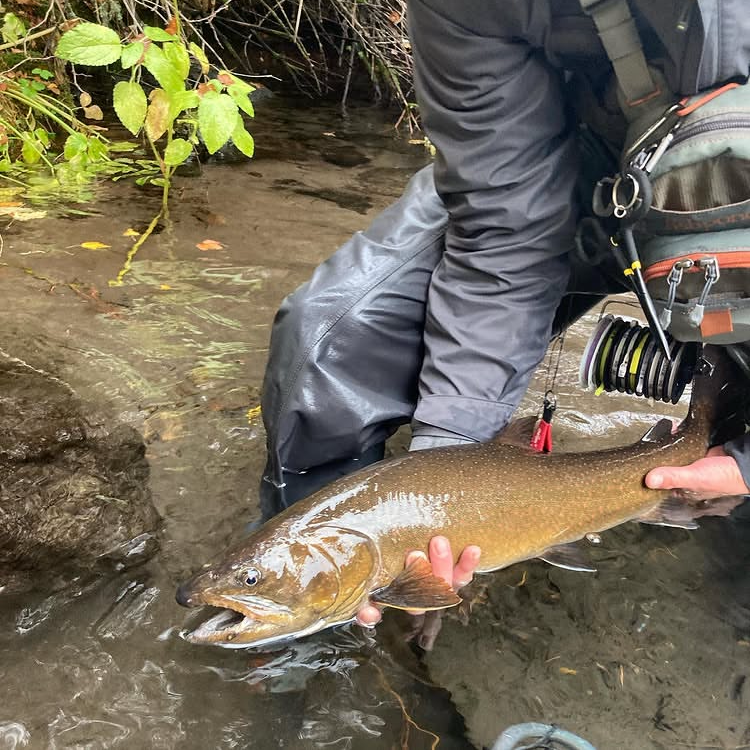
    Keep the fish’s head and gills in the water so it can recover. When releasing, point its nose into a gentle current and allow its gills to reoxygenate. Support the fish until it swims off on its own. Simple.

    The Money Shot

    I don’t take many fish pics—because it’s not great for the fish. But when I do take a photo or video, I follow a few basic rules:

    • Let the fish recover a little before handling.
    • Support its body so you’re not stressing or compressing internal organs.
    • Take a video instead of a photo—videos are quicker, and you can screenshot your favorite moment later.

    To do it right: support the fish, gently lift it out of the water, pause in-frame for just a second, and then help it back in. Easy. I’ve seen way too many guys re-dunk and re-shoot their catch 15 times like some kind of botched baptism. Don’t be that guy.

    Be Mindful of the Temperature

    I’m talking both air and water temps.

    Don’t shoot a dozen photos on a 90-degree summer day. That’s like holding your fish up to a heat lamp. But even more important is the water temperature. Trout and other salmonids are cold-water species. When water temps rise above 65°F, things start getting dicey. At 70°F, it’s downright dangerous.

    Even if you do everything right, a fish released into warm water might still die from stress and lack of dissolved oxygen.

    At the end of the day, it’s on us as individual anglers to act as conservationists and ambassadors for the sport. We owe it to future generations to preserve the rivers, fish, and wild beauty we’re lucky enough to enjoy.

    Fish hard—but don’t be hard on the fish.

    -T

  • When to Fish Short: The Case for a Light or Short Fly Rod

    My fiancée and I hiked some of the local trails this past weekend. The path pitched and rolled through volcanic terrain before dropping into a stand of trees and running alongside a narrow creek—maybe 20 feet wide at most. I knew this water held small brook trout in a few pockets deeper than six inches. The flow was swift, technical, and choked with dense foliage hovering over the frigid current. As it turns out, my 9’ 5-weight wasn’t up to the task. Yes, I caught fish—no, it was not ideal.

    What is Considered a Sort or Light Fly Rod?

    I define short as anything under 8 feet and light as anything under a 3-weight. Of course, rods can be short and heavy, or long and light. For example, a purpose-built bass rod might be under 8 feet, but it’s stiff and fast-action to throw poppers and push heavy lines through the air. On the other end of the spectrum are Euro-nymphing rods—usually 10 feet or longer and rarely above a 3-weight. The soft tip protects fine tippets, while the powerful butt section provides the backbone to manage surprisingly strong fish.

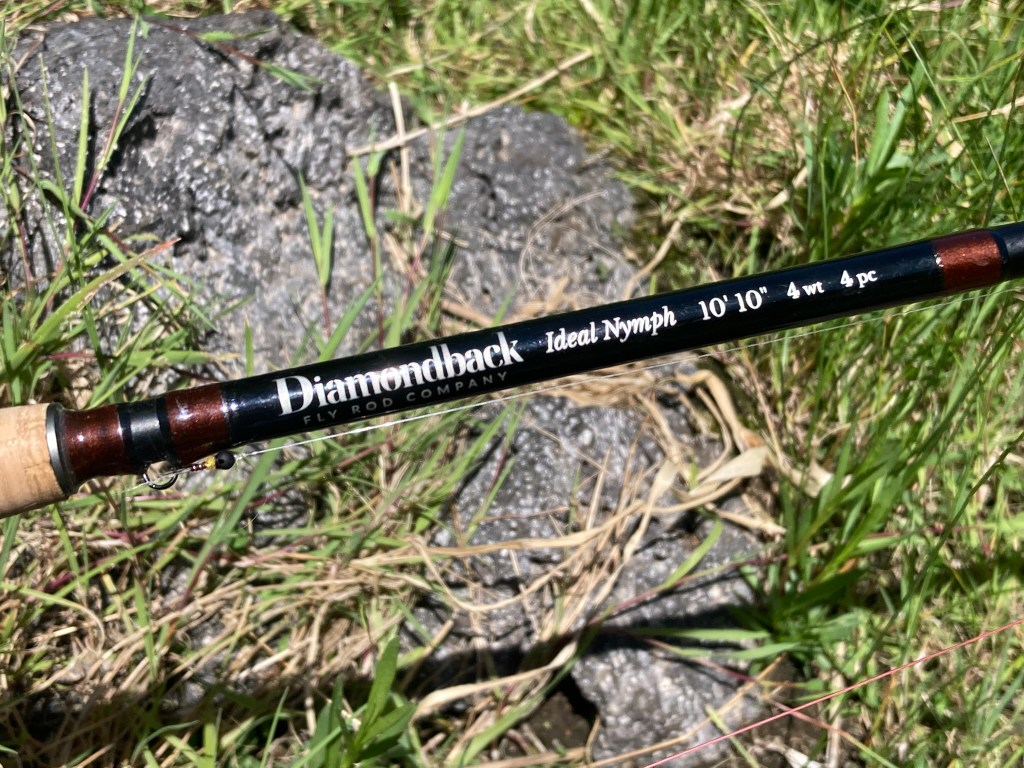
    One exception to the “long and light” rule? My buddy’s 10’10” 6-weight Ideal Nymph. Built to Euro-nymph for steelhead in pocket water, that rod is proof that there are no hard rules—just tools for specific jobs.

    Situations Where Short or Light Rods Shine


    Tight Quarters:
    Think overgrown creeks, brushy banks, and dense tree canopies—anywhere a 9-foot rod turns into a liability. Shorter rods offer real advantages here. Their compact profile makes it easier to navigate tight vegetation, and they allow for quick, compact casting strokes when backcasting isn’t an option. Bow-and-arrow casts are also more precise with a short stick, and that precision can be the difference between a fish and a missed opportunity.

    Small Water: Short rods excel on spring creeks, alpine trickles, and mountain streams. Beyond the benefit of easier casting in tight quarters, lighter-weight rods are better suited for playing the small fish we often find in these environments. Ever set the hook on a six-inch trout only to accidentally launch it into low orbit with your 5-weight? Guilty as charged. And not proud of it.

    Ultralight Tactics for Fun: Let’s be honest—it’s just more fun to fish light tackle. I’m not advocating chasing steelhead on a 2-weight and 6x tippet, but there’s something to be said for prioritizing finesse and feel over brute strength. Of course, it’s our responsibility to balance enjoyment with ethical handling—land fish quickly and release them safely. Light rods also shine in technical dry fly situations. They land flies gently, offer better accuracy at close range, and are more enjoyable to cast when you’re tossing tricos or midges to spooky risers. Trust me—fishing small bugs on light tackle is just more rewarding than lobbing them with your standard 9’ 5-weight.

    Hiking In: Short and light rods are more travel-friendly—whether you’re flying across the country or trekking 10 miles into the backcountry. Especially when exploring alpine lakes or remote streams, you’ll appreciate the reduced weight and bulk. A compact rod is easier to carry rigged, bushwhack through thickets with, and pass fellow hikers without snagging everything in sight. Portability might be one of the greatest strengths of these rods.

    When Not to Use a Short/Light Rod

    There’s a subset of anglers who use trout tackle for steelhead—casting 9’ 4-weights, 5x tippet, and dainty soft hackles. Sure, that sounds like fun, but most of us don’t have the skill (myself included) to land big fish on light gear without risking their well-being. If the fish requires backbone, give it backbone.

    Windy days on the Deschutes are also no time for a 7’6” 3-weight. Light lines struggle in a headwind, and short rods lack the power to push flies across big water. You’ll also have trouble casting heavy flies—whether weighted streamers, nymph rigs, or big dry-dropper setups. Anytime I’m throwing sink tips, indicators, or 4.6mm tungsten beads, I reach for a rod that can handle the load.

    Match Rod Length/Weight to Conditions, Not Ego

    Alpine creeks deserve a 7’6” 2-weight. Technical spring creeks call for a 8′ 3-weight. A compact pack rod is perfect for a 10-mile hike with 2,000 feet of elevation gain. Fiberglass rods are a joy for casting small dries. It’s about having the right tool for the job.

    Think about the size of fish you’re targeting and the water you’ll be fishing. Short and light rods are precision instruments, not just toys or training wheels. Build some versatility into your quiver. Just like you wouldn’t use a Phillips screwdriver for a flat-head screw, you don’t want to be stuck with one rod for every situation.

    Most of us start with the all-purpose 9’ 5-weight—but that shouldn’t be the end of your gear journey. Your rod collection becomes an expression of your preferred tactics and the waters you frequent. Over time, it can also reflect your personality—especially when you start adding custom builds or vintage glass into the mix.

    That said, you don’t need to spend thousands to fish three species in three environments. My buddy Mike is a perfect example. His quiver includes 5-weights, 6-weights, 8-weights, and two-handers—all purchased secondhand. None of them would’ve cost more than $250 new. And guess what? The man catches a ton of fish. He won’t replace a rod unless he can’t get parts anymore. That’s one of the reasons I appreciate Mike—he’s a patient, utilitarian guy who believes fishing shouldn’t be stressful or overcomplicated.

    Long story short: Sometimes, less rod is more fish.

    -T

  • Why Local Fly Shops Still Matter in the Age of Amazon

    With two-day shipping and endless options, why would anyone still shop at a brick-and-mortar store? The reasons go far beyond just “supporting local.” Your local fly shop is more than a retail space — it’s the cultural hub, knowledge base, and community anchor of the sport. It’s where fly anglers trade tips and stories, but never their best holes.

    Fin and Fire in Redmond is more than a fly shop — it’s a hub for the fly fishing and hunting community. Check out their podcast sometime!

    Online Convenience Has Its Limitations

    Simply put, one-size-fits-all gear rarely works on your home waters. Big online retailers push an overwhelming selection of generic flies that lack the finesse to excel on the Deschutes, the Umpqua, and definitely the Metolius. Even the specialty fly fishing websites don’t understand the nuances of local hatches or the feeding behavior of spooky fish.

    And let’s be honest — those big-box retailers will probably recommend a 9’ 5wt for every body of trout water, without considering whether your local fish max out at eight inches or tend to hold beneath tangled overhangs.

    Your local fly shop is a source of real, timely knowledge. With anglers constantly coming and going, the shop gets fresh, accurate reports daily. The fly bins are stocked with patterns that are proven to work on your local rivers — not just generic size 12 pheasant tails. They’ll even let you know what sizes the fish prefer during specific seasons.

    Need a specialized setup? Your local shop can dial it in — from rod weight down to the 15-foot tapered 6x leader you’ll need to drift a dry fly through conflicting microcurrents. And if something breaks, they’ll give you an honest take on whether it’s worth fixing or replacing. Sometimes, they’ll even fix it for you.

    A Place to Touch, Cast, and Compare Gear

    Here’s a case study: the Redington Behemoth is widely praised online as an indestructible reel with strong drag, thoughtful design, and an affordable price. And while I agree with most of that, the “thoughtful design” part doesn’t hold up. It’s not until you hold it in your hand that you realize it’s a heavy, clunky paperweight that lacks finesse. Yes, it’s durable — but it’s unpleasant to use and way too heavy for any single-hand rod I’ve encountered.

    I do own a Behemoth, but only because I scored it used at a great price. It lives on my switch rod, where a heavier reel actually helps anchor the rod during the casting stroke.

    When you browse your local fly bins, you’ll also find flies you won’t see online. That’s because fly shop nerds tie patterns specifically for your local waters. Two of my local shops — The Fly Fisher’s Place and Patient Angler — absolutely get this. The owners have spent decades crafting patterns that consistently fool fish on the same rivers they’ve been fishing since the ‘80s. I’d like to see Amazon try to match that.

    But Trev, the Online Prices Are Just Too Good!

    Lies.

    I’ve done the homework. The fly prices are basically the same, and most gear pricing is locked in by manufacturer agreements. That’s right — the $500 Grundéns Vector waders cost the same online as they did at my local shop (which is where I bought mine).

    The difference? That markup at your local shop goes back into your community, not into a venture capital firm’s pocket. Your dollars support real people, not corporate dickheads and stock buybacks.

    Peter Bowers, owner of the Patient Angler, is one of the most down to earth, helpful, and kindest guys I know. Photo from his feature in Bend Magazine.

    The Bottom Line

    Supporting your local fly shop builds a culture around fly fishing, not just a transactional economy. Your money helps real people who dedicate their time, energy, and knowledge to helping you catch more fish. It also funds conservation work: stream restorations, local cleanups, regional nonprofits, and guide coalitions all benefit from shop-backed stewardship.

    I shop local because I’ve made friendships with shop staff. Sometimes I just pop in to ask about a bug they posted on Instagram or to shoot the shit about water levels.

    Shops I Frequent in Central Oregon

    • The Patient Angler: Peter and Steven are the most genuinely helpful guys I’ve ever met. They’ve provided top-notch service for over 40 years.
    • Fin and Fire: Chris and Paul are super cool hombres. Chris once lent me a sink tip from his personal leader wallet for a steelhead weekend. Their Iron Chef-style fly tying competition is the highlight of my winter.
    • The Fly Fisher’s Place: Jeff is a top-tier tyer and stillwater angler. He writes the best fishing report in town and will get you hooked on the ghost fish of the Metolius.
    • Bend Fly Shop: These folks live and breathe Spey.
    • Confluence Fly Shop: Tye is a well-traveled storyteller and a killer artist. Check out his fish illustrations — and his conservation work, too.

    Support your damn shops.

    -T

  • Big Flies, No Bites: Streamer Days and Humble Lessons

    You already know the feeling. You open your boat box filled with a hundred combinations of fur and feathers, tie on a piece of meat, and start hucking streamers at brown trout that might as well be vegan. That’s what happened to me this past weekend on my home waters.

    It’s one of the only sections around here where you can fish from a drift boat. Calm water, mottled cloud cover, mid-60s, and a cooler of Rainiers. I’d committed to throwing streamers at the banks all day. That’s right—while trout were rising everywhere, I kept my 8wt in hand and lobbed meat at logjams. I had some great follows, a few flashes, even a pricked jaw or two, but nothing to the net. Days like these make me wish I’d brought my dry fly rod—and left my hubris at home.

    Getting skunked on a day like this, with the boys, beats working 11/10 times.

    The Game Plan

    This time of year is a great window to entice local brown trout with 4-inch sculpin and baitfish patterns. While olive is usually the ticket, yellow can get the job done too. The key with streamer color is not to get stuck on one. Kelly Galloup says it best: if you haven’t moved a fish in 15 minutes, change colors.

    I’ve found that contrast makes a big difference. Among the sculpins, buggers, dungeons, and D&Ds, most of my flies have a light belly and a darker top—maybe even some mottling in the collar for good measure.

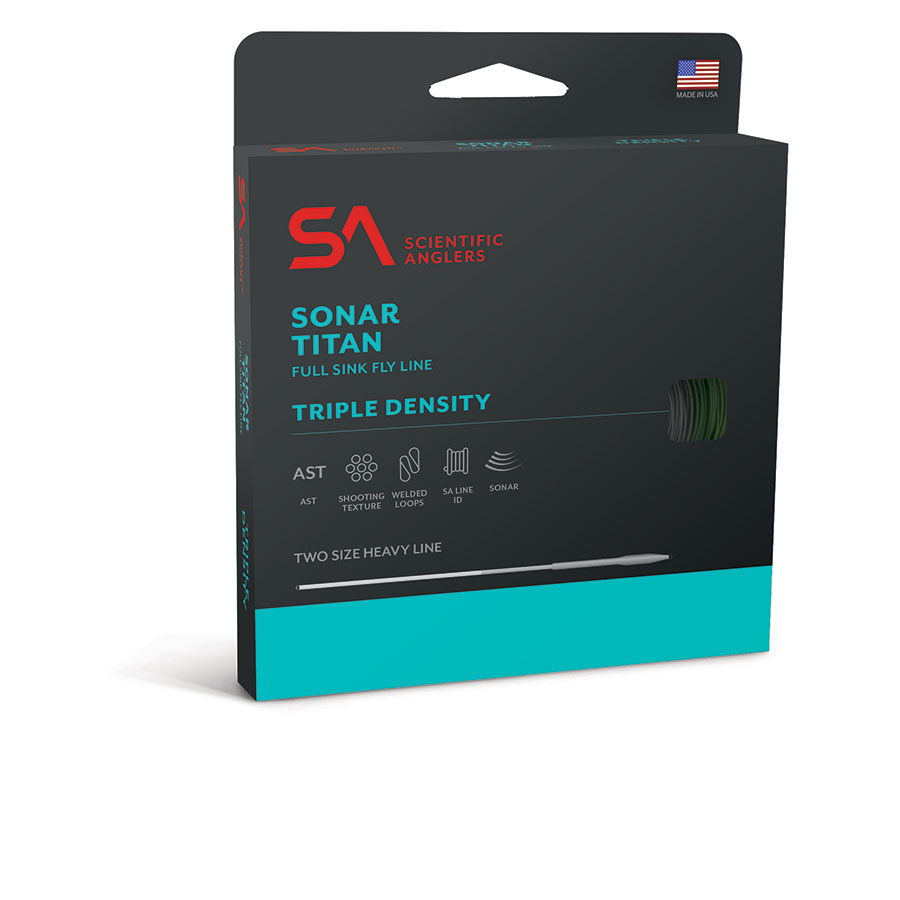
    Rods and lines matter. A fast-action rod with a heavy weight-forward taper line gets the job done. Leave the 4-weights at home—bring at least a 6wt if you want a chance at launching that articulated bug more than ten feet. The Scientific Anglers Sonar Titan 3D is a solid choice for boat work. A fast-sinking tip paired with an intermediate running line makes your life a lot easier from the drift boat. If you’re wading, go with a line that has a floating handling section so you’re not getting tangled around every rock in the river.

    We fish the structure, and we fish a lot of it—cast after cast into cut banks and logjams until our shoulders are sore. We run flies off rock shelves and behind boulders. Brown trout—especially the big ones—hang out in slower water with plenty of hiding spots. Logjams and undercut banks offer the cover they need to ambush wounded baitfish and stay out of the afternoon sun.

    Big flies like this yellow dungeon are well-suited for brown trout fishing with heavy rods.

    The Grind (The Skunking)

    Honestly, I feel like we did everything right—changing flies, varying retrieves, casting into fishy structure. And I know we did everything right, because the day was full of action. Fish followed our flies right up to the boat. But as the day wore on, we had to accept it: this was going to be one of those days.

    The occasional missed grab almost made it worse. Feeling the headshakes, only to lose the fish halfway in—classic barbless heartbreak. I could lie to myself and say I didn’t commit to the strip set. But really, it was the hooks. Or the moon phase. Probably both.

    Reflecting on a Tough Day

    Streamer fishing and steelheading require the same mindset. You commit to the hunt, even when it doesn’t pan out. The ones who keep coming back—who dedicate themselves to a lifetime of shellackings—enjoy the process: the method, the obsession, the moment when you fool a fish, even just for a second.

    Like steelheading, streamer fishing isn’t about numbers. It’s about that one fish—THE fish. And sometimes, the fish doesn’t show. But we keep grinding, because we know that one day, it will. And when it does, we’ll be ready.

    I’ll be back out there when the clouds roll in.

    -T

  • Drift Boat or Raft? What to Row (and Why)

    Personal pontoons are a fun way to float the river, provided the rapids aren’t too gnarly.

    Ask ten guys on the river what’s better—a drift boat or a raft—and you’ll get eleven different answers. I’ve rowed both and read countless forum arguments about which one reigns supreme. Here’s what I’ve learned.

    The cop-out answer is: “It depends.” I know—that’s not what you’re looking for, but hear me out. Each vessel serves a unique purpose and has its place on the river. The decision to buy one or the other depends on your rowing style, the type of water you’re running, how much gear or how many passengers you’re transporting, and what activities you prioritize. I’ll break it down as simply as I can.

    Rays River Dories builds some of the most beautiful drift boats to ever grace a river.

    Drift Boat

    The boat that conquered the West. When most of us picture a drift boat, we imagine the classic McKenzie or Rogue River styles: high sides, flat bottoms, and lots of rocker. These boats are responsive, track well, and offer a great casting platform.

    Drift boats come in various materials—from wood to aluminum to fiberglass. Each has its pros and cons, and the choice usually comes down to personal preference. Drift boat captains need to stay sharp on the oars; a bad line through a rapid can punch a hole in your boat. That’s not to say they can’t handle whitewater—just look up dory captains sending massive standing waves on the Colorado River.

    Drift boats have three major advantages that rafts can’t match: stability, comfort, and aesthetic. Their rigid bottoms make for ideal casting platforms. High sides keep anglers dry and seated comfortably—though they do catch the wind. And let’s be honest: a well-maintained wooden drift boat floating downriver will always turn heads.

    Rafts are rugged and built for maximum utility.

    Raft

    Rafts are inflatable boats made of PVC or Hypalon (rubber). A metal frame supports seats, gear, and casting platforms, giving the vessel its structure. These boats are more forgiving in rough or shallow water, tending to bounce off rocks rather than smash into them—but don’t let their durability become a crutch. Get comfortable behind the sticks.

    Rafts have a shallow draft and a wide footprint, which helps them track well downriver. However, they can be sluggish compared to a drift boat, so plan your lines early.

    Rafts are the ultimate utilitarian river vehicle. Framed designs offer endless customization to match your rowing style. Add casting platforms, cooler mounts, and cargo tie-downs as needed. Raft floors come in I-beam or drop-stitch construction—the latter being better for standing and casting.

    Side-by-Side Comparison

    CategoryDrift BoatRaft
    DurabilityTough but rigid – can dent or crackHighly durable and forgiving
    Shallow WaterTracks well in moderate shallow waterLow draft – performs well in skinny water
    RapidsClass I-III no problemUp to Class V with proper skills
    Casting PlatformStable and ideal for multiple anglersStable with key modifications
    PortabilityTrailer requiredTrailer, roof rack, or rolled in a car
    MaintenanceFill scratches and dents, repaint regularlyLearn to patch and use UV protectant
    CostUsually more expensive upfrontGenerally more budget-friendly
    AestheticClassic, clean, sexy linesUtilitarian and rugged

    Transporting Your Vessel

    No question—having a dedicated trailer is the best way to transport your drift boat or raft. But trailers add a few grand to your setup, and then there’s the issue of storage.

    If space and transport are major concerns, go with the raft. While it’s inconvenient, you can deflate, roll, and haul it in the back of an SUV. I’ve seen people strap them (inflated) to the roof of a Subaru or rest them across truck bed rails—that’s how I transport mine.

    A Word on Maintenance

    There’s no such thing as a maintenance-free boat. Period.

    Drift boats need occasional varnishing, repainting, and gelcoat repairs. Rafts need patching and regular UV protectant applications. Both need to be cleaned—not just for looks or longevity, but to prevent spreading invasive species. Transporting aquatic hitchhikers between watersheds is a dick move.

    Clean your damn boat.

    The Grand Canyon style of drift boat is fully decked and equipped to handle huge whitewater. This one is guided by OARS on the Colorado.

    So, What Should I Buy?

    • Weekend Warrior: Get a drift boat. You can attach a motor for lakes, it’s more comfortable for the family, and your angler buddies will appreciate the casting platform.
    • Expedition Types: Go with a raft. Customization is endless, and it’s easy to convert into a gear boat.
    • Guides: Choose whichever suits your clientele and trip style.
    • Skinny Water / Variable Flows: The raft is your friend.
    • New Rowers: Crash your buddy’s boat first. Then maybe grab a used raft to learn on.
    • Rich Guys: Just buy both—ignore your spouse.

    Final Thoughts

    I currently own a used raft with more patches than Raggedy Ann, but I plan to own a drift boat someday. I even want to build one. Beyond the satisfaction of crafting it myself, I love the heritage aesthetic of a wooden drift boat—it feels like an homage to the legacy of angling in the Pacific Northwest.

    For now, my raft lets me learn new rivers and row in peace, but the comfort of a drift boat is becoming more appealing than the versatility of a raft. If I were regularly running Class IV whitewater, I might feel differently—but for my style of fishing, the drift boat is where it’s at.

    At the end of the day, row your friends’ boats, be honest about what features you value most, and come to your own conclusion. Talk to the guys at your local fly shop. Every vessel has its place—and both will get you on the water.

    And really, isn’t that what matters most?

    -T

  • The Rivers We Fish in Central Oregon

    No, I’m not going to tell you exactly where to fish. That’s part of the journey, and you’ll need to learn that for yourself. This is a high-level overview of the rivers I love to fish and have the privilege of living near. Sometimes I take it for granted that I live just a cast away from world-class water full of native redband trout.

    It’s hard to capture the vastness of the Deschutes canyon on camera.

    The Deschutes River

    This is the holy grail of fly water in Central Oregon—and easily the most well-known stream in the region. The Deschutes originates from Little Lava Lake in the Cascades and travels 252 miles north before emptying into the mighty Columbia River. The last 100 miles, below Lake Billy Chinook, are considered world-class fly water, home to vast numbers of wild trout and sensitive runs of steelhead and salmon.

    The upper reaches of the Deschutes hold aggressive brown trout and brook trout—wild, but not native species. The Middle Deschutes through Bend transitions into a redband trout and mountain whitefish fishery before emptying into Lake Billy Chinook, held back by the Pelton and Round Butte Dam complexes. Below the dams, the Lower Deschutes widens, gains power, and cuts through an untamed landscape. It’s the quintessential Western river.

    The biggest draw on the Deschutes is the legendary salmonfly hatch in May. Between early May and Memorial Day, giant salmonflies and golden stones emerge en masse, covering the banks in the hundreds of thousands. While some consider this the main event, savvy anglers know that the fishing only improves from June through fall.

    The Crooked River

    The Crooked originates high in the Ochoco Mountains before emptying into Prineville Reservoir—a solid bass fishery. Below Bowman Dam, the river winds through a canyon with exceptional roadside access and well-maintained day-use areas. It has an unrivaled fish-per-mile count compared to other Central Oregon streams. Just don’t expect to land any trophies.

    Unfortunately, the Crooked is poorly managed and suffers wild swings in discharge and persistent algae blooms. Agricultural runoff promotes a slick layer of algae that becomes a brown slime under the summer sun. Winter and spring bring erratic dam releases that flood the river and nearby farms. The only upside? A short window of clean rock and clear water after the last major release. Thankfully, the trout seem to bounce back quickly and take full advantage of these brief clean spells.

    The Metolius stays frosty as it rapidly descends into Lake Billy Chinook.

    The Metolius River

    The Met is my favorite stream for winter fishing. As a spring creek, it flows steadily at 40–45°F year-round. Its pristine waters create a stunning landscape of crystal-clear currents and healthy aquatic life. Resident bull trout migrate up from Lake Billy Chinook to ambush spawning fish.

    There’s something here for every style of fly fishing: chuck streamers for big bulls, euro nymph fast seams and deep buckets, or present delicate dries in back eddies and soft pools. Dry fly fishing here is a game of finesse. The hatches are diverse and fleeting, and the fish are educated and cautious. The common wisdom is that if you wait to see rising fish, you’ll be waiting a long time. But if you can read the water and match the hatch—like a sulfur emerging—you just might fool one with a transitional dry. Just don’t forget your 15-foot tapered leader.

    The Fall River

    I’ll admit this river isn’t my favorite, even though it’s undeniably beautiful. The Fall is a cold, clear spring creek flowing through the Sunriver–La Pine area, winding through a picturesque forest just 20 minutes from Bend. The issue? Almost all the fish here are hatchery stockers. And I prefer wild redbands.

    Because of its beauty and easy access, the Fall gets crowded year-round. Most anglers congregate near the hatchery or campground to sight-fish to a seemingly endless supply of stocker rainbows. That said, the Fall is a bipolar river—some days the fish are dialed in and eat everything, while other days they’re tight-lipped and uninterested. Dry fly fishing can be fun here if you downsize your fly and show them something different. Just be ready to run a 15-foot tapered leader and approach with stealth.

    The McKenzie River

    Drive west along Hwy 126 toward Eugene and you’ll find yourself winding alongside the McKenzie—a river rich in history and deeply embedded in the lore of fly fishing. The McKenzie River drift boat originated here, likely because wading is downright treacherous. Slippery rocks, dense forested banks, and a pushy current demand respect. If you value your safety, do yourself a favor and float it. Cleats and a wading staff won’t cut it.

    The Mac is cold. Very cold. Snowmelt from the Cascades feeds this river and helps sustain rich habitat for native redbands, bull trout, cutthroat trout, and anadromous fish. The upper river, above Leaburg Dam, offers a wild and scenic experience, while the “town section” near Eugene slows down and gives you the chance to swing a fly close to a lively college town.

    I’ll be honest—my experience on the McKenzie is limited, but that’s changing. I fished the town section a bit during my time at the University of Oregon, and now I’m working my way upriver by raft, exploring its more remote reaches. Expect to hear more about the McKenzie as I get to know it better.

    Bonus River: The North Umpqua (2.5 Hours from Bend)

    No other river has captured my imagination quite like the North Umpqua. Its breathtaking beauty is matched only by its storied legacy. The river’s modern reputation was shaped in part by Zane Grey, the famed steelheader and novelist, who began exploring the river in the early 1930s after Major Mott’s passing—another name etched into North Umpqua lore.

    Most fly anglers view the North Umpqua as the capstone of their fishing journey—and with good reason. The regulations in the famed Fly Water section are strict: single barbless, unweighted flies only, with no strike indicators or split shot. While aggressive cutthroat will smash your fly, that’s not why most are here. The real draw is the legendary summer-run steelhead.

    These fish are, sadly, on the decline. Landing one is rare, and closures are becoming more frequent. But I don’t mind the restrictions. Conservation comes first—and the difficulty of the river only enhances its mystique. A steelhead on the North Umpqua isn’t just a fish. It’s the culmination of a lifetime of dedication, ten-thousand unanswered swings, and the humbling reminder that the fish don’t owe you a thing. I’ve never met a desperate steelhead. When a summer-run fish explodes on a waking fly, it evokes something primal—an emotional high that no other river can replicate.

    Final Thoughts

    Living in Central Oregon is a privilege. I’m surrounded by rivers that demand time, skill, and respect—each one offering a unique window into what makes this region so special. Whether you’re just starting out or have fished these waters for decades, there’s always more to learn. That’s part of the draw.

    -T

  • Sunday-Funday on the Mac

    The drive to the McKenzie river was windy and brief—only about 90 minutes outside of Bend. It’s always a drastic shift crossing over the Cascades. The arid, sunny climate in Central Oregon feels like the antithesis of the wet, mossy green of McKenzie Bridge. But today we lucked out with a light breeze and clear skies, a pleasant surprise in late May.

    Nobody at the boat ramp when we put in. Water temps were in the low 50s. Not a bad start to the morning, especially with a Red Bull in hand. My younger brother, Todd, and my good friend Mike helped load the raft with all the essentials—Rainier, High Altitude Lager, more Red Bull, and a can of V8 bloody beer mix. There might have been some sunscreen thrown in the boat at some point, but I never found it.

    The McKenzie was scorched by wildife several years ago. The river endures and plants make their comeback in the charred landscape.

    The day started slow since my oar skills were a little rusty after a winter of mostly wet-wading. The first few turns downriver were clumsy, but I quickly found my rhythm. The McKenzie is a new river to me, and I had some fresh Cataract oars I was breaking in. They’re about a foot longer than my old, sun-bleached wooden ones. Turns out that longer oars don’t just give you more reach—they push a lot more water, thanks to the wider and longer blades. More surface area = more power.

    I bought the new set not just because the old ones were beat up, but because they were way too short for my setup. I row a 30-year-old Riken Pioneer commercial raft, patched and re-patched, measuring 12’6” long with a 66-inch-wide unbranded frame. And yes—it floats. The old 7’6” oars barely gave me any leverage. The new 9’6” oars are sized closer to proper specs (roughly 3x half the frame width) and have swappable blades. Since I plan on upgrading to a bigger boat with a 72” frame down the line, I sized up about a foot. Plus, my tall captain’s seat and habit of standing while scoping upcoming rapids call for longer oars than conventional setups.

    The McKenzie is no joke. It’s pushy, and keeping anglers in position is a real challenge. Wind, microcurrents, and a minefield of rocks make things interesting. While it’s not an advanced whitewater river (at least the section we rowed), it does demand your full attention. There are plenty of sweepers, exposed rocks, and hydraulics that can punish a lazy stroke. Some rapids have flipped boats and taken lives. Respect the McKenzie.

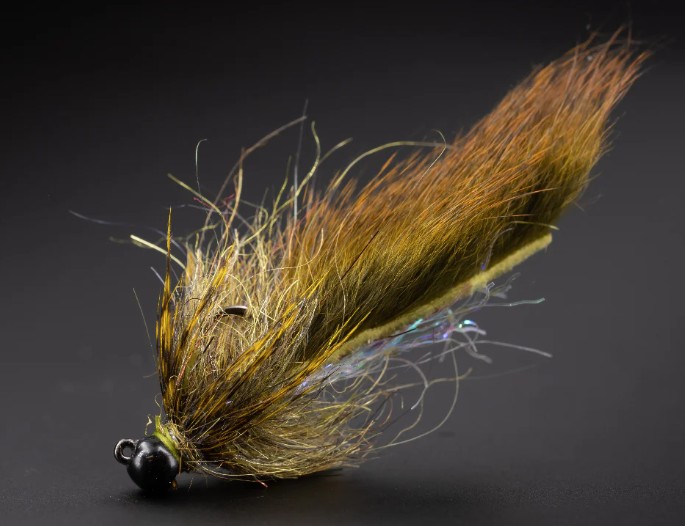
    It was about an hour in before we finally got into fish. At the second decent-looking run, we pulled off and found some eager trout holding about two feet under a turbulent seam, just a few feet to the right of a rock that would make any approaching drift boater sweat. Euro nymphing with heavy jig streamers turned out to be the ticket for this slot. About 40 feet downstream, the water slowed and the turbulent seam mellowed into a well-defined foam line about 18 inches wide. Even flows, cobbled bottom, scattered boulders a few rod lengths off the bank. It was beautiful dry-dropper water—3 to 4 feet deep—and the fish thought so too. While nothing took the dry, a size 18 olive baetis nymph picked off a few willing trout.

    Further downriver, we came upon the head of a riffle flanked by a monolithic rock face—easily a couple hundred feet tall. We stopped here mostly because the tailout above the riffle shallowed up fast and grounded our raft mid-river. We hadn’t consumed enough beers to lighten our ballast. It looked too fishy to pass up, so we dropped the anchor and waded out.

    This might be a good time to mention that it was Todd’s first time fly fishing moving water outside of practice casting. I had gifted him a 9’ 5wt Echo Carbon XL and an old reel in exchange for his 2004 Corolla with over 250K on the odometer—a fair trade. To be honest, the dulled finish on the Echo looked freshly buffed next to the Corolla’s peeling red topcoat. Todd had been working on his cast all day with minimal success—until now. A Sexy Walt’s Worm, suspended four feet under a Chubby Chernobyl, tempted three trout in just a few minutes. Triumph at last. Mike and I each cleaned up in our own corners of the riffle, while Todd’s confidence grew with every cast.

    It was as if the fishing gods had finally cut us a break. The rest of the day turned into a blur of action—trout no more than 10 inches long leaping out of the water to hit Chubbies, Hoppers, Green Drakes, X-Caddis—you name it. It was a perfect day to initiate my little brother to life on the river. This time of year, the fish like to hang tight to the banks under the alders, especially as the sun climbs. Overhanging branches drop a buffet of big bugs into the foam lines, and trout wait below in the shade to ambush them. The long boulder-strewn runs of the McKenzie offer prime habitat for a thriving trout fishery.

    Mike re-rigs some dry flies between rapid stretches. Moments of reprieve like this are perfect for stretching your legs or sipping your beer, which is probably warm by now…

    It’s worth noting that several miles of the McKenzie River corridor burned in the wildfires a few years ago. The first part of our float was ghostly—dead trees, log jams, no shade, and not much bug life. But further downriver, where the canopy still lives, the fish are still there, and the river still sings. While the river is making it’s recovery, it still has a long way to go.

    Final count: 12 cans of beer, sunburned flesh, a few busted knuckles, minimal flies lost, three big smiles. No idea how many fish we caught since I never keep count (that philosophy deserves its own article). I can’t wait to float this river again and make the McKenzie my second home. And if you’re headed to the McKenzie – bring some dries and mind the rocks.

    -T

  • Rant: You Don’t Need an Expensive Reel to Catch Fish

    There’s something to be said about a shiny new reel—the low startup inertia, the smooth drag system, the purple anodized aluminum. I’m guilty of buying nice reels, but I wouldn’t say I’ve ever purchased a fancy one—nor do I plan to.

    Let me be clear: you don’t need to spend your life savings on a Nautilus reel to go fishing (most of the time).

    The Lamson Liquid is a great example of a reliable modern reel that doesn’t break the bank. This one has seen its fair share of river miles.

    The Modern Reel Is Already Amazing

    Most modern reels are made from machined aluminum, with tolerances much tighter than even the priciest vintage reels. It’s a great time to be a trout bum—thanks to the marvels of modern manufacturing, you can score a decent fly reel for $40.

    With a few exceptions, the vast majority of reels you’ll find in your local fly shop will catch fish for many years to come—as long as you take care of them.

    Remember: the reel is mostly there to store your fly line. Don’t overcomplicate it.


    Most of the Price You Pay Is for the Color and Weight

    I’ve seen reels hit the market at $800+ just because they’re limited-edition lime green or feature laser-etched brook trout spots. Unless you’re an avid collector—or show up to the river in Balenciaga waders—I’d steer clear of the shiny objects.

    Now, weight does matter when choosing a reel. The expensive ones are absurdly light—some feel like they barely register on a scale. But don’t get too hung up on it.

    The best reel for your fly rod isn’t necessarily the lightest one.

    Let me explain: the reel plus the weight of your fly line and backing should balance your rod. Even that isn’t the full picture.


    Match Your Reel to Your Rod and Style

    If you’re fishing dries, streamers, or indicators:

    Your reel should either perfectly balance the rod or make it a little tip-heavy. That makes for a more responsive cast.

    If you’re euro nymphing:

    You want the rod to balance slightly toward your hand to reduce fatigue. You’ll probably also want a full cage reel.

    If you’re casting a spey rod:

    The reel should be on the heavy side to anchor your cast. A full cage is also ideal to prevent thin running lines from slipping between the frame and spool.


    But Trev, the Expensive Reels Have the Best Drag!

    Yeah, I’ve heard it before. But you don’t need a $600 drag system to stop the 0.2378-pound cutthroat that’s peeling backing.

    You don’t even need it for a 12-pound steelhead or a 30-pound chinook—though it might help.

    Don’t believe me? There’s an entire class of anglers chasing salmon and steelhead with 100-year-old Hardy click-and-pawl reels—which have no drag system at all.

    There’s even a newer company, Cubalaya Outfitters, that makes click-and-pawl reels designed for saltwater use. Hitting the flats without any drag? Count me in!


    It’s the Angler, Not the Drag

    Here’s the truth: a talented angler who fights fish efficiently—using their fly rod as the shock absorber—doesn’t need an expensive drag system. In most trout scenarios, the drag on a $35 Echo Base will do just fine. Most of the time the fish is in my net before I let it get on the reel. Most of your control fighting fish comes from stripping line, being tactical, and fighting using the butt of your rod.

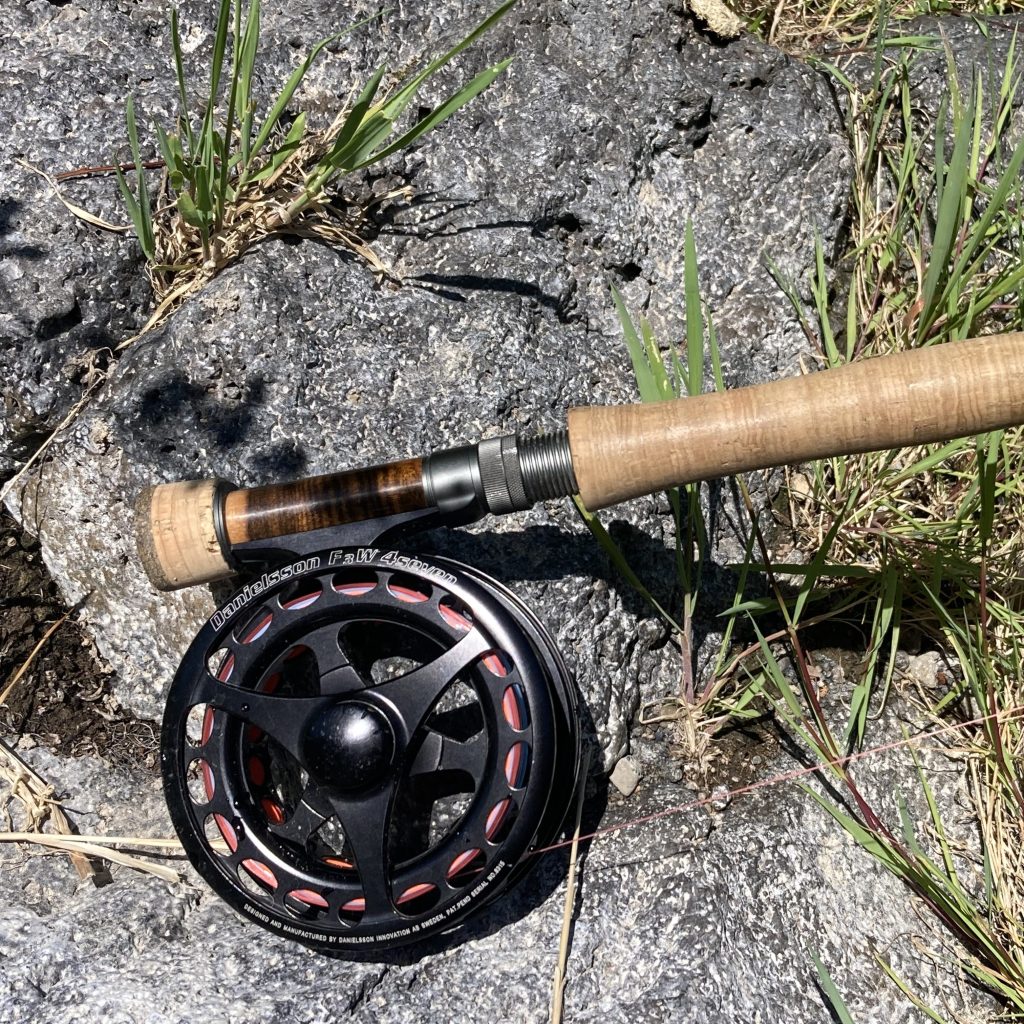
    The Danielsson F3W series is a phenomenal large-arbor reel that is a pleasure to fish. What it lacks in flash it makes up for in elegance and finesse. This 4seven model is mated to my euro rod.

    Shoutout to My Favorite Reelmaker

    One night, while navigating a spey forum rabbit hole, I stumbled across a reel brand I’d never heard of: Danielsson.

    Turns out, this mystery Swedish brand is closely tied to Loop (a European name you may recognize), but they only sell direct-to-consumer from Sweden—so you won’t find them in your local fly shop.

    Two weeks later, I came home to a package from Sweden containing a Danielsson F3W that I snagged for $212.56 (shipping included). I instantly fell in love with:

    • The minimalist, full-cage design
    • The light weight
    • The satisfying click of the drag
    • The elegant machining

    If you’re ready to upgrade from your first reel, give Danielsson a shot. Not into waiting for international shipping? Swing by your local fly shop and pick up a Lamson Liquid—another great value.


    What’s Worth Paying For?

    Pay for nostalgia, the story, and the fitment.

    I know I’ll eventually spend a stupid amount of money on a click-and-pawl reel—just because I love how it sounds. I also know I’ll waste months and hundreds of dollars tracking down a vintage Hardy so I can imagine what it was like to fish the North Umpqua before the steelhead runs collapsed.

    Some people are just that into brown trout, and they want their reel skin to show it. I get it.

    A reel is an expression of your appreciation for the sport. And in that sense, spending a mortgage payment on one can make emotional sense.

    Just don’t let a bargain-bin reel stop you from being the fishiest person on the river.

    – T