Blog

  • The Rod Transport System I’m Constantly Asked About: Why I Swear by the Sumo Suction from Rodmounts

    Disclaimer: I’ve never owned or used an enclosed rod vault. I’ve never been able to justify the price tag—and let’s be honest, most of the river rats I run with can’t either.

    My favorite fly fishing accessory didn’t come from a high-end gear catalog—it came from my fiancée. I’d been on the hunt for a way to transport my rods without constantly breaking them down between spots. I wanted to hop from hole to hole along the Deschutes without rerigging or jamming gear into weird and unsafe positions inside my vehicle. Piles of broken-down rods suck. After seeing plenty of rod transport solutions, the Sumo Suction by Rodmounts has easily become my favorite.

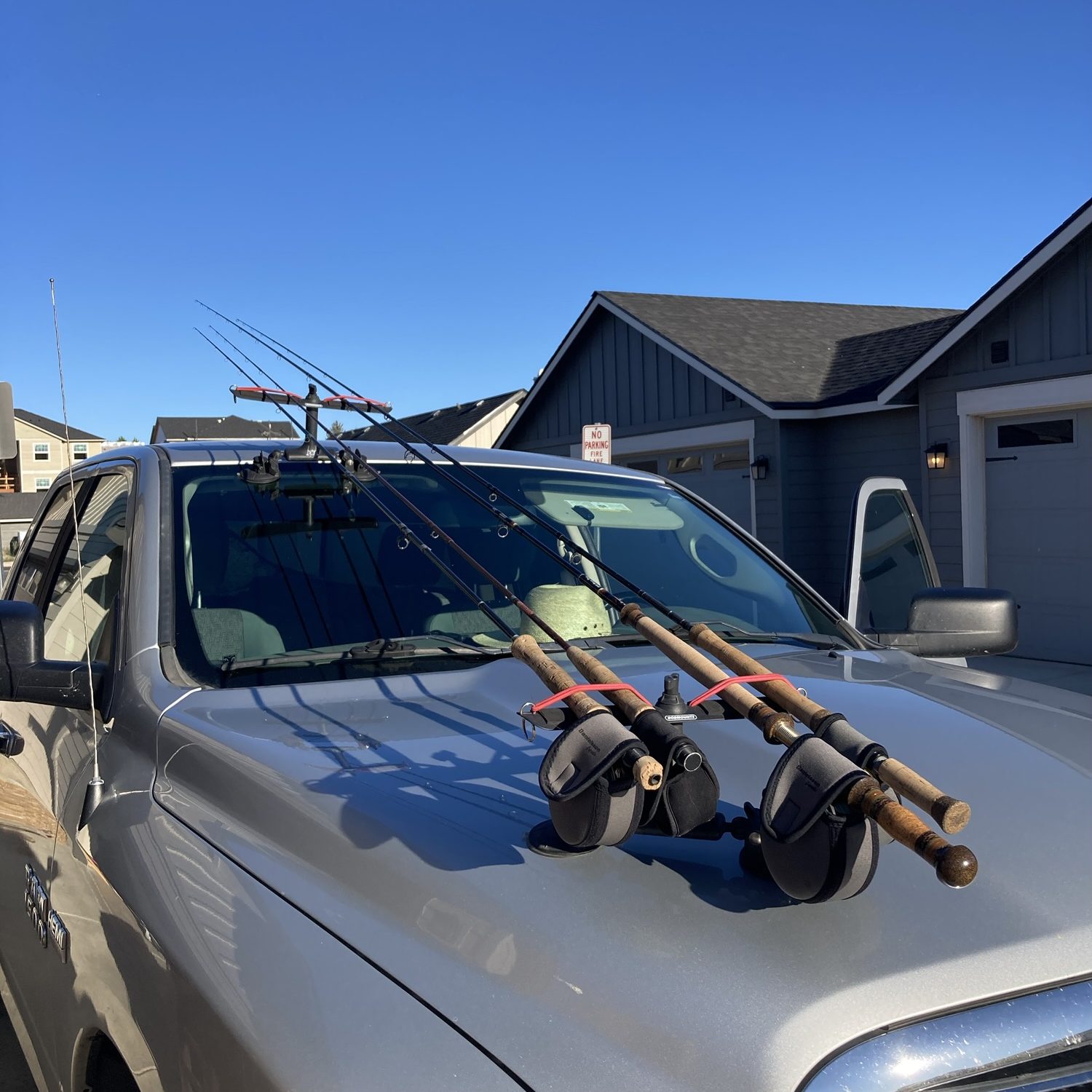
    The Sum Suction by Rodmounts in action on my pickup.

    How It Works

    The Sumo Suction is a two-piece rod carrier that uses powerful suction cups to mount securely to your vehicle’s hood and windshield. It holds remarkably well—but here’s the key: clean the mounting surface with Windex and make sure it’s completely dry before you attach it. A clean, dry surface helps the suction cups form a tight, reliable seal.

    The bungee system stretches securely over your rod handles and has enough give to fit 3 rods per side. Not a suction cup believer? Rodmounts also offers a magnetic version for added peace of mind.

    Why I Love the Sumo

    1. It shows off my gear.
    There’s nothing quite like pulling into a riverside pullout and watching someone double-take at my Meiser spey rod strapped across the hood. Let’s be real—flaunting your gear is half the fun and it’s okay to let everyone else know how much fishier you are than them. And as everyone knows, if you see a 20-year-old Subaru parked at your favorite run with a Sumo on the hood, just turn around. That guy already caught all the fish.

    2. It’s damn reliable.
    I took the Sumo on a multi-state road trip across the western U.S. and never once took it off. I mounted my rods in Central Oregon, fished Silver Creek in Idaho, survived a rainstorm, passed through Park City, and drove 750 miles home—rods mounted the entire time. The top question I get is: Do you really trust suction cups with thousands of dollars of gear? After a 2,000 mile trip at highway speeds, my answer is a confident “yes.”

    3. It’s more affordable than a RodVault or RiverQuiver.
    Sure, enclosed systems have their place—especially in urban environments where theft is a concern. But at $170, the Sumo is a better value for most anglers than the $500+ enclosed racks. If you fish rural waters and trust your surroundings, you’ll appreciate the savings.

    4. It’s more adaptable.
    The Sumo holds up to six fly rods, while most enclosed systems max out at 2-4 rods. It mounts on nearly any vehicle—no roof rack required. Need to move it between cars? No problem. I can mount or remove my Sumo in under 90 seconds.

    5. It’s made by a local.
    Rodmounts isn’t owned by some faceless conglomerate. It’s a small, Central Oregon company run by someone who loves fishing as much as we do. No venture capital, no fancy headquarters—just a great product from someone who gets it. #supportlocal

    No more snapped rod tips. No more tangled backseat disasters. No more breaking down rods between every hole. The Sumo is sleek, efficient, and hands-down the best value rod rack on the market.

    Just remember: clean that surface well before mounting and you’ll get maximum performance. I can’t recommend this system—or supporting this local business—enough.

    -T

  • Build Your First Euro Nymphing Leader (Without the Confusion)

    I was first introduced to euro nymphing when my buddy Lucas showed up to the river one day with a Moonshine Vesper he’d picked up for a few hundred bucks. It didn’t take long for me to notice him vacuuming up fish, and I knew I needed to try the technique out.

    Problem was, I didn’t have a euro rod.

    Turns out, you don’t need a euro rod to tight line nymph.

    I grabbed my Echo Carbon XL—a no-fuss 9’ 5wt with a soft-ish tip—and threw a mono rig on it. A mono rig is basically a 40-foot leader made of straight monofilament. It’s a simple way to turn your standard setup into a euro rig without swapping out your fly line. As I quickly found out, you can definitely euro nymph on a regular 5wt using a mono rig—it just isn’t as graceful.

    But it works.

    Euro Nymphing Is Fun—And Damn Effective

    Personally, I prefer euro nymphing to fishing with an indicator. It’s more active, more effective, and it teaches you to be a more skillful angler. Nymphing on a tight line gives you ultimate control over keeping your fly in the strike zone.

    With an indicator, your leader length is fixed while you’re fishing a run that might vary drastically in depth and current. A tight line setup gives you more sensitivity and control, and makes it easier to detect subtle strikes.

    It also teaches you to approach the water more thoughtfully and stealthily—instead of splashing into the run and blowing it up before you even make a cast.

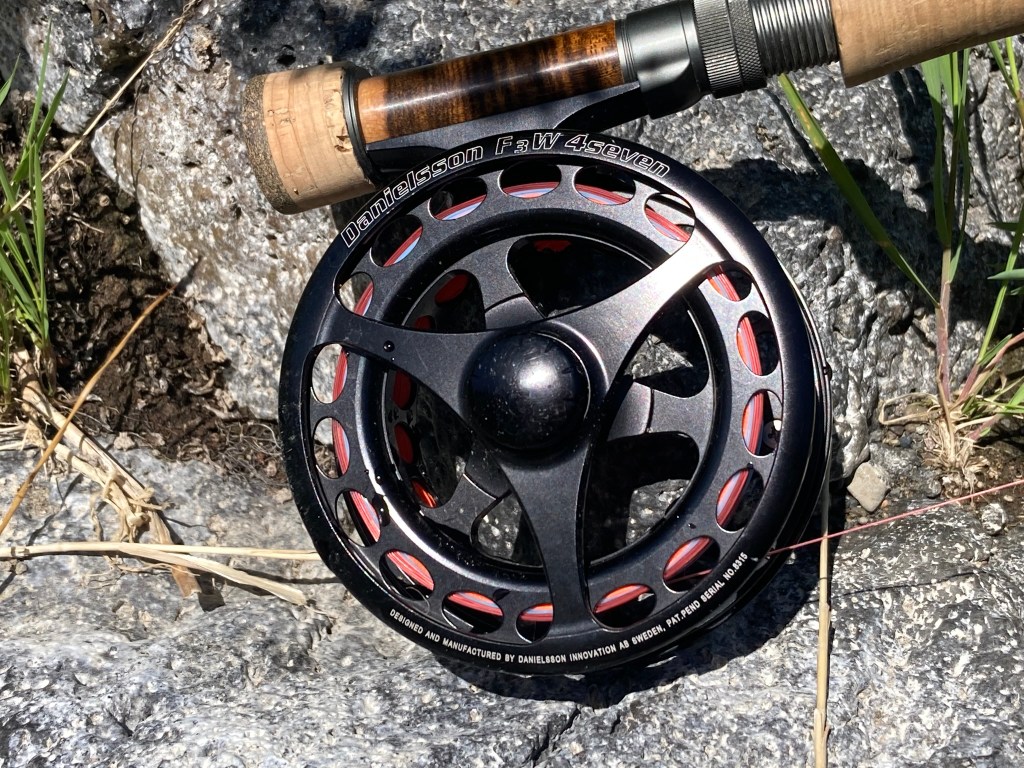
    I set up this Danielsson full-cage reel with a mono rig and a handling section of spey running line, just because I like the way it feels. No fly line in sight.

    Let Me Save You the Research, Time, and Confusion

    Euro fly lines are a waste of money. The mono rig is the simplest (and best) way to tight line nymph on almost any rod.

    If you want a multi-purpose system, just keep a mono rig on a spare tippet spool and attach it to your regular fly line using a loop-to-loop connection. This avoids sag in your guides, cuts through the water more efficiently, and increases strike sensitivity.

    Here’s a basic formula that you can adapt to suit a variety of fishing situations:

    • 30+ feet of Maxima Chameleon
    • A couple feet of sighter material
    • A tippet ring
    • Fluorocarbon tippet

    Fishing lighter beadhead nymphs? Use thinner diameter material.

    Casting big, heavy jig streamers? Use thicker stuff.

    Need to fish farther away, or your fly line is creeping up your guides? Just lengthen the Maxima section.

    The Leader I Use (and Why It Works)

    That long Maxima section prevents your fly line from entering the guides, which introduces slack—and slack is the enemy when you’re trying to detect subtle takes.

    I personally use Maxima Chameleon because its stiffness helps cast the heavy jig streamers I like to fish on large Western rivers. I use a blood knot to connect to Cortland Tri-Color Indicator Mono, then attach a tippet ring with a clinch knot. Check out my post on fishing knots if you want the extra details.

    I leave the tag ends about an inch long to make the sighter easier to see.

    From there, I attach fluorocarbon down to my flies. Pro tip: buy Seaguar or P-Line fluorocarbon—because, let’s be real, fly shop tippet is kind of a scam.

    Don’t believe me? I once witnessed the tip of a $1000 Sage break before the 4lb P-Line leader did.

    Sighter Material: Use What You Can See

    There’s a lot of debate about which sighter material is best. Honestly, I don’t think it matters as much as people say.

    The best sighter is the one you can see in a variety of light conditions.

    Some folks use blood knots to connect different colors of Sunset Amnesia and leave the tag ends. Some prefer bi-color, and others go with plain white sighters they customize with paint pens from the craft store.

    Bottom line? There’s no wrong answer—just use what works for your eyes.

    This Diamondback Ideal Nymph 10’10” 4wt is a purpose-built euro nymphing rod. The heavier rod weight is useful for throwing jig streamers and heavy beads on a mono rig.

    Build a Simpler System (That Actually Works)

    However you build your system, I have two rules:

    1. Use blood knots to connect pieces of leader material.
    2. Don’t taper down too fast—or too much.

    Blood knots slide through the guides better and leave visible tag ends. But they aren’t great for drastically different diameters—which is actually a feature, not a limitation. It forces you to build a more level leader, which sinks faster and drifts more predictably than a heavily tapered one.

    Simple Mono Rig Formulas

    For casting large jig streamers and heavy beadheads:

    • 30+ feet of 12lb Maxima Chameleon
    • 3–4 feet of 2X sighter material
    • Tippet ring
    • Fluorocarbon to match the depth you’re fishing

    For smaller flies and most other applications:

    • 30+ feet of 8lb Maxima Chameleon
    • 3–4 feet of 4X sighter material
    • Tippet ring
    • Fluorocarbon to match the depth you’re fishing

    Start with one of these simple setups, and adjust from there. Add complexity if you want—but don’t let a lack of a euro rod keep you from trying out this crazy effective technique.

    This streamlined approach cuts through the noise and gives you a strong foundation for euro nymphing success—without emptying your wallet or overwhelming your brain.

    -T

  • Do You Really Need a $1,000 Fly Rod?

    (Spoiler: It Won’t Catch You More Fish—But It Might Feel Nicer Doing It)

    I’m the proud owner of a $1,200 custom fly rod, and I love every second I spend fishing it. But do most anglers need a high-end fly rod to catch more fish? Probably not.

    Here are my thoughts—based on actual time on the water—so you can decide whether it’s time to splurge or time to stick with something more affordable.

    1. Expensive Fly Rods Don’t Always Perform Better

    I’ve been lucky enough to fish some premium fly rods—Winstons, Sages, and a few other rods that feel buttery smooth. They’re amazing tools, no doubt. But after a certain point, the performance gains start to taper off.

    What you’re mostly paying for past that $600 mark is build quality, finish, ergonomics—and let’s be honest—a bit of flex for your ego.

    Think of it like this: Toyota and Lexus both get you where you need to go. One just does it with leather seats and walnut trim. The Kia Soul also gets you where you need to go, but not for long. Same goes for rods.

    I picked up this St. Croix Imperial 9′ 5wt for $60 on Marketplace, and it’s seen more miles than any other rod I own.

    2. Mid-Tier Fly Rods Are the Best Value

    When you’re starting out, even the cheapest fly rod feels like magic. It gets you casting, learning, and (hopefully) landing fish. My very first rod was unbranded and found in the corner of a thrift store, of all places. But as your technique sharpens, your expectations change—and you start to feel where your gear falls short.

    That’s when we start upgrading.

    My first “real” fly rod was an Echo Carbon XL. Solid rod, great action, and only $200 brand new. But the cork on the handle? Trash. It broke down fast and showed its age in a single season.

    Approaching the $400–$600 range, you’ll start to see a real jump in materials and performance. Beyond that, you’re mostly paying for things like better cork, upgraded guides, or niche features like saltwater compatibility or Euro nymphing designs.

    If you’re looking for the best fly rod for the money, this is your zone.

    Let’s take a real-world example. I fish a Diamondback Ideal Nymph that set me back about $550. My buddy runs a Sage ESN, which retails for almost $1,000. Both rods are phenomenal performers with excellent ergonomics, great balance, and thoughtful features for tight-line nymphing. The Sage might edge out the Diamondback ever so slightly in feel and responsiveness—but only to a trained hand. What really sets it apart is the finish; it just looks like a high-end rod. That said, for the price, I’d still rather buy two Diamondbacks in different weights than a single Sage. That’s how much value you’re getting. And here’s the kicker: my buddy who owns the Sage? He also fishes an Ideal Nymph—and loves it. That says a lot.

    My Diamondback Ideal Nymph 10’10” 4wt has become a staple in my quiver.

    3. High-End Fly Rods Are a Luxury, Not a Necessity

    At the $1,000 mark and up, you’re buying premium craftsmanship, top-tier materials, and features tailored for specific fishing styles. And if you’re someone who truly appreciates those details, it can absolutely be worth it.

    My $1,200 rod is an RB Meiser Highlander. It wasn’t just a purchase—it was an experience. I got to tour the shop, talk with the builder, choose the blank and components, and even work with Steve Godshall to dial in a custom line that matched my casting stroke and the rivers I fish. Nick Moses outdid himself crafting my favorite fly rod.

    That kind of connection to your gear? It’s hard to beat.

    4. When Does It Make Sense to Drop Big Money on a Fly Rod?

    Here’s the thing—spending a grand on a rod doesn’t make you a better angler. But it can enhance your experience if you’re fishing hard and often.

    • If you’re constantly on the water, it pays to invest in something that feels good in the hand and holds up over time.
    • If you’re dialed in on a technique like spey casting or Euro nymphing, a purpose-built rod can help maximize performance.
    • If you value artistry and craftsmanship, a hand-built rod is something special. It’s not just gear—it’s part of your story.

    Final Take

    You don’t need a $1,000 fly rod. But if you’ve got the experience to appreciate it, the budget to afford it, and the obsession to justify it… why T.F. not?

    Just don’t expect it to magically catch you more fish. That’s still on you.

    -T

  • How I Rig My Spey Setup for Summer Steelhead

    I want to get something out of the way before diving in: you can spend as much—or as little—as you want on a spey setup for any time of year. I’ll explain my two core summer rigs and when I choose to use each of them. You can absolutely fish for summer steelhead on a single-hand rod very effectively—though I’m partial to the two-handed approach.

    Method 1: The Cheap Switch Rod

    • Rod: 11’1” Fenwick Aetos 6/7 weight switch rod
    • Reel: 7/8 weight Redington Behemoth
    • Line: 400gr Rio Scandi Body

    One of my favorite rods in my quiver is also one of the cheapest. I love the rod and hate the reel—even though the reel feels right at home in this configuration. I was looking for a compact two-hander that wasn’t too heavy and would balance with a Redington Behemoth that was gathering dust in my garage. The Fenwick Aetos switch rods aren’t made anymore, and you can only find them secondhand. I picked mine up for $135 on Facebook Marketplace, still wrapped in plastic.

    The rod is light, has decent action, casts well, and performs well above its price point.

    The Redington Behemoth? Ugly, graceless, heavy. But it takes a beating and delivers enough drag to stop a hot summer fish. I line it with a 400gr Rio Scandi Body, which has a 23 ft head. It throws light sink tips up to T-8, but really shines with intermediate VersiLeaders. It’s a blast to tie on a size 5 hairwing and let ’er fly.

    Method 2: My Dream Summer Run Setup

    This setup is my pride and joy. Nick Moses outdid himself building the rod.
    • Rod: 13’ RB Meiser Highlander 6/7/8 weight spey rod
    • Reel: Danielsson H5D 9thirteen
    • Line: Steve Godshall Scandoid or Bridge Tributary, depending on wind

    My favorite rod is a gift I received from my fiancée: a custom Meiser Highlander spey rod. The stick is a work of art, and I had the privilege of being involved in the build process. If you can swing it, reach out to Nick Moses at RB Meiser Rods—he’ll treat you right. I use this rod as my “daily driver” spey rod year-round. I did a deep dive in another post about why I love this rod so much.

    To balance this cannon of a rod, I ordered my favorite reel brand: Danielsson. Their reels offer incredible value, and I’ll probably write a dedicated article on why I love them so much.

    Line choice is where things get interesting. When it’s windy, I load up a 524gr Steve Godshall Scandoid line with a 30 ft head. I usually run 12–15 ft of 10 lb Maxima to my fly. When the sun’s overhead, I’ll swap in a 10–14 ft polyleader and fish a few feet deeper in the column.

    On still mornings, I switch to my Bridge Tributary line, designed by champion caster and line maker Tim Arsenault. It weighs 525gr and has a 42 ft head—and holy shit, it’s a dream to cast. I taper a 15–20 ft mono leader down to 8 lb Maxima and let the rod do all the work.

    Why All the Different Setups?

    I use two different rods to fish three different lines because, ultimately, the line fishes the fly. The switch rod excels in tight quarters under aspen trees, while the full spey rod provides unmatched casting efficiency.

    The longer belly of a proper spey line is a pleasure to cast and delivers delicate presentations to wary fish. Lines like the Bridge Tributary allow me to cover a run quickly—I don’t have to strip in 30 feet of running line every time I recast. Cast, swing, step, repeat. The Tributary’s 42 ft head is long, but still manageable. Its only real weakness shows in the afternoon on the Deschutes, when 30 mph canyon gusts make it hard to hold a tight loop. By then, I’m switching to an intermediate tip on the Godshall line anyway—so it’s not a big deal.

    The Business End

    This is the easiest part of steelheading, but the one anglers tend to overthink. Just tie on a fly you have confidence in. If you don’t have confidence in anything, you can always trust a Green Butt Skunk.

    If you’re fishing a floating line with a long head, taper a 15–20 ft leader down to 8 lb Maxima and call it good. Tie on a hairwing with a Turle Knot and start fishing. I have a separate post that talks about the nuances of different fishing knots.

    If you’re using a floating Scandi line, do the same thing but add a VersiLeader or polyleader and tie on 5 ft of Maxima Ultragreen before your fly. Again, use a Turle Knot.

    Don’t fish Skagit lines in the summer. Skagit lines slap the water. Summer steelhead are more likely to take a fly on or near the surface, and they’ll chase a fly that’s presented well. Skagit setups are made to turn over heavy tips and big flies—not weightless classics and long mono leaders.

    None of this matters if your fly’s not in the water.

    -T

  • Gear Upgrades That Actually Matter: 5 Fly Fishing Upgrades That Are Worth Every Penny

    Gear Upgrades That Actually Matter: 5 Fly Fishing Upgrades That Are Worth Every Penny

    If you’re new to fly fishing or just working with a budget (aren’t we all?), you’ve probably been told your first upgrades should be a $1000 rod and a $600 reel. That bad advice usually comes from Jeff Bezos or someone who owns a fly shop. I’m here to tell you otherwise.

    As someone who spends a lot of time on the water here in Central Oregon, these are the five fly fishing gear upgrades that actually made a difference for me—things that helped me fish better, stay safer, and enjoy the day more. Whether you’re just getting started or looking to level up, these are the upgrades that matter.

    A cheap rod and reel in the hands of a fishy hombre is much more effective than a $1000 rod casting tailing loops. This cheap setup has been well-loved, and the line was more expensive than the rod!

    1. Casting Lessons

    This is easily the most overlooked upgrade in fly fishing and trust me when I say your rod isn’t the bad caster, you are. Spend $60–100 on a lesson instead of buying a fancier rod. You’ll walk away with cleaner loops, better line control, and more confidence. Bonus: you might actually start to like that entry-level rod you thought you’d outgrown. Hit up your local fly shop for lessons. Fin and Fire is a great choice if you are local to Central Oregon.

    The Korkers Darkhorse wading boots are comfortable, easy to put on and take off, and offer unmatched versatility.

    2. Quality Wading Boots

    The first time you hit wet rock in cheap boots, you’ll wish you’d spent the extra money. I’m a big fan of Korkers with interchangeable soles. Felt with studs in summer, Vibram with studs in winter. Having options makes a huge difference, especially on the slick rocks of the Deschutes. If you can only afford one pair, rubber with studs offers the most flexibility. And get the boots with the Boa instead of the laces.

    IThe Grundens Vector are the best waders I’ve ever owned. They also make a Gore-Tex model, but I don’t think it’s necessary.

    3. Decent Waders

    Waders are the last place to cheap out. A good pair means staying dry, warm, and fishing longer. My first pair of cheap waders served their purpose, but now I run Grundéns Vector waders and have zero complaints. They’re built tough, warm, and haven’t leaked after a season of abuse. Just wear your damn wading belt. I did a deep dive on why I love these waders so much.

    4. Better Fly Line

    This one gets ignored way too often. Upgrading from a cheap or cracked fly line is a huge performance boost. A $150 rod with the right line casts better than a $900 rod with the wrong one. My St Croix 5wt rod cost me $60 on Marketplace but I put a $120 line on it, and it fishes beautifully. I’m not saying throw your combo kit in the trash, but the line that came with it is probably trash.

    5. Streamlined Storage

    Your kit doesn’t need to look like you’re packing for a week in the woods, unless you’re spending a week in the woods. One fly box, nippers, hemostats, floatant, a couple tippet spools. I personally rock a small Fishpond chest pack for quick and easy access. Less gear = more time fishing, less time digging.

    Final Thought

    If you’re just getting started or looking to upgrade, don’t get sucked into gear lust. Most of the time, you’ll get more out of upgrading your skills and comfort than buying another rod or reel. Fish what you’ve got, make smart upgrades, and get out there.

    -T

  • 4 Reasons I Fish Barbless Hooks — and Why You Should Too

    Better for the fish, your fingers, and your skills on the water

    It started because I’m a lazy angler. Read on and you’ll see what I mean

    1. The Regs Say So

    More and more, fish and game departments are requiring the use of barbless hooks—Oregon included. Getting hassled by a game warden cuts into my precious fishing time. If all you’ve got are barbed hooks, no worries—just pinch the barb down with your forceps and move on. Problem solved.

    2. It’s Better for the Fish

    You don’t need to be a rocket scientist to figure out that ripping a hook out of a fish’s face—especially with a barb—isn’t doing it any favors. Still not convinced? Try hooking yourself with a barbed hook and yanking it out. Not fun.

    Barbless hooks reduce damage and make catch-and-release what it’s supposed to be: less harmful for the fish.

    I love fishing barbless. These wide-gap jig hooks from Saluda Beads are an amazing bang-for-your-buck and definitely worth a look.

    3. They’re Easier to Remove

    We’ve all stuck a hook in our thumb at some point. With a barbless hook, it’s no big deal—it slides right out. It’s faster, cleaner, and less traumatic for both you and the fish. No torn-up fingers. No torn-up mouths. No urgent care visits.

    One time, my buddy got a size 20 two-bit hooker nymph buried in his finger. It was so small we couldn’t even push it through to crimp the barb. He fished the rest of the day with it still stuck, then went to urgent care. When I saw him later, he was missing a chunk of his thumb. True story.

    4. They Make You a Better Angler

    Barbless hooks force you to be sharper with your hooksets and smoother in your fights. You learn to keep constant pressure, let the fish run when it wants to, and land it fast. Once you get over the learning curve, your landing ratio will actually go up. You’ll realize just how much you were relying on that little metal bump.

    Final Word

    Going barbless makes life easier for you and the fish. It’s better for conservation, better for technique, and—if we’re honest—better for your fingers. Whether you’re doing it to stay legal or just trying to be less of a menace to trout, switching to barbless is an easy win.

    -T

  • Losing Fish, and Why That’s Sometimes the Point

    Every angler knows the sting of a long-distance release. You hook into something solid, your heart skips a beat—and then just like that, it’s gone. Lost fish are part of the game, but they’re also part of what makes fly fishing so addictive. Whether you’re chasing wild trout on your local stream or swinging flies for steelhead, losing fish is frustrating—and strangely, sometimes the humbling reminder we need. Let’s talk about why we lose fish, and why that’s not always a bad thing.

    I feel better about losing fish on beautiful days.

    Why do we lose fish?
    From a practical perspective, it’s due to a number of factors: dull hooks, a bad hookset, too much slack in the line, or hooking the fish in a soft spot of the jaw. As anglers, we have a lot of control over our technique and can adjust to increase the odds of landing a fish. But sometimes—just sometimes—I don’t mind losing one.

    Time on the river is a zero-sum game. Sometimes we win, sometimes the river wins. If we’re on a catching streak, we make up for it in lost flies. If we haven’t landed a steelhead in two seasons, then we pay our dues until the river decides to give one up.

    I love catching fish, but I don’t mind losing them either. At the end of the day, I’m on the river to escape the grind of my 8–5 life, and landing a fish is just the cherry on top. If fishing were only about catching, our spey rods would gather dust and we’d be drifting nightcrawlers through buckets.

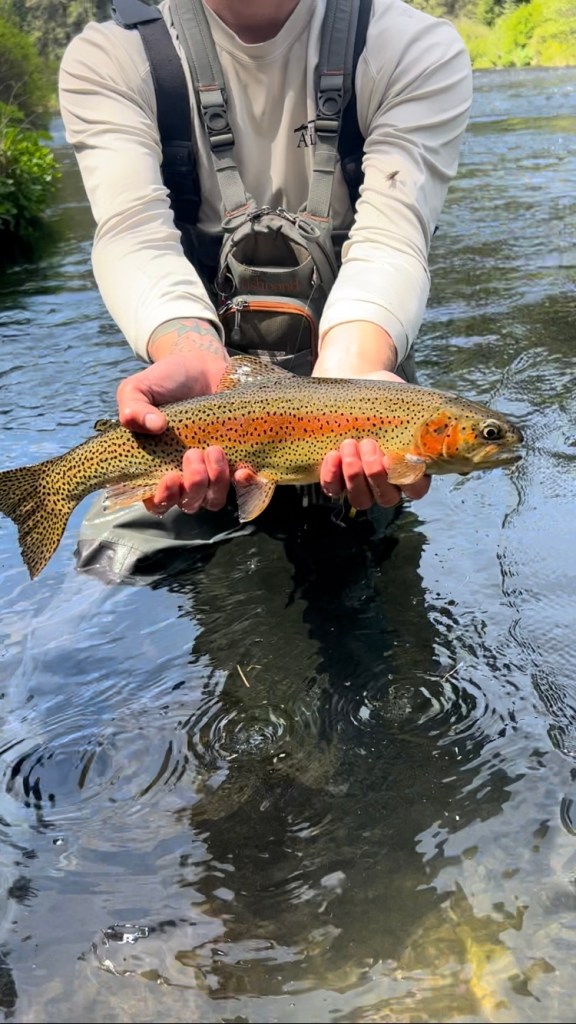
    Fishing is about much more than catching. It’s about learning the habits of our prey, understanding the dynamics of an ever-changing river system, and spending too much money on tackle. It’s about setting up a perfect drift, setting the hook on something that isn’t a rock, and waiting to see if we’re fighting a 5-pound redband—or a 5-foot-long branch.

    For some anglers, it’s the fight that keeps them fishing. For others, the tug is the drug. For me, it’s about doing everything I can to put the odds in my favor—and leaving the rest up to the fish.

    If you’re out there to fill a cooler, fly fishing probably isn’t your game. But if you’re like me—someone who values the pursuit, the process, and the peace that comes with time on their favorite piece of water—then you know: not every fish has to be landed to make the day a success. Sometimes, losing a fish is a sign you did everything right. And sometimes, it’s just the river keeping you humble. Keep your hooks sharp, your drifts clean, and your expectations in check. The next one might stick.

    -T

  • Dry Dropper Setups that Work in Fast Water

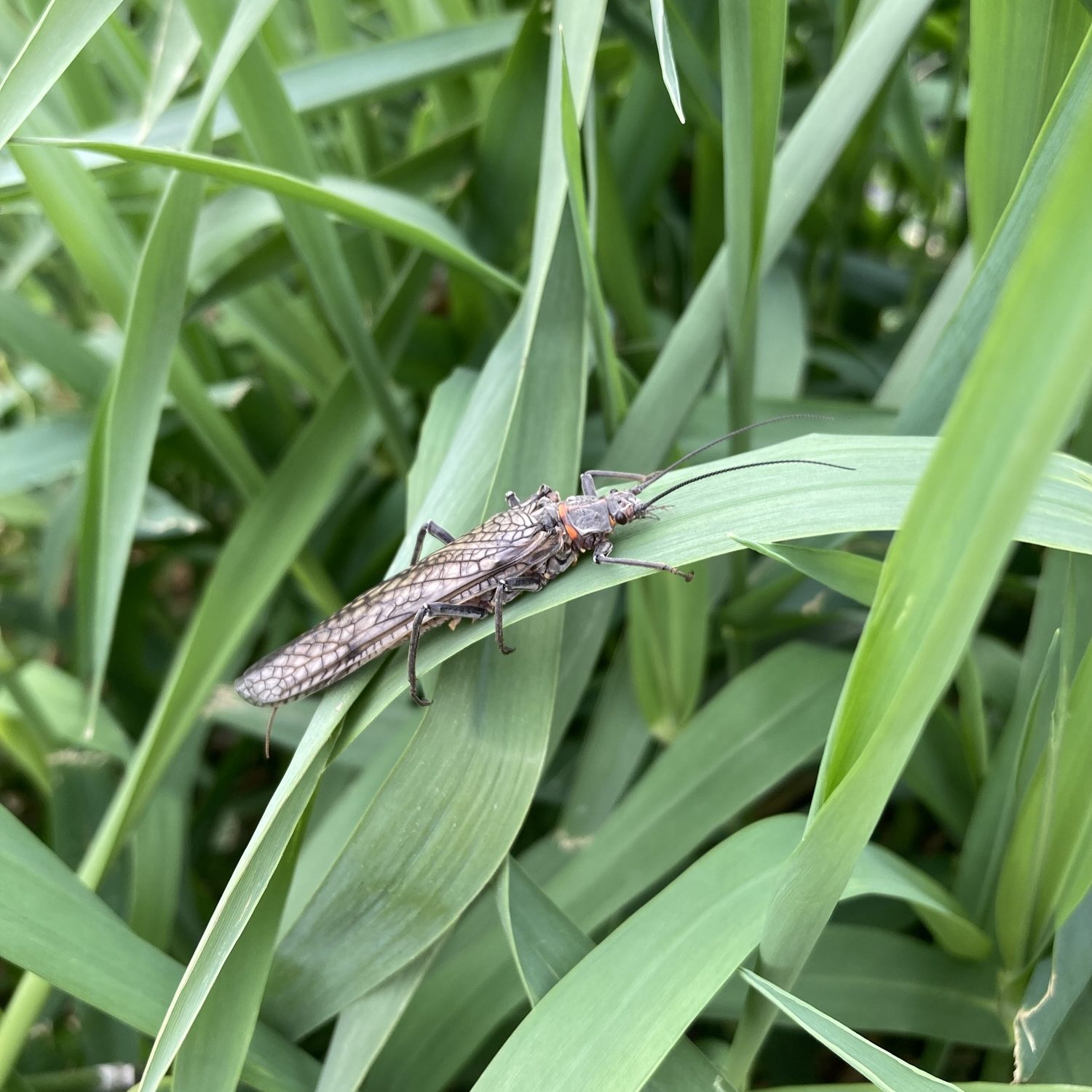
    I know it’s time to fish the dry dropper when the dogwoods explode with foliage and the grasses awaken from their winter slumber to weep over the banks. With Memorial Day quickly approaching, the big bugs begin to emerge, sending out scouts in anticipation of the annual salmonfly hatch.

    It’s probably my favorite way to fish a dry fly. It offers the consistency of nymphing, coupled with the excitement of explosive surface takes. The only catch? You need to commit to fishing one fly or the other with integrity. It’s very difficult to fish two different strike zones—running at differing current speeds—effectively.

    Clark’s Golden Stoneflies are a staple in my box during May and early June.

    When I fish dry droppers in fast water, I usually tie on something big, visible, and buoyant. Think Chubbies, hoppers, large Stimulators, and Clark Stones. For the dropper, I tie something dense that sinks quickly, such as a Perdigon or bead-head Pheasant Tail. It needs to be heavy enough to reach the strike zone—but not so heavy that it sinks your dry.

    Certain species of bugs prefer fast water more than others—namely, stoneflies and caddisflies. For the dry, I like to match the hatch with Clark’s Stones and Chubbies. Clark Stones are my favorite: they’re easy to cast, more realistic than a Chubby, and less resistant in the wind than a big chunk of foam. On the dropper, I opt for something impressionistic that sinks quickly—think size 14–16 olive Perdigon or flashback bead-head Pheasant Tail. The dropper should tumble in the current and over boulders like a real nymph.

    The length of your dropper depends on how deep the riffle is. Sorry—there’s no universal answer to “Is it long enough?” I’ve fished droppers as short as 18 inches and as long as 5 feet, and they’ve all caught fish. The trick is finding a length that gets into the strike zone while still allowing the dry to drift naturally. Too short, and you’re not getting down. Too long, and you’ll hang up constantly. But the occasional hang-up? That usually means your dropper is dialed in. Just beware that too much length introduces slack, which can cost you strikes.

    Salmonfly season in the high desert!

    There’s plenty of debate on how to attach the dropper to your dry. I’ve tied off the bend, the eye, the tag, and a tippet ring. They all catch fish, but tying off the bend is the easiest and most pleasant. If you keep the barb on your dry fly, you can tie on using a basic clinch knot in five seconds and start fishing. If you’re adamant about fishing barbless dries (I exclusively fish barbless nymphs), then tying off the tag end of a blood knot is my favorite. The right-angle coming off the blood knot lets your dry drift freely and helps prevent tangles better than an Orvis tippet knot or triple surgeon’s. Check out my post on different fishing knots to see what to use in each situation.

    Don’t overcomplicate tippet choice. Use 3–4X to your dry fly and 4–5X to your dropper—this works well in fast western water. Fish aren’t as tippet-shy as you’d think, and fast currents put stress on your tippet even when you’re into half-pound fish. I fish a 7.5–9 ft tapered leader for dry dropper setups. With this technique, you’ll often need to cast under overhanging limbs, and a long leader won’t do you any favors—unless you’re fishing a spring creek with tons of microcurrents.

    -T

  • Hello, beautiful people.

    Summer steelhead stoke on the Deschutes.

    I’m not a fly fishing guide, or the greatest fly fisher of all time (if such a thing even exists). I’m not a writer by trade or a polished content creator with a million followers. What I am is a guy who works an 8-5 job, pays the bills, and finds a little peace in this chaotic world by chasing wild fish with a fly rod in hand. My connection to the natural world is through that cigar-shaped piece of cork.

    Fly fishing, for me, isn’t just about the catch—though I’d be lying if I said I didn’t love that part. It’s about the process, the ritual, the quiet moments that slow the world down. The hum of the current. The soft snap of a cast. The total focus that comes when you’re watching your sighter or waiting for a tug on a swung fly. I wouldn’t call it an escape, exactly—but let’s be honest, it kind of is. When the screen-time piles up and the noise of the world gets too loud, stepping into a river feels like recalling our deep primal nature. Something we weren’t meant to forget.

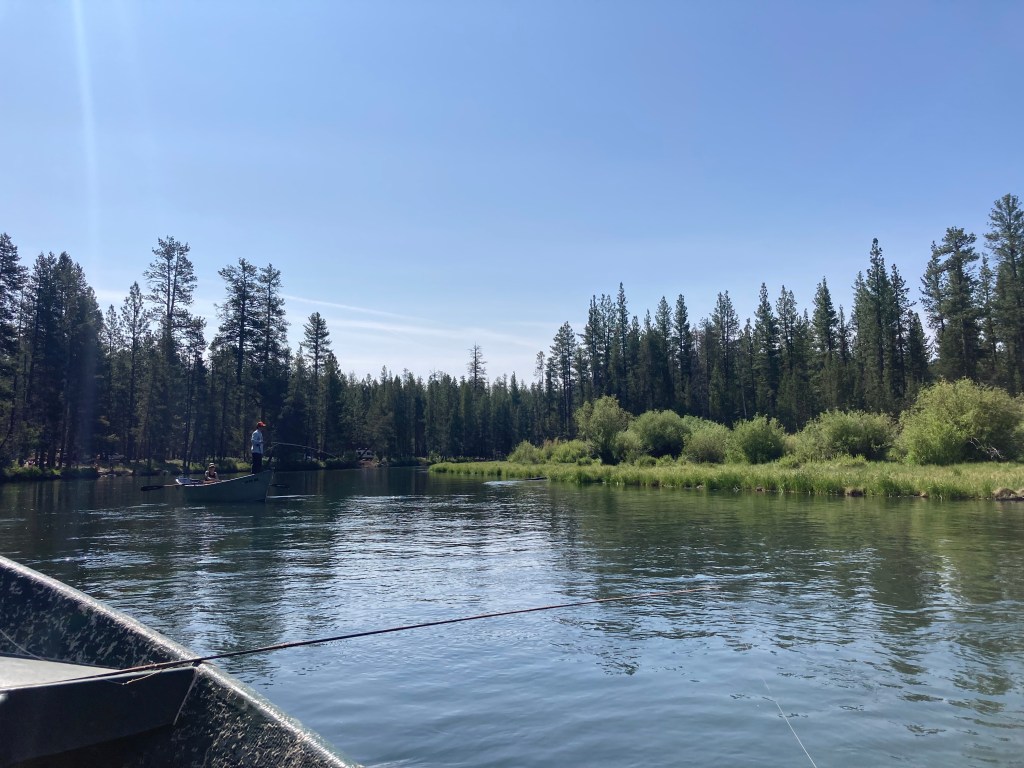
    I’m based in Central Oregon, surrounded by high desert, snowmelt rivers, and one of the last strongholds of native redband trout. I write about fly fishing because it keeps me tethered to something real—swinging traditional flies for steelhead, euro-nymphing for trout in pocket water, sleeping under the stars, or simply burning gas in a quest for the next great analog experience.

    This blog is where I share my thoughts—raw, unfiltered, and mostly unedited. You’ll find gear rants, trip reports, camping misadventures, thoughts on conservation, and the occasional detour into my personal life. I don’t pretend to have all the answers, but I do believe there’s value in telling the story anyway. Because that’s what connects us—the stories we share, the places we love, and the fish that haunt our daydreams.

    So poke around. Read a post or two. Or don’t—and maybe just go fish instead. Either way, thanks for being here.

    -T