
The Cascade Lakes Highway is open! The road to Paulina is finally open! Indeed, it’s that special time of year when the local roads department does their annual duty of gifting fly fishermen access to some of the most productive and scenic waters in Central Oregon. Even better, there’s a solid month before the rubber hatch when paddleboarders swarm the high lakes. That gives fly fishermen the chance to fish ice-off conditions and some seriously epic callibaetis hatches before the kayakers remember how fun the lakes are too.
Lakes can be intimidating to fish, and I’m no stranger to the feeling. I’ve spent the past two seasons going a bit harder on the lakes to figure out the secret sauce. Lakes tend to appear daunting and featureless, but you can drum up some seriously high-quality fish if you know where to look. Combine that with a couple of staple fly patterns and Bob’s your uncle! Besides damselfly nymphs, nothing has unlocked the secret of the lakes for me quite like the Sheep Creek Special.
It’s a Strange-Looking Fly
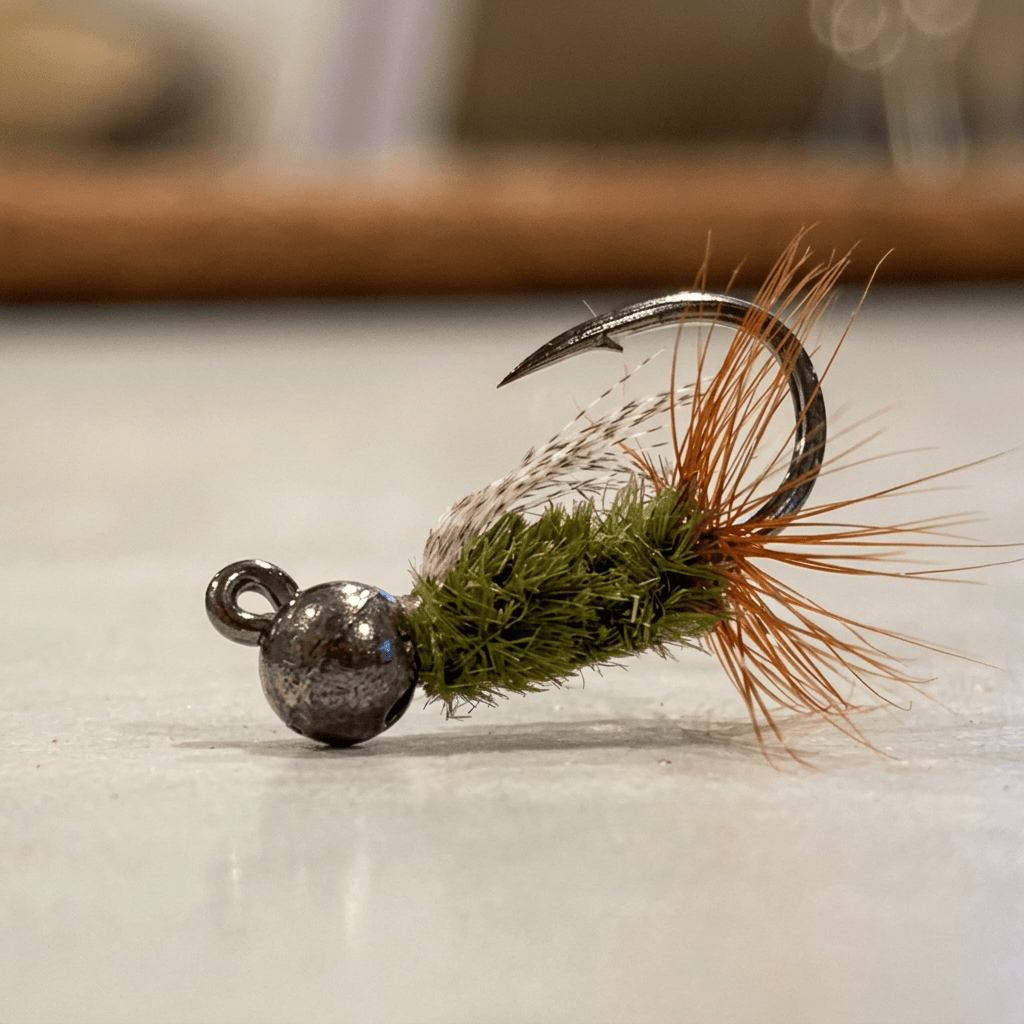
Legend has it that the Sheep Creek Special was the brainchild of George Biggs of Jerome, Idaho, who designed it to fish Sheep Creek Reservoir (hence the name). George was fishing one of his standard patterns when the hackle came unraveled and performed better than the intact fly. A little R&D later, and the superstar fly of the 1960s was born!
It’s an incredibly versatile fly, tied weighted or unweighted in sizes #6–16. It’s a top-notch attractor pattern, and I primarily use it as a searching fly to figure out what depth the fish are cruising at. It’s very impressionistic, loosely mimicking a damselfly in larger sizes and scuds or baetis nymphs in smaller sizes. The fly can be fished on a deep dangle when weighted or slowly retrieved on a floating or intermediate line in skinny water when lightly weighted or unweighted.
Tying the thing is very unconventional and largely left up to the angler’s interpretation. However, there are two things that give the Sheep Creek Special its signature look: a mallard flank wing and hackle wrapped at the bend of the hook. That’s right — you hackle the back of the hook only. It feels very wrong to do it that way, but it works. The body is typically ribbed and covered in the tier’s choice of dubbing. I’ve personally used Simi Seal, cactus chenille, peacock herl, and the like. I typically raid my olive tones, but you can tie it in black/red, black/tan, bright green — whatever you want, really. For the rear hackle, I generally feel that brown or furnace hen hackles sell the fly to whatever fish is willing to buy.
A Note on Hook Choice
Your hook seriously dictates the intended impression and performance of this pattern. I like to tie these on heavier-wire hooks for a couple of reasons. First, healthy lakes tend to rear larger specimens of fish, and I don’t want to give the hook an excuse to bend out. Second, I like the weight of the hook to counteract the buoyancy of my materials and provide at least a little bit of sink. That’s because I like to slowly retrieve a lot of my lake offerings on a floating line with an unweighted fly when I can get away with it.
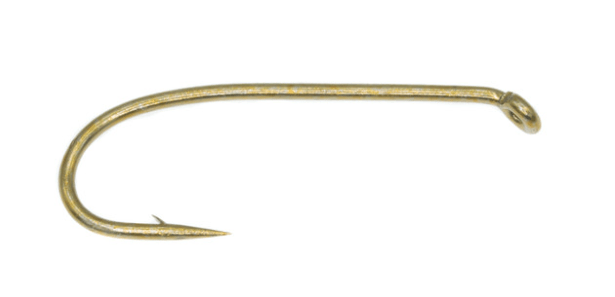
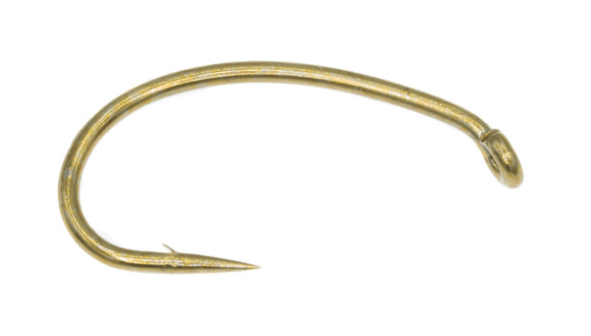
Specifically, the TMC 3761 is a solid hook that gets the job done for most of the Sheep Creek Specials that I tie. This wet fly hook gives a decent callibaetis profile in smaller sizes and does a fine job with a damselfly profile in the larger sizes. I also like to tie them on a TMC 2457 when going for more of a scud vibe with the fly. The Daiichi 1560 is a good substitute for the TMC 3761, and the Daiichi 1120 is a good substitute for the TMC 2457.
It’s Up to You to Tie Your Favorite Rendition of the Sheep Creek Special
It’s a versatile attractor wet fly that can be tailored to your favorite lakes. Remember that the larger sizes do well on a straight-shank, heavy-wire hook for damselfly nymph imitations, while the smaller sizes accurately represent the scuds and resident nymphs in your nearby lake. It’s a weird-looking fly, I know, but it’s an easy tie that is sure to pay dividends. Build out a row in your stillwater box and see what I mean.
— T

Leave a Reply