
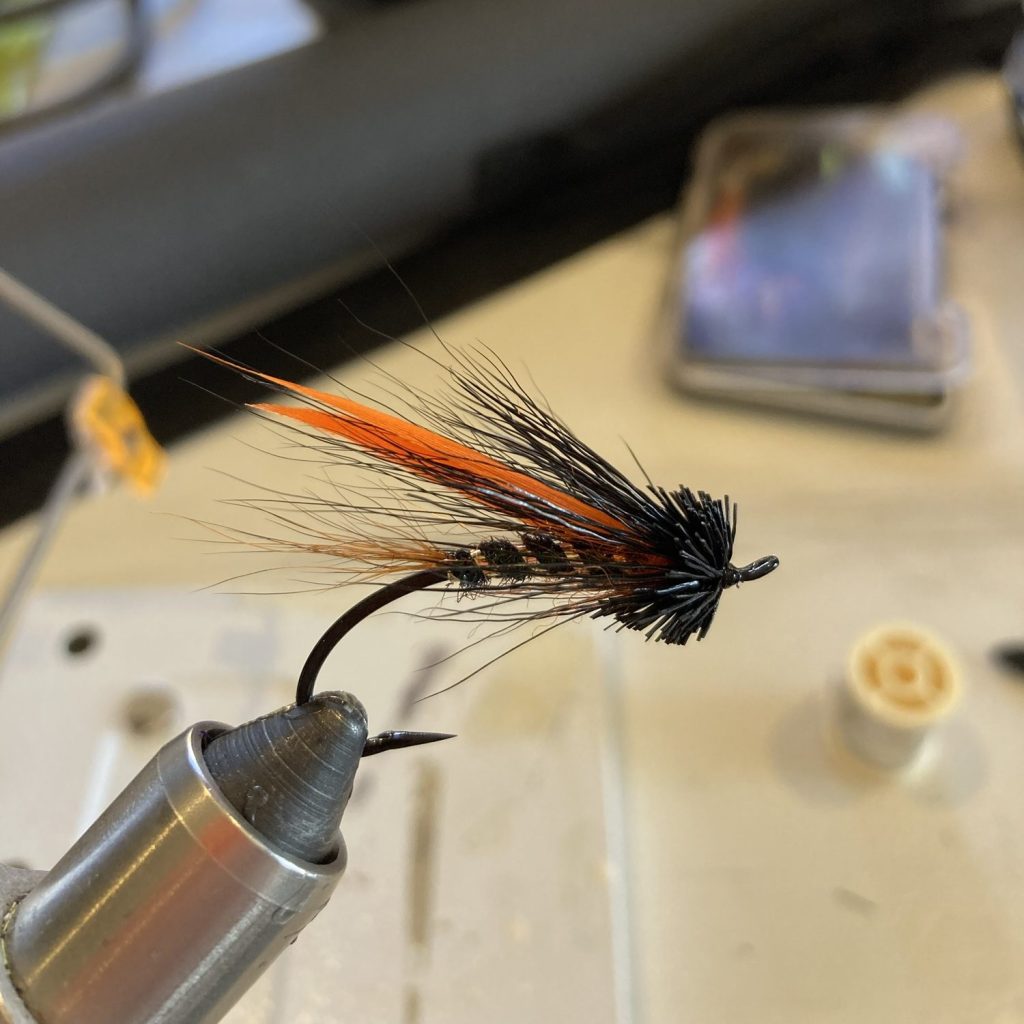
There are way too many hooks on the market for tying steelhead and salmon bugs, and I’m personally overwhelmed. If you’re like me, you’ve probably gravitated toward one hook brand that seems stout and sharp, then tied on those hooks in a variety of sizes. While there’s nothing wrong with that approach, we can do better as expert anglers. I’m writing to tell you there’s a world of hooks out there that we can explore together. Let’s break it down simply.
The Format
I’m not going to discuss hook choice for tube flies or intruders—that’s an entirely different topic. But if you want to know my favorite stinger hook for intruders, let’s just get it out of the way: the Owner SSW with the cutting point.
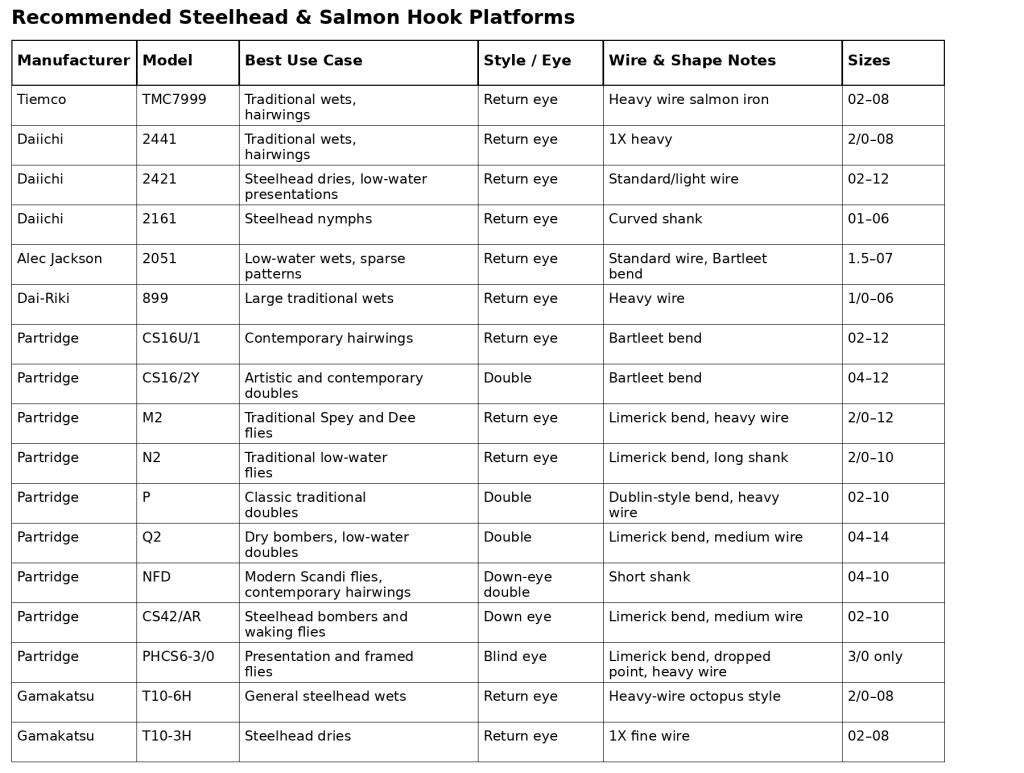
This type of post can get overly complicated and confusing, so we’ll break it up into sections: best for dries, best for wets, best for low-water wets, and best for artistry. I’ll give a couple of options for each and then end with a table that makes the information easily digestible. So, without further ado, let’s get into it!
Best Hooks for Steelhead Dries
The best hooks for steelhead dry flies—or most greased-line presentations—are going to be light-wire hooks. The challenge is finding a light-wire hook that doesn’t bend out when you lay into a 15-pound buck.
I personally prefer the Daiichi 2421 for the bulk of my surface presentations. These hooks are strong, sharp out of the box, and don’t have an overly heavy wire gauge. They are also produced in sizes 02 through 12, giving the tyer a lot of flexibility when dialing in profile or sizing down for spooky fish.
For bombers and flies fished waking, I recommend the Partridge CS42. The down-eye assists in keeping the fly afloat, and the wire is a bit thinner while still maintaining strength. The smooth shank and lack of a return eye make spinning deer and elk hair much simpler. On that note, elk hair is John Hazel’s preferred material for steelhead dries and bombers.
Best Hooks for Steelhead Wets
I like beefier hooks for most of my wet flies, which means 1X heavy is the name of the game. In this instance, “1X heavy” simply means the hook is crafted using wire of a gauge typical of one size heavier. For example, a size 6 hook will maintain the regular proportions of a size 6 hook but be forged from wire more typical of a size 4 hook.
For this purpose, the Tiemco 7999 and Daiichi 2441 are my hooks of choice. They are largely interchangeable, though the Daiichi hooks tend to be more economical.
The heavier wire helps in a few situations. First, it keeps the fly submerged when fished on a greased line. Second, it helps keep the fly below the sink tip when fished subsurface. Third, it keeps the fly down in faster water. Finally, it helps counteract the natural buoyancy of hairwing flies, since natural materials tend to trap air bubbles.
Best Hooks for Low-Water Steelhead Flies
Wet flies for low water need to be tied sparsely and in smaller sizes. Low water often means clear water, which in turn makes fish inherently spookier.
Low-water flies especially need to be tied sparsely because the hook itself doesn’t do much of the heavy lifting when it comes to keeping the fly submerged. For this purpose, nothing beats the Alec Jackson 2051 hooks. They are commonly found in sizes 1.5 through 07, and don’t be intimidated by the odd sizing.
Simply put, the Alec Jackson hooks are the sexiest hooks out there. Their proportions lend themselves to tying beautiful wet flies, but the hooks themselves are fairly light despite their gauge. For this reason, I like to relegate them to low water and slower runs. Again, my offerings on these hooks are tied sparsely and typically without a buoyant natural hairwing.
Best for Artistry
This section is heavily subjective, but I’ll try my best. For artistry, I believe a hook should be large in size and exhibit beautiful proportions. However, some classic fly styles break the mold. For example, Dee-style flies are often tied on hooks 4X long and beyond.
My three favorites are the Alec Jackson 2051, Partridge CS16/2Y, and Partridge PHCS6-3/0.
I’ve already established that the Alec Jackson is the sexiest hook out there. The Partridge CS16/2Y is a close second, featuring a sweeping modified Bartleet bend and dual hooks. It’s a beautiful platform for tying classic dual-hook Atlantic salmon flies.
The Partridge PHCS6-3/0, however, is specifically marketed toward the artist. The 3/0 platform is ideal for showcasing large patterns intended for framing. The modified Limerick bend is classic and stylish, while the blind eye suits the traditionalist. Indeed, the lack of an eye allows the traditional tyer to lash on gut loops just as the pioneers of fly tying did in Great Britain. It’s a hook truly suited for those enchanted by the history of Spey and Dee flies.
Wrapping It Up
Don’t settle into a “one-size-fits-all” hook. Each hook is designed with an intended purpose, and it’s up to us as tyers and anglers to adapt to the situation at hand.
In practical terms, that means tying on larger and heavier hooks for more buoyant patterns, quicker water, or deeper runs. It means purchasing hooks that increase the likelihood that our dries will wake properly. And it means tying sparsely to accommodate the natural sink rates of standard and lighter-gauge hooks.
The effective steelhead angler ties a variety of patterns in a variety of sizes on a variety of hooks, then switches flies frequently to most effectively fish each run and individual lie that may hold a fish. It’s a concept I’m still working to fully understand myself, and it will probably take a lifetime on the water.
—T

Leave a Reply